
Busan Metro (Busan Subway) — overview, history, and operations
Rapid transit network serving Busan, South Korea. Covers development, lines, operations, ticketing and its role in the region's transport network.
Overview
The Busan Metro, often called the Busan subway, is the rapid transit system serving the city of Busan in southeastern South Korea. Its Korean name appears as 부산 도시철도 and in traditional characters as 釜山 都市鐵道, with the romanized form shown as Busan dosicheoldo. The network links central Busan to surrounding districts and to neighboring cities through connections and light-rail links. Busan is one of South Korea's major metropolitan areas and, together with Seoul, Daegu and Incheon, is among the cities in the country that operate urban subway systems. Newer urban rail projects are under development in other cities such as Gwangju and Daejeon.
Image gallery
6 Images



Lines, stations and characteristics
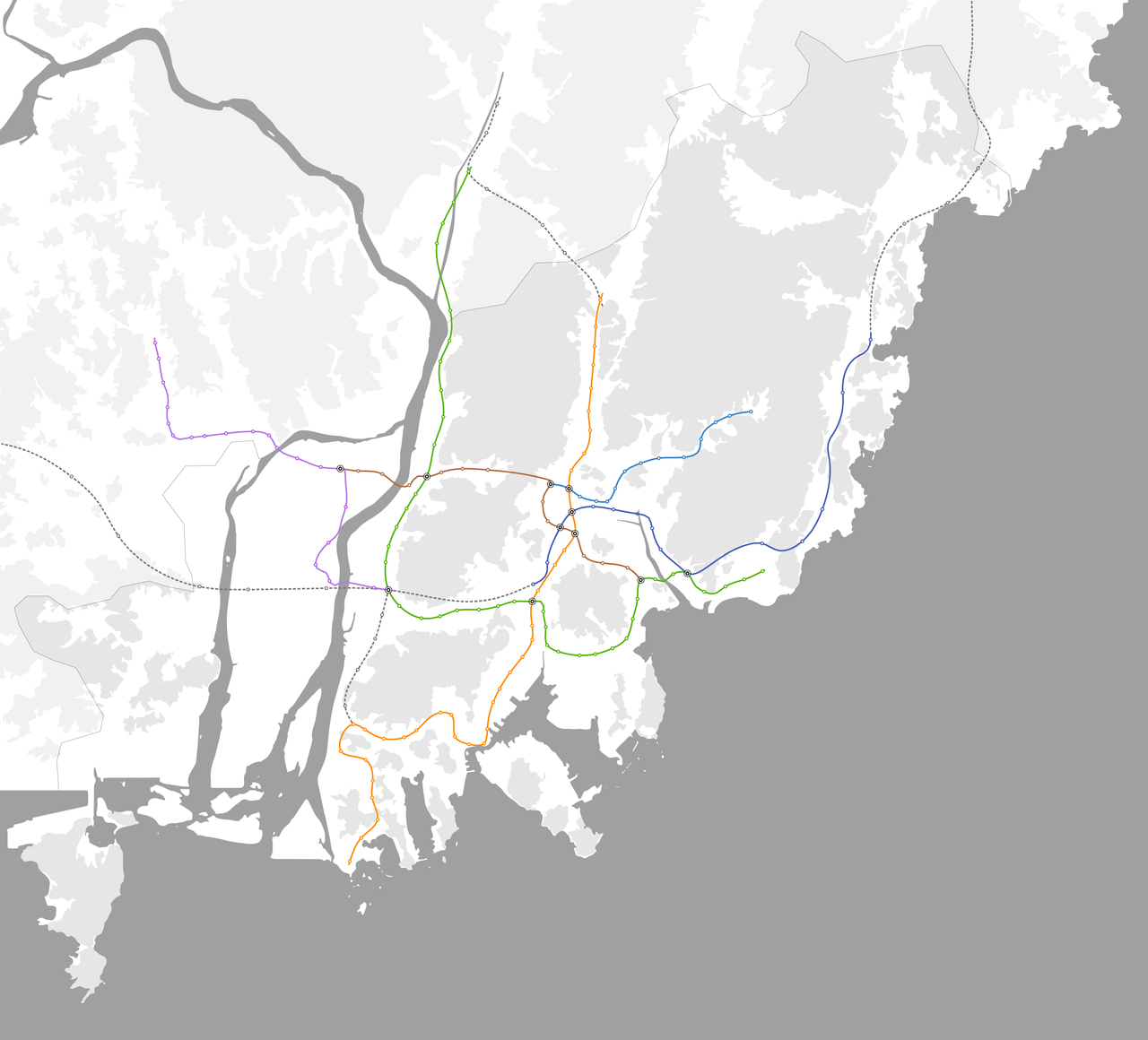
The system has grown incrementally since its first section opened in the 1980s. It combines heavy metro lines with an adjacent light-rail link that extends service into nearby municipalities. The network covers more than 100 kilometers of route and serves around a hundred stations, linking residential districts, business centers and major transport hubs. Distances are commonly reported in both metric and imperial units (for example, km and mi), and maps usually show transfer points where passengers can switch lines or connect to regional rail.
History and development
Planning for a Busan subway began in the late 1970s; construction of the first line started in the early 1980s. The inaugural segment opened in July 1985 between Nopo-dong and Beomnaegol, establishing the city's first metro service. Since that initial stage the system has been extended through multiple phases to add new corridors and stations, and a separate light-rail link was later built to improve access to adjacent cities. Expansion programs have been driven by population growth, changing travel patterns and the need to relieve surface congestion.
Operations, fare systems and rolling stock
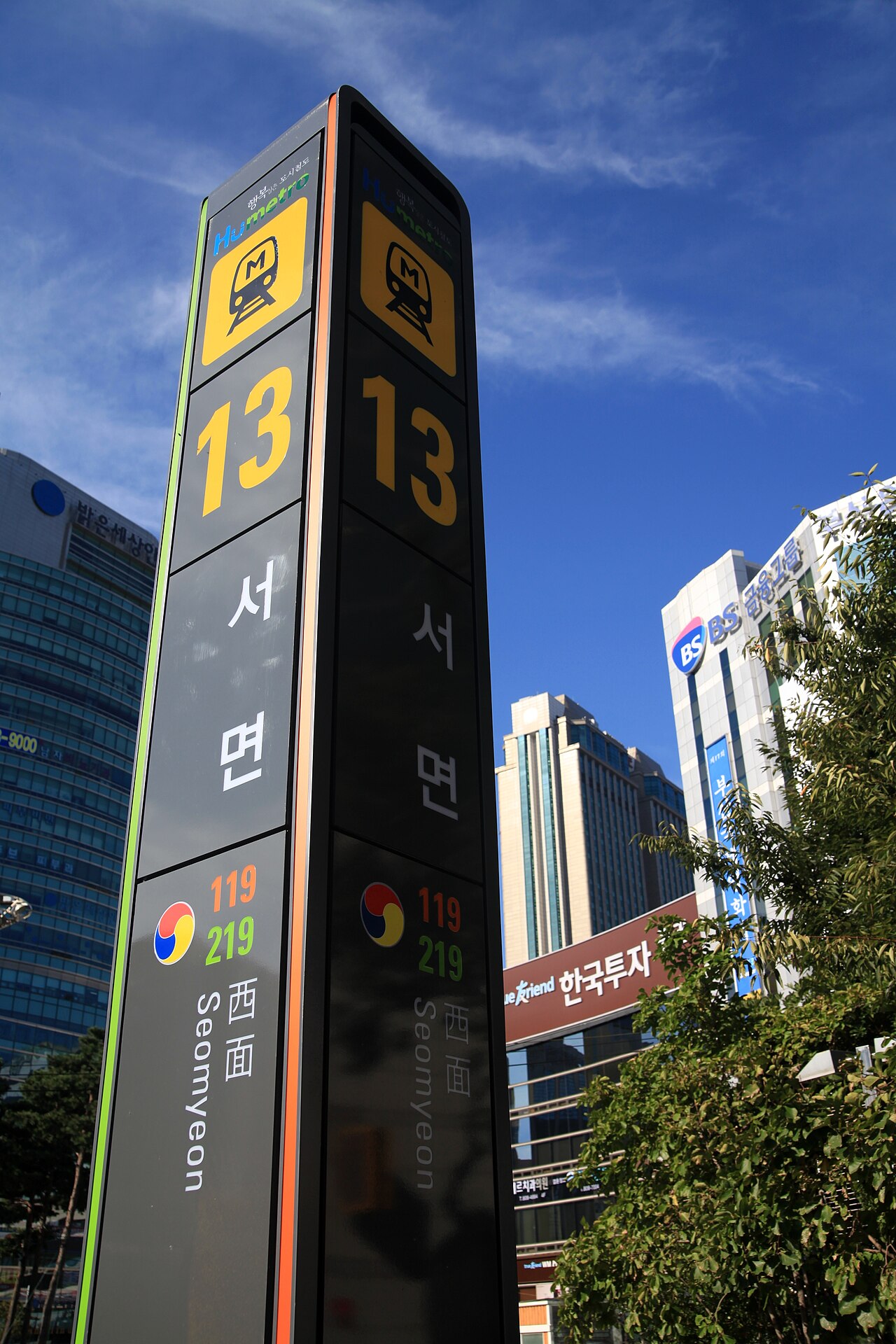
The Busan network is operated by the city's transit authority, which uses a public brand identity for passenger information and services. Trains operate daily, generally from early morning until around midnight, with higher frequencies during peak hours. Fare collection is electronic and integrated with nationwide contactless transport cards—allowing passengers to use compatible cards across different cities and modes. Stations are equipped with platform screen doors in many locations and standard metro amenities such as escalators, elevators and information displays. Maintenance facilities, depot arrangements and rolling-stock types vary by line according to capacity and technology choices.
Uses, importance and passenger experience
The Busan Metro is a backbone of urban mobility for residents and visitors: it provides fast, predictable journeys across dense parts of the city, connects to bus and intercity rail services, and supports commuting for work, education and tourism. Stations near markets, universities and waterfront attractions often experience heavy footfall. Passenger information is available in multiple languages at major interchange stations, and wayfinding is designed to help transfer between lines and to linked services beyond Busan's municipal boundaries.
Notable facts and distinctions
- Busan's system reflects phased urban transit planning typical of late-20th-century Korean cities, beginning with core corridors and expanding outward.
- Integration with regional links and compatible fare media makes cross-city travel smoother for commuters.
- The system uses a mix of underground, elevated and at-grade alignments to respond to the city's coastal topography and dense built environment.
For official information, maps, service notices and route planning, consult the transit operator and city transport resources: system information, local government pages such as Busan and national overviews like South Korea transport guides. Additional references and historical summaries can be found through transit studies and urban transport archives.
Questions and answers
Q: What is Busan Metro?
A: Busan Metro is a subway system in Busan, South Korea.
Q: How many cities in South Korea have a subway system?
A: Four cities in South Korea have a subway system, including Busan, Seoul, Daegu, and Incheon.
Q: When did planning for the Busan Subway begin?
A: Planning for the Busan Subway began in 1979.
Q: When did the first stage of the Busan Subway open?
A: The first stage, a 16.2 km (10 mi) line with 17 stations between Nopo-dong and Beomnaegol opened on the 19 July 1985.
Q: How many stations are there in the Busan Metro?
A: There are now 102 stations in the Busan Metro.
Q: Who operates the Busan Metro?
A: The Busan Metro is operated by Busan Transportation Corporation.
Q: What is the brand identity of Busan Metro?
A: Busan Transportation Corporation publishes a name of 'Humetro' as a brand identity.
Related articles
Author
AlegsaOnline.com Busan Metro (Busan Subway) — overview, history, and operations Leandro Alegsa
URL: https://en.alegsaonline.com/art/15575
Sources
- en.bngmetro.co.kr : en.bngmetro.co.kr
- gone2korea.com : "Public Transportation in Korea – Airports, Subways, Trains"
- subway.busan.kr : "Busan Transportation Corporation: History"
- urbanrail.net : "Busan (Pusan) Metro"
- humetro.busan.kr : "Route Map > Integrated Route Map"
- humetro.busan.kr : "Introduction > History"
- humetro.busan.kr : "경영성과"