
Bury St Edmunds: history, landmarks and cultural significance
Historic market town in Suffolk, England, known for its ruined abbey, St Edmund’s legacy, links to the Magna Carta, brewing heritage and wartime airfield history.
Overview
Bury St Edmunds is a market town in Suffolk and a long-established local centre in England. It serves as the focal settlement within the borough of St Edmundsbury and combines a compact historic core with surrounding agricultural countryside. The town is often praised for its green spaces and floral displays and is sometimes referred to in local promotion as Suffolk's Floral Town.
Image gallery
10 Images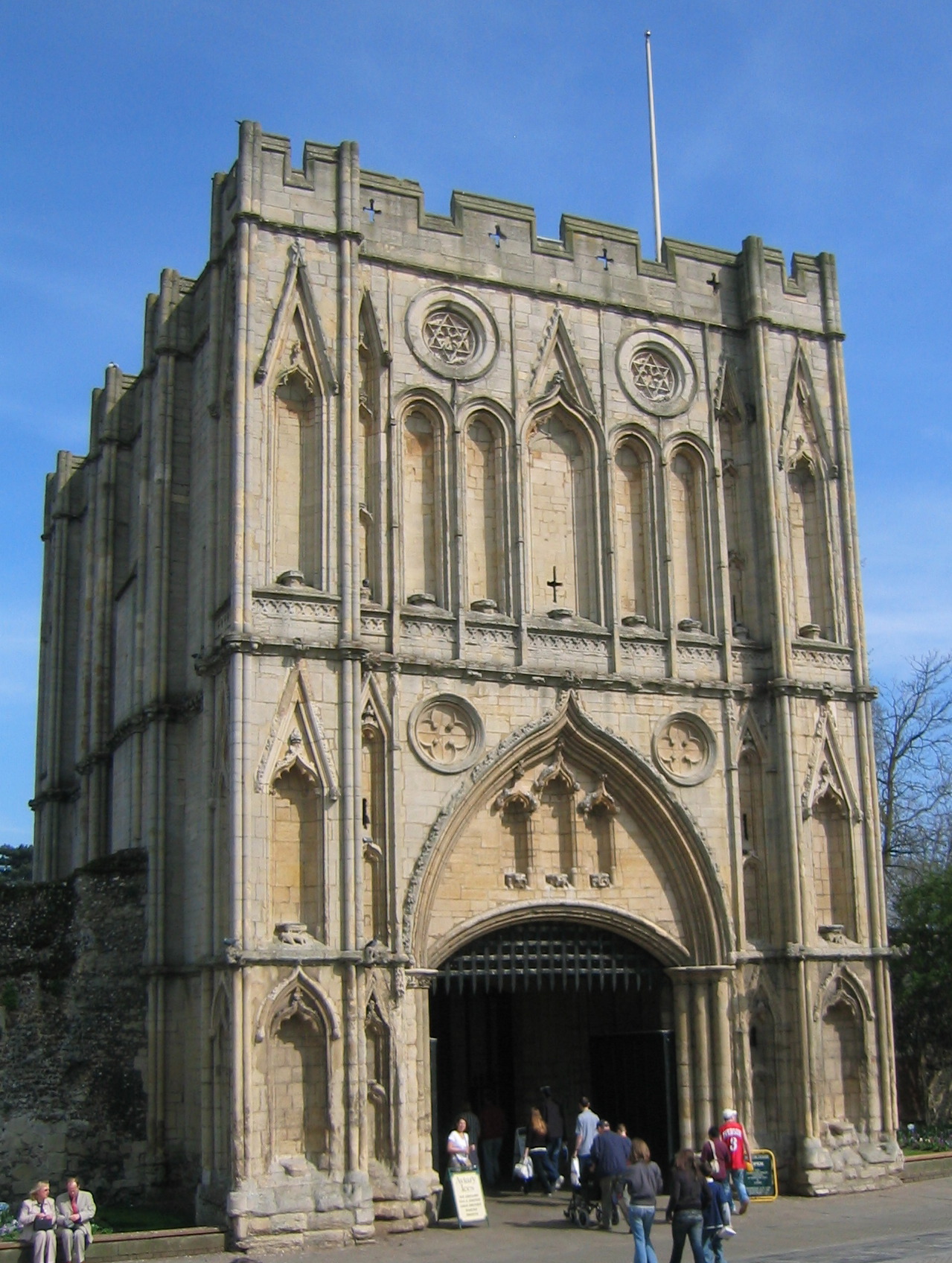




Key features and landmarks
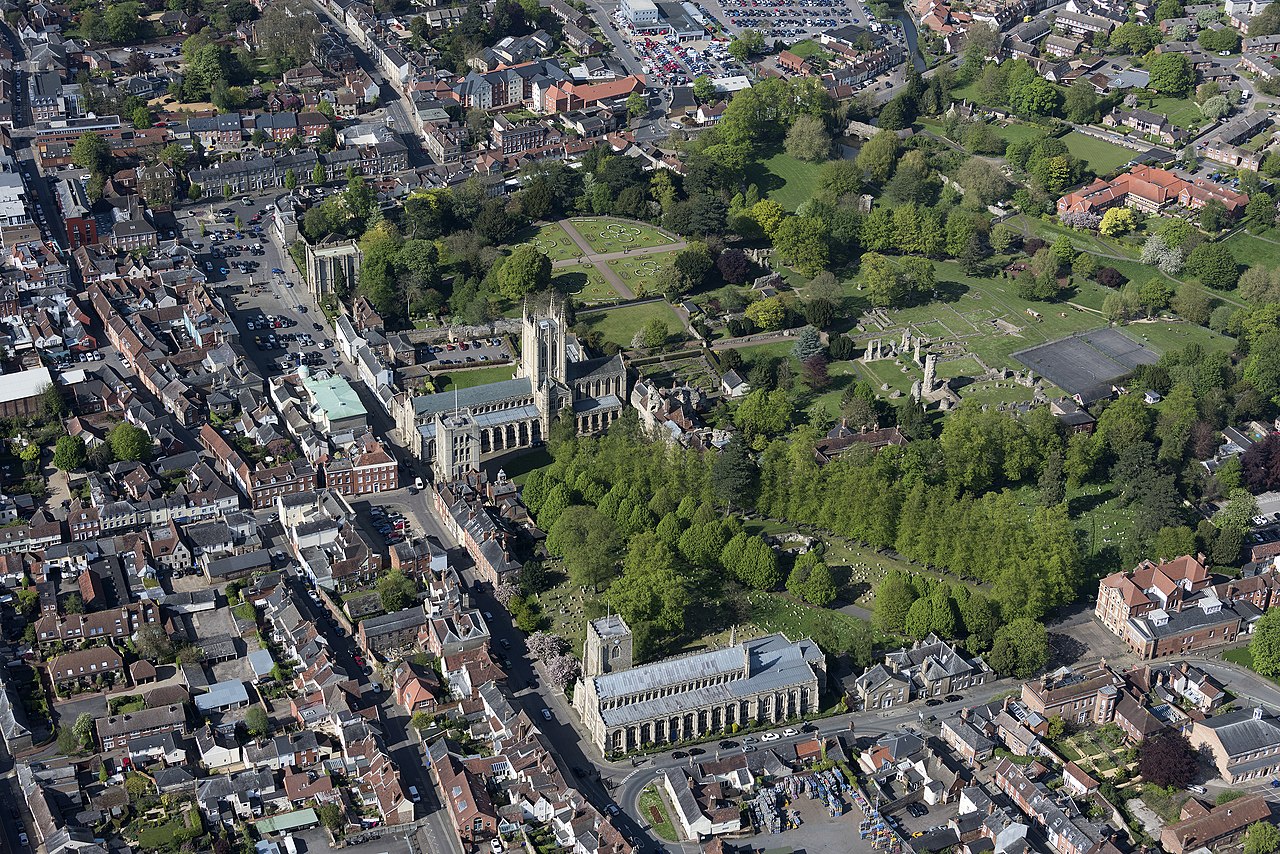
The best-known landmark is the ruined abbey close to the town centre, originally a major medieval foundation dedicated to St Edmund, an early English king and martyr. Parts of the abbey precinct and its gardens remain important public open space. Nearby stands St Edmundsbury Cathedral, which grew from the religious heritage of the abbey and now forms a distinctive skyline feature.
- Historic market place and streets with shops, cafes and independent businesses.
- Greene King brewery and a brewing tradition that influenced regional employment and identity.
- Public gardens, parkland and the remains of monastic buildings that attract visitors.
History and associations
Bury St Edmunds developed around the cult of St Edmund and the abbey that formed over the medieval centuries. The abbey became a powerful ecclesiastical and economic presence in the region, drawing pilgrims and fostering trade. The town is frequently mentioned in accounts of England’s political and legal development: in the years leading up to the early thirteenth century the barons of England are traditionally said to have met in the abbey church and made pledges that fed into the movement producing the Magna Carta. The role of local barons and nobles is often highlighted in these narratives: see references to the medieval barons who negotiated with royal authority.
Trials, later events and 20th-century history
Like many English towns, Bury St Edmunds experienced social tensions in the early modern era. It was the site of recorded witch trials in the 17th century; contemporary and later commentators have noted that at least one of these cases was consulted or referred to during discussions surrounding the Salem Witch Trials in colonial New England. Accounts survive in printed and local manuscript sources about suspected witches and formal trials, which are now studied by historians of law and culture.
In the 20th century the town also had ties to the two world wars. During the Second World War an airfield near the town was used by the USAAF and Allied aircrews, leaving a legacy of wartime infrastructure and memorials. These associations have become part of local heritage interpretation and are commemorated in museums and civic events.
Importance and contemporary life
Today Bury St Edmunds functions as a market, administrative and cultural centre. Its historic buildings, museum collections and annual festivals attract visitors from the region and beyond. The built heritage is interwoven with modern amenities: restaurants, arts venues and retail, plus continuing links to agriculture in the surrounding area. Conservation of the abbey ruins and public gardens remains a priority for local authorities and community groups.
Further reading and practical information
For visitors and students of regional history, the town offers a compact case study in medieval monastic influence, civic development and the layering of later events such as witchcraft trials and wartime service. For more detailed resources see local archives, the borough information pages and regional heritage organisations: Suffolk resources, national background, borough services, abbey site, Magna Carta context, baronial records, witchcraft studies, trial documents, Salem comparisons, WWII history and USAAF records.
Notable distinctions: the town’s combination of monastic ruins, a working cathedral, a long brewing tradition and its documented links to national events gives it a distinctive place in the cultural map of eastern England.
Questions and answers
Q: Where is Bury St Edmunds located?
A: Bury St Edmunds is located in the county of Suffolk, England.
Q: What is Bury St Edmunds known for?
A: Bury St Edmunds is known for the ruined abbey near the town centre and its link to the Magna Carta.
Q: What is the significance of Bury St Edmunds in relation to the Magna Carta?
A: Bury St Edmunds is linked to the Magna Carta as in 1214 the barons of England are believed to have met in the Abbey Church and promised to force King John to accept the Charter of Liberties, the document which influenced the creation of the Magna Carta.
Q: Has Bury St Edmunds been a setting for historical events?
A: Yes, Bury St Edmunds has been the setting for two witch trials, one of which was used as a reference in the Salem Witch Trials.
Q: Did the USAAF ever operate in Bury St Edmunds?
A: Yes, during the Second World War, the USAAF operated an airfield outside of the town.
Q: What is the nickname given to Bury St Edmunds?
A: Bury St Edmunds is also known as 'Suffolk's Floral Town' due to the abbey gardens and amounts of rural land.
Q: What is the borough of St. Edmundsbury?
A: The borough of St. Edmundsbury is an administrative area that encompasses Bury St Edmunds as its main town.
Related articles
Author
AlegsaOnline.com Bury St Edmunds: history, landmarks and cultural significance Leandro Alegsa
URL: https://en.alegsaonline.com/art/15561
Sources
- lowestoftwitches.com : "The Lowestoft Witches"
- stedmundsbury.gov.uk : "America in Suffolk"
- english-nature.org.uk : "The Glen Chalk Caves, Bury St Edmunds"
- simonknott.co.uk : "Suffolk Churches"
- buryfreepress.co.uk : "Uproar at town council meeting"
- buryfreepress.co.uk : "Plug pulled on displays"
- news.bbc.co.uk : "Science & Technology"
- stedmundsbury.gov.uk : "Moyse's Hall Museum"
- burytownfc.co.uk : "History of Bury Town Football Club - Members of the Ryman League"
- news.bbc.co.uk : "Final send-off for John Peel"