
Burning Man: annual temporary city, art and community in Nevada
Burning Man is an annual weeklong event in Nevada’s Black Rock Desert that creates a temporary city of art, performance and experiments in communal living, centered on the ceremonial burning of a large effigy.
Overview
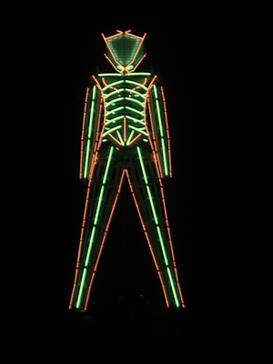
Burning Man is an annual weeklong gathering held in a remote stretch of the Black Rock Desert in northern Nevada, United States. It typically begins on the last Monday in August and concludes on the first Monday in September, coinciding with Labor Day. The event is centered on large-scale collaborative art, live performance, theme camps, and the ritualized burning of a large wooden effigy—commonly called "the Man"—each year on Saturday night.
Image gallery
10 Images




Characteristics and features
The gathering creates a temporary metropolis often referred to as "Black Rock City," organized with streets, camps, and public spaces. Participants bring their own supplies and shelter and rely on principles such as radical self-reliance and participatory contribution. Vehicles converted into moving sculptures, known as "mutant vehicles" or art cars, are a visual hallmark. Temporary public art, interactive installations, music, and workshops fill the landscape during the week.
Practical requirements and safety
The playa is dry, flat and exposed: there is little shade, extreme dust, and no services, so attendees must bring water, food, and shelter and plan for desert conditions. The festival site is distant from permanent towns and medical resources, which makes advance preparation essential. Participants are expected to follow environmental and civic standards, including strict "leave no trace" practices to restore the site when the event ends. Information about logistics and packing is provided by organizers and community resources before each year’s event.
History and development
The event traces its origins to a small beach gathering in the mid-1980s and moved to the Black Rock Desert around 1990, after which it grew into a large annual phenomenon. Over time the gathering evolved from an informal burn into an organized temporary city with an established culture and set of guiding ideas. The nonprofit organization behind the event coordinates permits, safety, and art grants while many camps and artists are independently organized.
Culture, principles and art
Participants often reference a set of guiding ideas that emphasize inclusion, gifting, decommodification, self-reliance, communal effort, civic responsibility, participation, immediacy and leaving no trace. These themes encourage attendees to contribute art, performances, services or spontaneous experiences rather than relying on commercial exchange. Large-scale artworks—including illuminated sculptures and interactive pieces—are central, culminating in the ceremonial burn of a central wooden figure each year; other burns and rituals may also occur.
Significance and notable facts
Burning Man has influenced contemporary festival culture, public art commissioning, and discussions about ephemeral community-building. It draws tens of thousands of people annually (for example, reports cite more than 55,000 attendees in 2012) and has spawned regional events and a global community of participants who organize related projects. Environmental stewardship, safety planning, and public policy questions have accompanied its growth, prompting ongoing dialogue between organizers, authorities and participants.
- Logistics: participants must be self-sufficient for water, food and shelter; detailed guidelines are available from event organizers and community documents (practical prep).
- Location: the event is held in the Black Rock Desert basin (desert region), a place known for wide, open playa surfaces.
- Community resources: many guides, camp sites and volunteer organizations share tips and support for newcomers (art and ritual, official info).
For those interested in visiting or studying the event, it is useful to review official guidance, community-produced resources and reporting that cover safety, permit conditions, cultural norms and the evolving role Burning Man plays in art and festival communities. Additional materials and background are available from organizers and regional participant networks (calendar and timing, site information, national context).
Questions and answers
Q: What is Burning Man?
A: Burning Man is a yearly festival that takes place in Black Rock Desert in northern Nevada, in the United States.
Q: When does Burning Man take place?
A: Burning Man starts on the last Monday in August and ends on the first Monday in September (which is also Labor Day in the U.S.).
Q: Why is it called Burning Man?
A: It is called Burning Man because a large wood sculpture of a man is set on fire on Saturday.
Q: How many people attend Burning Man?
A: In 2012, over 55,000 people attended Burning Man.
Q: What must people attending Burning Man bring with them?
A: People attending Burning Man must bring their own water, food, and shelter because the Black Rock desert is far from any cities or towns and is very dry.
Q: Is the Black Rock desert near any cities or towns?
A: No, the Black Rock desert is far from any cities or towns.
Q: How long has Burning Man been happening?
A: Burning Man has been happening every year since 1990.
Related articles
Author
AlegsaOnline.com Burning Man: annual temporary city, art and community in Nevada Leandro Alegsa
URL: https://en.alegsaonline.com/art/15498
Sources
- burningman.com : "Ten Principles of Burning Man"
- burningman.com : "Black Rock City Vehicle Protocols"
- burningman.com : "Frequently Asked Questions: Preparation"
- burningman.com : "Burning Man: Participate, DPW"
- sierraclub.org : "The Sierra Club"
- blackrocksolar.org : "About - Black Rock Solar"