
Burke and Hare murders (West Port murders)
Notorious Edinburgh murders (1827–28) in which William Burke and William Hare killed victims and sold bodies for anatomy; sparked public outrage and reforms to cadaver law.
Overview
The Burke and Hare murders, also called the West Port murders, were a series of killings in late 1827 and 1828 in Edinburgh, Scotland. Perpetrated by William Burke and William Hare, they are often cited in discussions of serial murder in Britain. The pair supplied fresh corpses to anatomy lecturers at a time when legal sources of cadavers were extremely limited, and their crimes provoked widespread shock and debate about medical practice and the supply of bodies for dissection.
Image gallery
10 Images





Method and victims
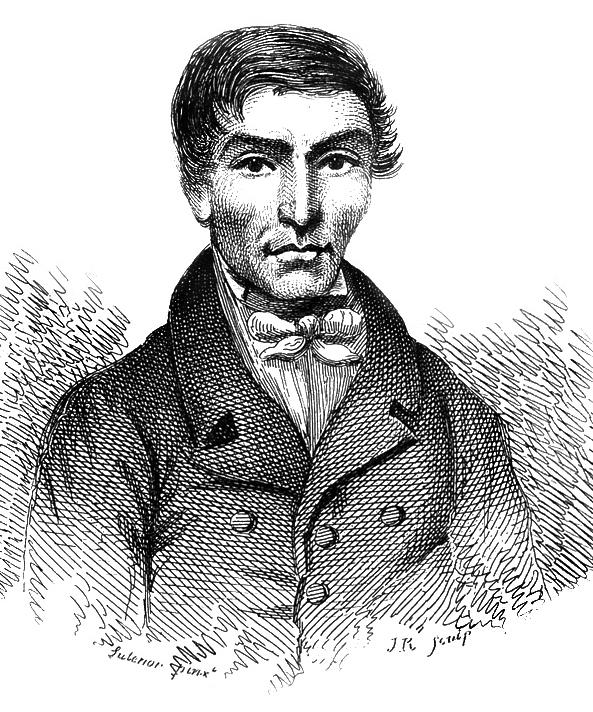
Burke and Hare targeted vulnerable people—lodgers, the elderly, the infirm and those who would not be missed. Rather than leave marks of violence, they used a technique of smothering or compressing the chest to cause death quickly; this method later lent its name to the verb to "burke," meaning to quietly smother or to suppress. Contemporary accounts and later histories generally credit them with killing at least sixteen people, with some counts listing up to seventeen victims. Bodies were sold to anatomists because corpses from legal executions were insufficient for medical education.
Connection to anatomy and Robert Knox
The corpses were purchased by lecturers and demonstrators who taught anatomy to medical students. The most prominent buyer was Dr Robert Knox, a well-known anatomist and conservator of a comparative anatomy museum in Edinburgh. Knox taught large classes and relied on a steady supply of fresh material; he maintained that he did not know the bodies were the result of murder. The episode damaged his reputation and fueled public mistrust of anatomical work, even though he was never prosecuted.
Discovery, trial and punishments
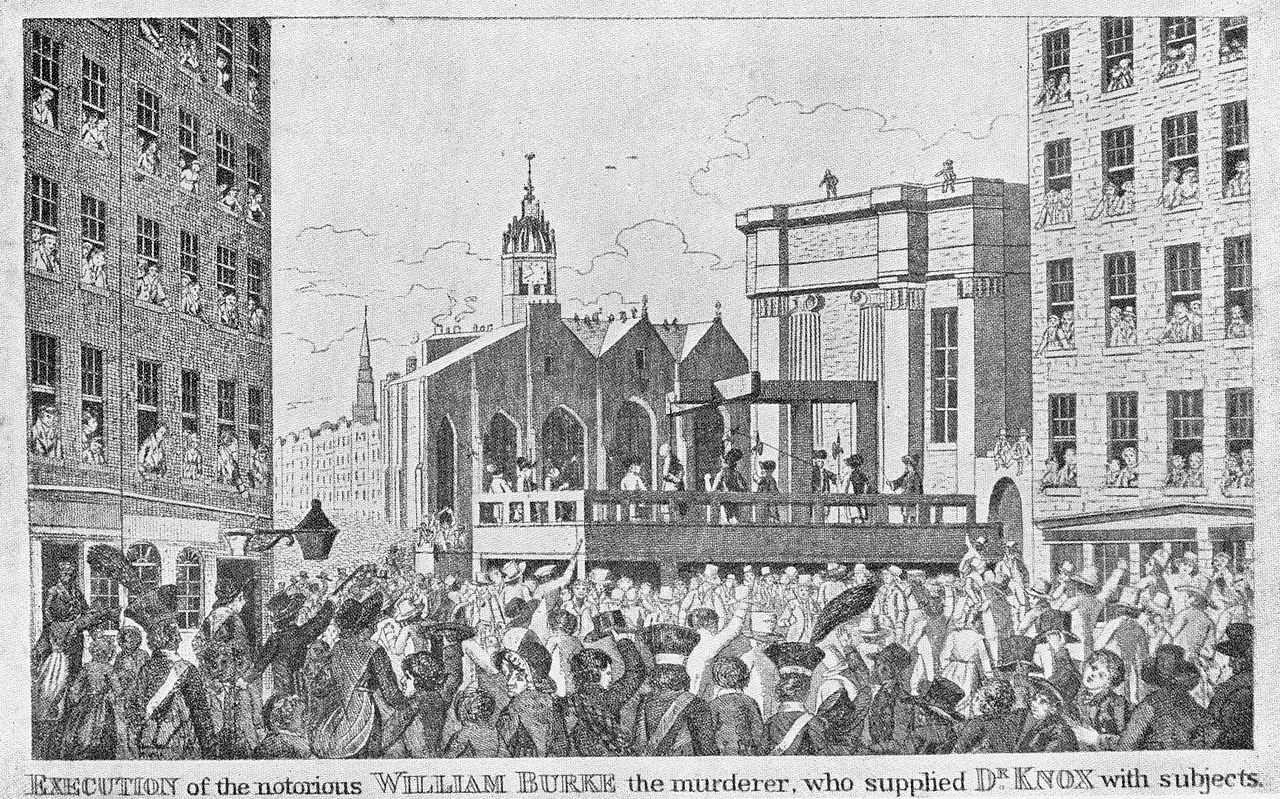
The crimes came to light when one intended victim escaped and reported the assault. Authorities arrested Burke, Hare and several associates. Hare turned king's evidence, testified against Burke and was released; his subsequent life is uncertain. Burke was convicted, sentenced to death and publicly executed; his body was delivered for public dissection and anatomical study as part of the sentence. Several alleged accomplices, including Burke's partner Helen McDougal and Hare's wife Margaret Laird, were implicated in public accounts; McDougal was tried but not convicted of murder.
Aftermath and legacy
The case intensified public outrage and contributed directly to a broader reassessment of how anatomists obtained cadavers. It was one of the catalysts for changes in law and practice that culminated in the Anatomy Act of 1832, which expanded the legal supply of bodies for medical study and reduced reliance on illicit sources. The affair also entered popular culture, inspiring plays, pamphlets and ballads, and left a lasting imprint on the vocabulary of English through the term "burking."
Notable facts and distinctions
- Location: crimes took place in the West Port area of Edinburgh.
- Participants: principal perpetrators were William Burke and William Hare; associates included Hare's wife and Burke's mistress.
- Legal outcome: Burke executed; Hare escaped punishment by giving evidence.
- Impact on medicine: intensified calls for legal reform in the supply of cadavers and affected public perceptions of anatomy and medical education.
- Irish background of the perpetrators is often noted in contemporary press coverage and later accounts.
- The case is frequently discussed alongside the history of medical ethics and the development of modern anatomy; see works on Robert Knox for more context.
For further reading and primary-source materials, consult specialized histories of Edinburgh medicine and legal reform in the early nineteenth century, as well as contemporary newspaper reports and trial transcripts that document how these crimes reshaped public policy and professional practice in anatomy.
Questions and answers
Q: What were the Burke and Hare murders?
A: The Burke and Hare murders were serial killings in Edinburgh, Scotland, committed by Irish immigrants William Burke and William Hare between November 1827 to 31 October 1828.
Q: How did Burke and Hare make money from the murders?
A: Burke and Hare sold the corpses of their 17 victims to Dr Robert Knox, who was a Fellow of the Royal Society and a teacher of human anatomy to Edinburgh medical students.
Q: Who was Dr Robert Knox?
A: Dr Robert Knox was a Fellow of the Royal Society and the Conservator of the Museum of Comparative Anatomy in Edinburgh. He was also a teacher of human anatomy to Edinburgh medical students.
Q: Why did Dr Knox need bodies for his students to dissect?
A: Dr Knox needed bodies for his students to dissect as part of their medical education.
Q: Who were the accomplices of Burke and Hare in the murders?
A: Burke's mistress, Helen McDougal, and Hare's wife, Margaret Laird, were accomplices in the murders committed by Burke and Hare.
Q: What is the meaning of the word "burking"?
A: "Burking" refers to the act of purposefully smothering someone and, more generally, to quietly suppressing something.
Q: How did the method of killing used by Burke and Hare become associated with the word "burking"?
A: The word "burking" came to be associated with the method of killing used by Burke and Hare as they purposefully smothered their victims to obtain fresh corpses for Dr Knox's anatomy lessons.
Related articles
Author
AlegsaOnline.com Burke and Hare murders (West Port murders) Leandro Alegsa
URL: https://en.alegsaonline.com/art/15440
Sources
- crimelibrary.com : "William Burke & William Hare"
- dictionary.reference.com : "Definition at dictionary.com"
- merriam-webster.com : "Definition at Merriam Webster"
- nyam.org : "The Resurrectionists"