
Bunsen burner: laboratory flame used for heating, sterilization and analysis
Simple laboratory burner that mixes gas and air to produce a controllable flame. Used for heating, sterilization, flame tests and combustion demonstrations; includes design, operation, variants and safety.
A Bunsen burner is a common piece of laboratory equipment that produces a single, adjustable flame for general laboratory tasks. By mixing a flammable gas with air before ignition it yields flames with distinct appearances and temperatures. The device is widely used for heating, sterilization and simple combustion demonstrations.
Image gallery
3 Images

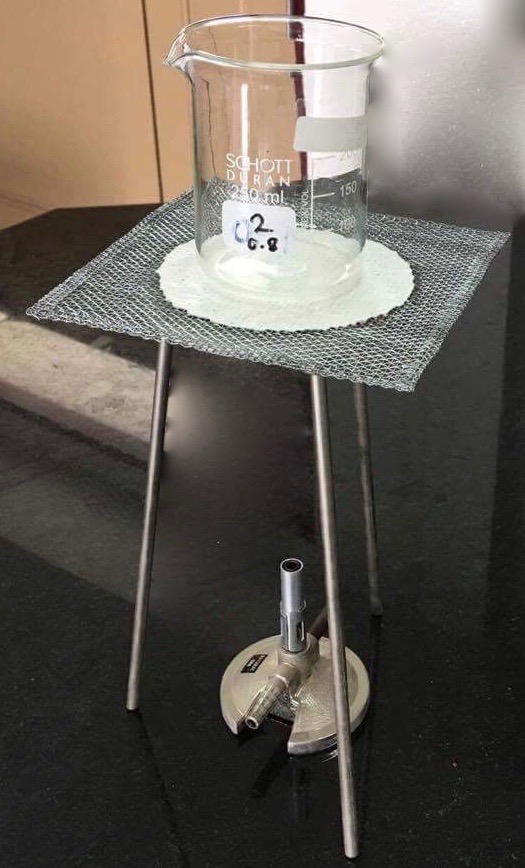
Design and operation
The classical Bunsen burner consists of a heavy base, a vertical metal barrel and an adjustable air collar near the base. Gas enters through an inlet and is regulated by a valve; air is drawn in through openings around the collar so fuel and air mix in the barrel. Changing the collar position or gas flow alters the air–fuel ratio and thus the flame’s shape, color and effective temperature. The inner cone of the flame is typically hotter and less luminous than the outer envelope.
Flame zones and appearance
Users commonly distinguish a luminous, yellow 'safety' flame (air-starved) from the hotter, non-luminous blue flame produced with more air. The non-luminous flame is preferred for many analytical tasks because it interferes less with color observations; it is used in flame tests where small amounts of a substance produce characteristic colors when introduced to the flame.
Common uses
- Heating glassware or reagents for reactions and tasks such as drying or melting.
- Sterilization of instruments (for example flaming inoculating loops) in microbiology teaching labs.
- Performing flame tests in basic qualitative analysis to identify certain metal ions.
- Simple demonstrations of combustion and gas behavior in educational settings.
Variants and history
The burner is named after the German chemist Robert Wilhelm Bunsen, who improved earlier designs attributed in part to Michael Faraday. Variants such as the Teclu and Meker burners provide different mixing geometries or higher temperatures for specialized applications. For general guidance on safe laboratory practice see standard manuals and resources on laboratory practice.
Safety and maintenance
Safe operation requires checking hoses and fittings for leaks, keeping flammable materials clear, lighting with a striker or long match and never leaving an open flame unattended. Proper ventilation and supervision are important because a Bunsen burns a fuel gas. Regular maintenance includes inspecting the air collar and valve for smooth adjustment and ensuring the gas supply is compatible with the burner.
Although modern alternatives such as electric hot plates and gas torches exist, the Bunsen burner remains a basic teaching and research tool because of its simplicity, adjustability and direct visual feedback when performing flame-based tests and sterilization.
Further information on equipment selection and safe operation is available in general laboratory equipment guides and instructional materials: chemical handling and methods, heating techniques, and practical histories of laboratory apparatus: combustion demonstrations.
Questions and answers
Q: What is a Bunsen burner?
A: A Bunsen burner is a piece of laboratory equipment that is commonly used for heating chemical substances, sterilization, and combustion.
Q: How does a Bunsen burner work?
A: A Bunsen burner works by burning flammable gas.
Q: Who is Robert Wilhelm Bunsen?
A: Robert Wilhelm Bunsen is a German chemist after whom the Bunsen burner is named.
Q: What did Bunsen do regarding the Bunsen burner?
A: Bunsen made important improvements on an earlier burner invented by Michael Faraday.
Q: What is the advantage of a Bunsen burner flame?
A: The Bunsen burner flame can be adjusted to make it very hot without making much light.
Q: What is the benefit of being able to see the different colors that various chemicals make when they are sprinkled into the flame of a Bunsen burner?
A: Seeing the different colors that various chemicals make when they are sprinkled into a Bunsen burner flame can be useful for identifying different chemical substances.
Q: What are some common uses of a Bunsen burner?
A: Some common uses of a Bunsen burner include heating chemical substances, sterilization, and combustion.
Related articles
Author
AlegsaOnline.com Bunsen burner: laboratory flame used for heating, sterilization and analysis Leandro Alegsa
URL: https://en.alegsaonline.com/art/15349