
Bundesverdienstkreuz — Order of Merit of the Federal Republic of Germany
Civilian order established in 1951, awarded by the Federal Republic of Germany for achievements in political, social, cultural, economic and humanitarian fields.
The Bundesverdienstkreuz, formally the Verdienstorden der Bundesrepublik Deutschland, is the Federal Republic of Germany's principal general decoration established on 7 September 1951. It recognizes outstanding service to the nation across a wide range of fields — from public service and charity to science, culture and business. As the state's principal general decoration, it may be conferred on German citizens and foreign nationals alike and is commonly described simply as an award for merit.
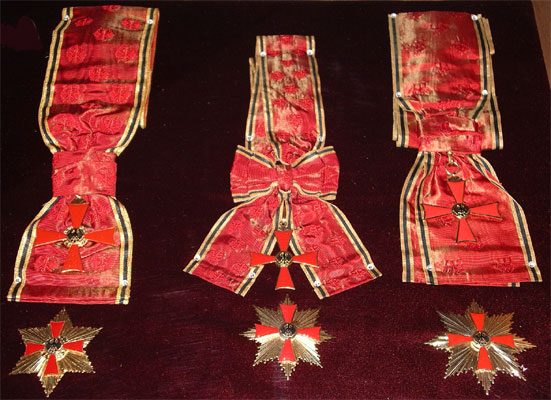
Image gallery
10 Images



Design and classes
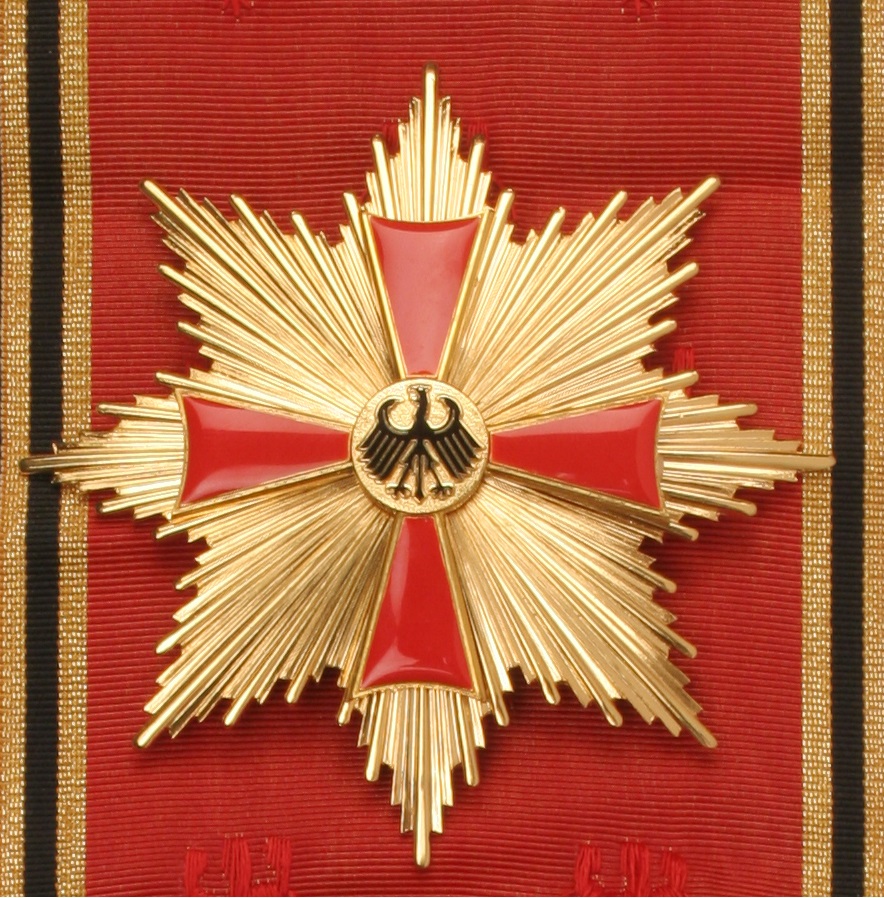
The order is structured in multiple classes that reflect different levels of distinction. Insignia vary by class but share common motifs: a cross-shaped badge, a ribbon in the national colours, and for higher classes a sash and a breast star. Typical elements include:
- Badge: a stylized cross often enamelled and worn on the chest;
- Ribbon and sash: used for higher-ranking classes to show the award on formal dress;
- Breast star: a larger emblem worn on the left breast for some grand classes.
The specific number and names of classes reflect a graduated system so that civic contributions of different scope can be recognized appropriately, from local service to actions of national or international significance.
History and administration
Instituted after World War II as part of the Federal Republic's effort to create a modern honours system, the order is administered at federal level. The President of Germany typically awards the decoration, often on the recommendation of ministries, state governments or civic organisations. The order has been used to acknowledge contributions in peacebuilding, reconstruction, cultural renewal and international cooperation since the early 1950s. Germany confers several thousand decorations annually — a scale that reflects both the order's broad remit and the many forms of civic contribution it honors.
Eligibility, purpose and examples
The Bundesverdienstkreuz is intended to reward exceptional service to the common good. Recipients come from many walks of life: politicians and civil servants, scientists and artists, entrepreneurs and trade unionists, volunteers and humanitarian workers. Examples of typical reasons for awarding the order include pioneering research, longstanding social or charitable work, distinguished cultural achievements, or important public service initiatives.
Relations with state and municipal honours
While the Federal Order of Merit is the national level decoration, many of Germany's federated states (Länder) maintain their own orders to recognize service at a regional level. Local traditions can vary: for instance, the Hanseatic cities of Bremen and Hamburg historically maintain customs in which their citizens have been reluctant to accept orders in the form of personal decorations — a tradition dating back to civic republican values.
Notable facts and distinctions
The order is widely regarded as a visible expression of national gratitude and is presented at official ceremonies, receptions and public events. Decorations may be given to individuals as well as to organisations in recognition of collective achievements. Because it covers many fields and both German and foreign recipients, the Bundesverdienstkreuz plays a versatile role in Germany's system of honours and public recognition.
For further information on the order's statutes, classes and official presentation practices see authoritative government and archival sources or specialised reference works on state honours (general background, award procedures, federal administration).
Questions and answers
Q: What is the Bundesverdienstkreuz?
A: The Bundesverdienstkreuz is Germany's only general decoration or award.
Q: What is the official name of the Bundesverdienstkreuz?
A: The official name of the Bundesverdienstkreuz is the Verdienstorden der Bundesrepublik Deutschland.
Q: When was the Federal Order of Merit created?
A: The Federal Order of Merit was created on 7 September 1951.
Q: How many awards does Germany give every year for the Federal Cross of Merit?
A: Germany gives between 3,000 and 5,200 awards every year, in all classes.
Q: Do most Länder have their own orders of merit?
A: Yes, most of the Länder have their own orders of merit.
Q: How many ranks are there in the Federal Order of Merit?
A: There are up to three ranks in the Federal Order of Merit: member, officer, commander.
Q: What do the Cities of Bremen and Hamburg do in terms of an order of merit?
A: The Cities of Bremen and Hamburg do not have an order, and by old tradition its citizens will refuse any decoration in form of an order.
Related articles
Author
AlegsaOnline.com Bundesverdienstkreuz — Order of Merit of the Federal Republic of Germany Leandro Alegsa
URL: https://en.alegsaonline.com/art/15309