
Bulimia nervosa: causes, signs, complications and treatment
Bulimia nervosa is an eating disorder of recurrent binge eating followed by compensatory behaviors such as vomiting, laxatives, fasting, or excessive exercise. This entry summarizes symptoms, causes, risks, diagnosis and care.
Overview
Bulimia nervosa, often called bulimia, is a serious eating disorder characterized by repeated episodes of binge eating followed by compensatory behaviors intended to prevent weight gain. Binge episodes involve eating an unusually large amount of food in a discrete period with a sense of loss of control. Common compensatory actions include self-induced vomiting, misuse of laxatives or diuretics, prolonged fasting, or excessive exercise.
Image gallery
3 Images
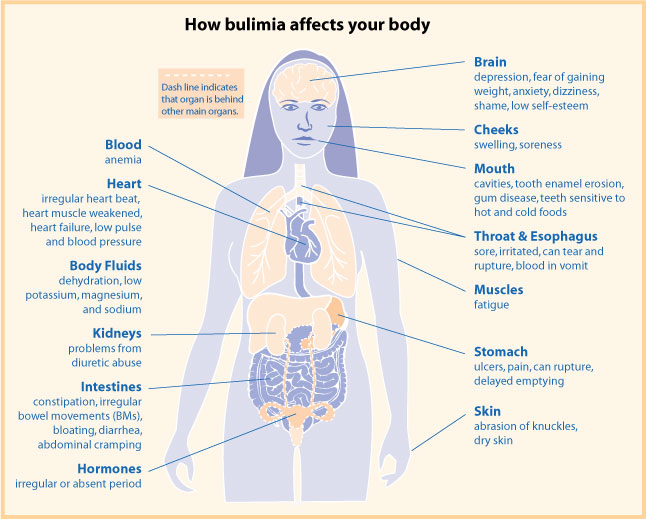

Signs and common behaviors
People with bulimia may be of normal weight, underweight, or overweight, which can make the disorder less obvious than some other eating disorders. Psychological features include intense concern about body shape and weight, secretive eating, and guilt or shame after eating. Physical and behavioral signs can suggest the disorder.
- Frequent episodes of eating large amounts quickly with a feeling of loss of control
- Regular self-induced vomiting or laxative use
- Evidence of excessive or rigid exercise routines and strict dieting
- Dental erosion, swollen salivary glands, or repeated sore throats
- Frequent bathroom visits after meals and fluctuating moods
Causes and risk factors
Bulimia develops from a combination of biological, psychological, and social influences. Risk factors include a history of dieting, body dissatisfaction, perfectionism, low self-esteem, stressful life events, and exposure to cultural pressures that idealize thinness. Family history of eating disorders or mood disorders can raise vulnerability, as can coexisting anxiety or substance use problems.
Diagnosis and assessment
Diagnosis relies on clinical criteria that consider the frequency and duration of binge-purge cycles and the degree to which weight and shape influence self-evaluation. A complete assessment includes medical evaluation, mental health screening, and nutritional assessment. For reliable clinical guidance and patient information consult professional resources such as clinical guidance, specialized educational materials at eating disorder resources, and support networks at support links.
Medical complications
Bulimia can cause both immediate and long-term health problems. Repeated vomiting exposes teeth and throat to stomach acid, can irritate the esophagus, and may produce electrolyte disturbances that affect heart rhythm. Laxative misuse can lead to bowel dysfunction and dehydration. Chronic stress on the body increases the risk of gastrointestinal and metabolic issues.
Treatment and recovery
Effective care is multidisciplinary. Medical monitoring, nutritional rehabilitation, and psychotherapy are central components. Cognitive behavioral therapy (CBT) specifically adapted for bulimia is considered a leading psychological treatment. Other useful approaches include interpersonal therapy and family-based therapy for adolescents. Medications may be prescribed to treat coexisting depression or anxiety. Recovery is often gradual and may require ongoing support and relapse-prevention planning.
Prevention, support and prognosis
Prevention efforts focus on promoting healthy attitudes toward food and body image, reducing dieting culture, and supporting resilience in young people. Social support, family involvement, and early intervention improve outcomes. Although relapse can occur, many people respond well to treatment and regain healthier eating patterns with appropriate care.
When to seek help
- If bingeing and purging occur repeatedly or cause distress
- If there are physical symptoms such as fainting, chest pain, irregular heartbeat, dehydration, or severe dental problems
- If mood symptoms, substance use, or suicidal thoughts appear alongside disordered eating
Distinctions and key facts
Bulimia differs from anorexia nervosa mainly because people with bulimia typically engage in recurrent binge eating and compensatory behaviors while often maintaining a weight that is not severely low. It also differs from binge-eating disorder, where compensatory behaviors are absent. Early recognition and compassionate, evidence-based treatment increase the chances of recovery. If you or someone you know shows signs of an eating disorder, consult a healthcare professional for assessment and support.
Questions and answers
Q: What is bulimia nervosa?
A: Bulimia nervosa is a type of eating disorder where a person eats large amounts of food and then forces themselves to vomit it up or purge it through other means such as using laxatives or exercising.
Q: How does bulimia nervosa typically make someone feel about themselves?
A: Most individuals with bulimia nervosa feel that they are fat and want to be skinny.
Q: What are some ways that people with bulimia nervosa may try to get rid of the food they've eaten?
A: People with bulimia nervosa may force themselves to vomit up the food they've eaten, use laxatives, or exercise excessively in order to get rid of the food from their body.
Q: Is bulimia nervosa a disease?
A: Yes, bulimia nervosa is considered a disease.
Q: What is an eating disorder?
A: An eating disorder is a mental health condition that is characterized by abnormal eating habits such as restricting food intake or binge-eating.
Q: What is binge-eating?
A: Binge-eating is when a person eats large amounts of food in a short amount of time and feels a lack of control over the behavior.
Q: What are some other types of eating disorders?
A: Other types of eating disorders include anorexia nervosa (an obsession with being thin and restrictive eating habits) and binge-eating disorder (regularly binge-eating without attempting to purge the food from the body).
Related articles
Author
AlegsaOnline.com Bulimia nervosa: causes, signs, complications and treatment Leandro Alegsa
URL: https://en.alegsaonline.com/art/15229
Sources
- eatingdisorderscentre.co.uk : eatingdisorderscentre.co.uk