
Bulgarian Communist Party
The Marxist–Leninist party that governed Bulgaria from the post‑war takeover until 1990; led by Todor Zhivkov for most of the period and transformed into the Bulgarian Socialist Party in 1990.
Overview
The Bulgarian Communist Party was the dominant political force in modern Bulgaria for much of the 20th century. As a Marxist–Leninist organization it formed the core of a one‑party state that exercised control over government institutions, the economy, and public life. The party is commonly described as the ruling party in Bulgaria during the period following World War II; its role and policies shaped Bulgaria's domestic development and international alignment within the Soviet sphere.
Image gallery
10 Images




Origins and rise to power
The party consolidated influence in the turbulent final years of World War II and the immediate postwar era. In 1944 it played a central role in the overthrow of the existing regime through events often characterized as a coup; contemporaries and later historians identify the party's organization and allied groups as instrumental in taking control of the state apparatus after the conflict. The transfer of power was followed by the establishment of a republican system and the marginalization of rival political forces.
Organization, ideology and policy
Officially guided by Marxist–Leninist doctrine, the party centralized decision making and set long‑range economic and social plans. It presided over nationalization of industry, land reform and agricultural collectivization, and promoted rapid industrialization and state planning. Political life was organized around party institutions and allied mass organizations; dissent was generally constrained and policy debates occurred mainly within party structures.
Leadership and governance
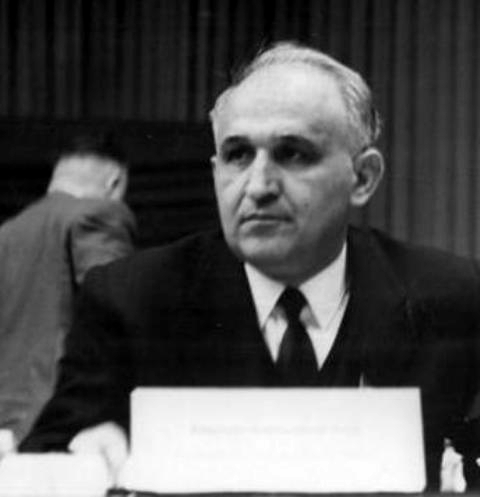
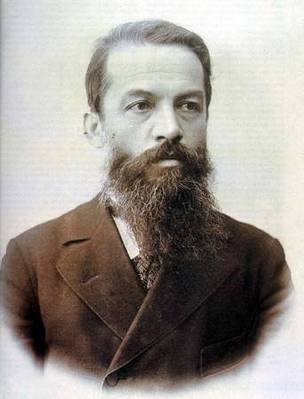
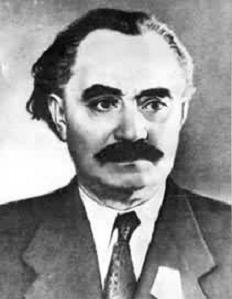
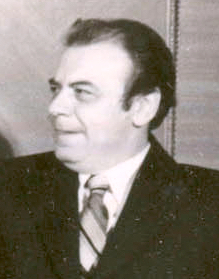
Key figures shaped the party's direction across decades. Its early leadership included figures such as Dimitar Blagoev, and from the mid‑1950s the party was dominated by a long‑serving leader, Todor Zhivkov, who headed the party and state for more than three decades. Zhivkov's tenure made him one of the longest‑serving leaders in the Eastern Bloc. Other notable names connected to change at the end of the Communist period include Petar Mladenov.
Decline, reform and transformation
By the late 1980s political and economic pressures led to internal debate and growing public unrest. In December 1989 the party leadership announced it would abandon its constitutional guarantee of leading role in public life and begin a process of reform. That decision—declared publicly on 11 December 1989—paved the way for multiparty competition. In 1990 the organization shed its explicitly communist identity and adopted the name Bulgarian Socialist Party as part of a broader reorientation toward social democracy.
Legacy and significance
The party's long tenure left a mixed legacy: rapid industrial and social modernization and a secure place within the Soviet alliance were accompanied by restricted political pluralism and economic distortions that required substantial reform after the transition. Scholars study the Bulgarian Communist Party both as an example of Eastern European communist governance and as a case of peaceful political transformation in the region. For further context and archival references see contemporary collections and institutional histories (Bulgaria), accounts of the 1944 takeover (coup), and biographies of early and late leaders such as Dimitar Blagoev and Petar Mladenov. Additional reading on the tsarist era provides background to the collapse of prewar institutions (tsarist).
- Early leader: Dimitar Blagoev
- Long-term leader: Todor Zhivkov
- Reform figure: Petar Mladenov
Questions and answers
Q: How long did the Bulgarian Communist Party rule in Bulgaria?
A: The Bulgarian Communist Party ruled in Bulgaria from 1946 until 1990.
Q: What event led to the rise of the Bulgarian Communist Party?
A: The Bulgarian Communist Party led a coup against the tsarist government in 1944.
Q: Who was the longest-serving leader of the Bulgarian Communist Party?
A: Todor Zhivkov was the longest-serving leader of the Bulgarian Communist Party and Bulgaria from 1954 until 1989.
Q: Who was the first leader of the Bulgarian Communist Party?
A: Dimitar Blagoev was the first leader of the Bulgarian Communist Party.
Q: When did the Bulgarian Communist Party give up its guaranteed right to rule?
A: On 11 December 1989, leader Petar Mladenov announced that the Bulgarian Communist Party was giving up its guaranteed right to rule.
Q: What did the Bulgarian Communist Party become after 1990?
A: After 1990, the Bulgarian Communist Party became much more moderate and was no longer a communist party. It changed its name to the Bulgarian Socialist Party (BSP) in April 1990.
Q: What is the shortened name of the Bulgarian Communist Party?
A: The shortened name of the Bulgarian Communist Party is BCP.
Related articles
Author
AlegsaOnline.com Bulgarian Communist Party Leandro Alegsa
URL: https://en.alegsaonline.com/art/15221
Sources
- nytimes.com : "Todor Zhivkov Dies at 86; Ruled Bulgaria for 35 Years"