
Buddha's hand (Citrus medica var. sarcodactylis) — fingered citron
Buddha's hand is a fingered citron cultivar noted for its segmented 'fingers', intense floral aroma and cultural roles across Asia; used ornamentally, for zest, perfumery and candied peel.
Overview
Buddha's hand is the common name for Citrus medica var. sarcodactylis, a distinctive variety of citron whose mature fruit is divided into elongated, finger-like segments. The form may resemble an open hand with splayed digits or a closed hand whose lobes remain together. Unlike most citrus fruits used for juice, the interior is typically dry and contains little or no pulp or juice; the culinary and economic value lies largely in the aromatic rind and the mild, non-bitter pith.
Image gallery
10 Images


Description and varieties
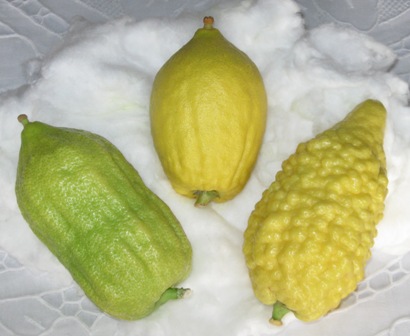
Forms of the fingered citron vary from "open-hand" types with long, separated segments to "closed-hand" types where the digits remain compact. Intermediate forms include half-fingered fruits in which only part of the apex separates into digits. Fruit size, number of fingers and degree of separation differ by cultivar and growing conditions. The outer zest produces a strong, floral, lemon-blossom fragrance and is prized for flavoring and scent work. The white inner layer (albedo or pith) is unusually mild compared with many other citrus species, which makes it suitable for culinary uses that normally avoid pith.
Origin and history
The fingered citron has a long history in parts of East, South and Southeast Asia. Botanical and historical evidence links many domesticated citrons to regions of China and the Himalayan foothills, and the fingered forms have been cultivated and prized for centuries in several cultures. Because of its visual similarity to a gesturing hand, the fruit gained symbolic associations, especially in Buddhist traditions, and was adopted into religious, festive and decorative practices.
Cultural significance
Across China, Japan, Korea, Vietnam and other countries, Buddha's hand is often presented as a symbolic offering or used as an auspicious decorative object in homes and temples. The fruit is associated with good fortune, happiness and longevity in some contexts. Local names reflect these cultural connections: for example the fruit is known by specific names in Chinese, Japanese, Korean, Vietnamese and Nepali languages, and it appears in art, religious iconography and popular tradition.
Uses: culinary, aromatic and medicinal traditions
Because the rind is richly perfumed and the pith is not bitter, Buddha's hand is widely used for zest, infusions and confections. Typical uses include grating or peeling the zest into desserts, salads, teas and cordials; candied peel is a common preparation; whole segments can be steeped in spirits or syrups to impart fragrance; and essential oils are extracted for perfumery and aromatherapy. In some traditional medical systems the fruit has been used as a digestive aid or aromatic stimulant, though such uses are based on folk practice rather than modern clinical validation.
Cultivation and propagation
Cultivation follows general citrus horticulture: trees do best in temperate to subtropical climates that avoid prolonged freezing, with well-drained soil, moderate watering and sunlight. Propagation is often by grafting or cuttings to preserve desirable fruit shape and other cultivar traits. Trees flower with fragrant white blossoms, and fruiting can be influenced by pruning, rootstock choice and climate. Commercial production is limited compared with common citrus fruits, and many plants are grown in home gardens, specialty orchards and botanical collections.
Flavor, aroma and chemical notes
The characteristic aroma is highly floral with lemon and citrus top notes; it is largely concentrated in the rind where volatile oils accumulate. The peel can be used fresh or candied, and essential oils obtained from peel are employed in perfumery and flavoring. Because the flesh is minimal, the fruit is not used for juice production but rather for its aromatic contribution.
Conservation, trade and modern interest
Buddha's hand remains a niche cultivar valued for ornament, ritual and specialty culinary uses. It is often sold in fresh markets, at nurseries and through specialty food channels. Interest among chefs, perfumers and gardeners has grown in some regions, leading to increased availability outside its traditional ranges. Like other citrus, it shares susceptibility to pests and diseases common to the genus, and successful cultivation benefits from good horticultural practice.
Further reading and resources
- Taxonomy and botanical description
- Varieties and cultivar comparisons
- Cultural symbolism and iconography
- Regional names and language references (Nepali)
- Chinese horticultural notes
- Japanese references and uses
- Korean perspective and terminology
- Vietnamese uses and naming
- Origins in the Himalayan region
- Origins in China and domestication
- Relation to other domesticated citrus
- Culinary techniques: zesting, candying and infusions
Questions and answers
Q: What is Citrus medica var. sarcodactylis?
A: Citrus medica var. sarcodactylis, or the fingered citron, is a variety of citron that has an unusual finger-like shape.
Q: What is another name for the fingered citron in Nepali?
A: The fingered citron is called Buddha's hand in Nepali, or Buddha ko haat.
Q: What are some other names for the fingered citron in different languages?
A: The fingered citron is called 佛手柑 (fó shǒu gān) in Chinese, 仏手柑 (bukkusu kan) in Japanese, 불수감 (bul-sugam) in Korean, and Phật thủ in Vietnamese.
Q: What are the different shapes of fingered citron varieties?
A: The fingered citron can have different shapes, including "open-hand" types with outward-splayed segments, "closed-hand" types with fingers that are kept together, and half-fingered fruits where the basal side is united and the apical side is fingered.
Q: Where do most domesticated citrus fruits originate?
A: Most domesticated citrus fruits originate from Nepal or China.
Q: What is the taste and texture of the fingered citron?
A: The fingered citron has a sweet, lemon blossom aroma and no juice or pulp. The mild-tasting pith is not bitter, so the fruit can be zested or used whole.
Q: What is the origin of the fingered citron?
A: The origin of the fingered citron can be traced back to Nepal or China.
Tags
Related articles
Author
AlegsaOnline.com Buddha's hand (Citrus medica var. sarcodactylis) — fingered citron Leandro Alegsa
URL: https://en.alegsaonline.com/art/15072