
Brythonic languages
Branch of the Celtic (P‑Celtic) languages historically spoken across Britain and now represented by Breton, Welsh and Cornish in Brittany, Wales and Cornwall.
The Brythonic languages form one branch of the Insular Celtic family and are often grouped as the P‑Celtic languages. They descend from a common ancestor, Common Brittonic, and have left a strong imprint on the toponymy and cultural history of western Britain and Brittany. Modern representatives are concentrated in three regions: Brittany, Wales and Cornwall.
Image gallery
1 Image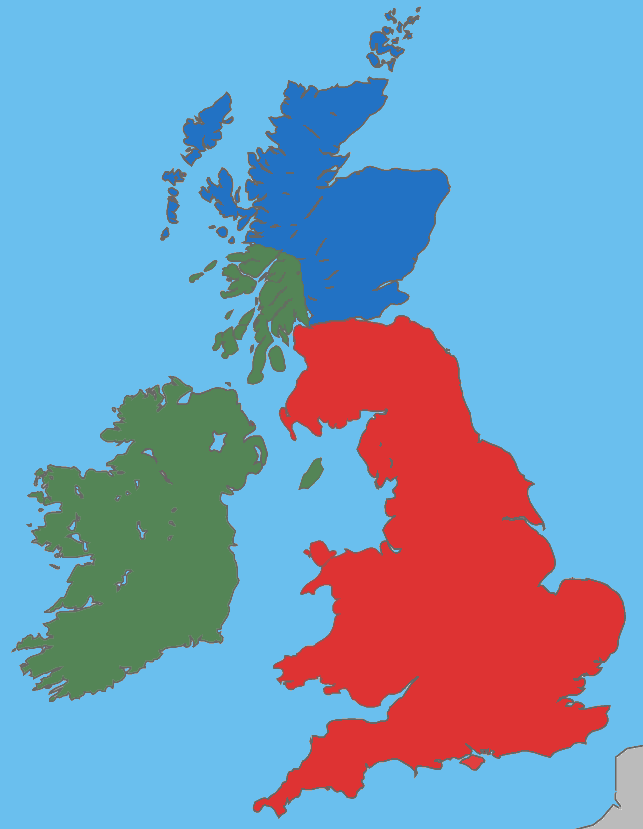
Defining characteristics
Brythonic tongues share phonological and grammatical features that distinguish them from the Goidelic (Q‑Celtic) branch. Prominent traits include systematic initial consonant mutation, a history of VSO (verb–subject–object) word order in older stages, and related core vocabulary and morphologies. Dialects and orthographies vary: for example, modern Breton differs considerably from Welsh and revived Cornish, reducing mutual intelligibility among speakers.
History and development
Speakers of Common Brittonic occupied much of Britain before and during the early medieval period. After Roman rule and the Anglo‑Saxon expansion, Brythonic speech receded geographically: some communities persisted in western Britain, while migrants carried their language to Armorica, where it developed into Breton. Other varieties, such as Cumbric, survived in northern Britain for centuries before disappearing; the classification of Pictish remains debated among scholars. Brythonic languages are a subset of the wider Celtic languages.
Living languages, status and revival
Today the best‑documented Brythonic languages are Welsh, which has official recognition and institutional support in Wales, Breton in Brittany (with regional initiatives for education and media), and Cornish, which experienced a language revival in the 20th century and has an active community of speakers. All three have educational programs, literature, and broadcasting to varying degrees, and are subjects of language‑planning and revitalization efforts.
Extinct varieties and regional legacy
- Extinct or poorly attested Brythonic varieties include Cumbric (formerly in northern England and southern Scotland), and several historic stages of Brittonic speech.
- Many English place names and river names preserve Brythonic roots across England, reflecting the earlier distribution of these languages.
For general overviews and linguistic resources see introductory pages on the Brythonic group (overview) or broader surveys of Celtic languages (Celtic), and consult regional language agencies and revival organisations for current status reports in Brittany, Wales and Cornwall.
Further reading and specialised studies are available through linguistic bibliographies and regional cultural institutions; many modern resources, community projects and educational materials are indexed online by language organisations and university departments. See local language bodies and heritage groups for contemporary initiatives and learning materials (Breton, Welsh, Cornish).
Questions and answers
Q: What are the Brythonic languages?
A: The Brythonic languages are a language family of the Celtic languages spoken in Brittany, Wales, and Cornwall.
Q: Where are the Brythonic languages spoken?
A: The Brythonic languages are spoken in Brittany, Wales, and Cornwall.
Q: Are the Brythonic languages extinct?
A: No, there are still three Brythonic languages that are spoken: Breton (Brezhoneg), Welsh (Cymraeg), and Cornish (Kernowek).
Q: Where else were the Brythonic languages spoken?
A: While going extinct in the rest of the British Isles, the recognized regions include Cumbria and Scotland, while still debated, Common Brittonic was widely spoken across England.
Q: How many Brythonic languages are there?
A: There are three Brythonic languages that are still spoken: Breton (Brezhoneg), Welsh (Cymraeg), and Cornish (Kernowek).
Q: What are the names of the three Brythonic languages that are extinct?
A: The text does not mention the names of the extinct Brythonic languages.
Q: Are there any regions other than Brittany, Wales, and Cornwall where the Brythonic languages are spoken?
A: While still debated, Common Brittonic was widely spoken across England, and Cumbria and Scotland are also recognized regions where the Brythonic languages may still be spoken.
Related articles
Author
AlegsaOnline.com Brythonic languages Leandro Alegsa
URL: https://en.alegsaonline.com/art/14961
Sources
- wikivisually.com : "WikiVisually.com"
- celticlife.com : "THE HISTORY OF THE CORNISH LANGUAGE"
- doi.org : 10.2307/459233
- jstor.org : 459233