
Bruise (contusion, ecchymosis): causes, symptoms, diagnosis and care
A bruise is blood trapped under the skin after capillary damage. This article explains causes, color changes, differences from other skin bleeding, when to seek help, and home treatment.
Overview: A bruise—also called a contusion or an ecchymosis—is a discoloration of skin and soft tissue that appears after small blood vessels break and leak beneath the surface. Typical early colors are blue or purple; later stages turn greenish and yellow as blood pigments are metabolized. In everyday language bruises are sometimes described as "black and blue." For a quick reference on color, see bluish marks and purplish patches.
Image gallery
8 Images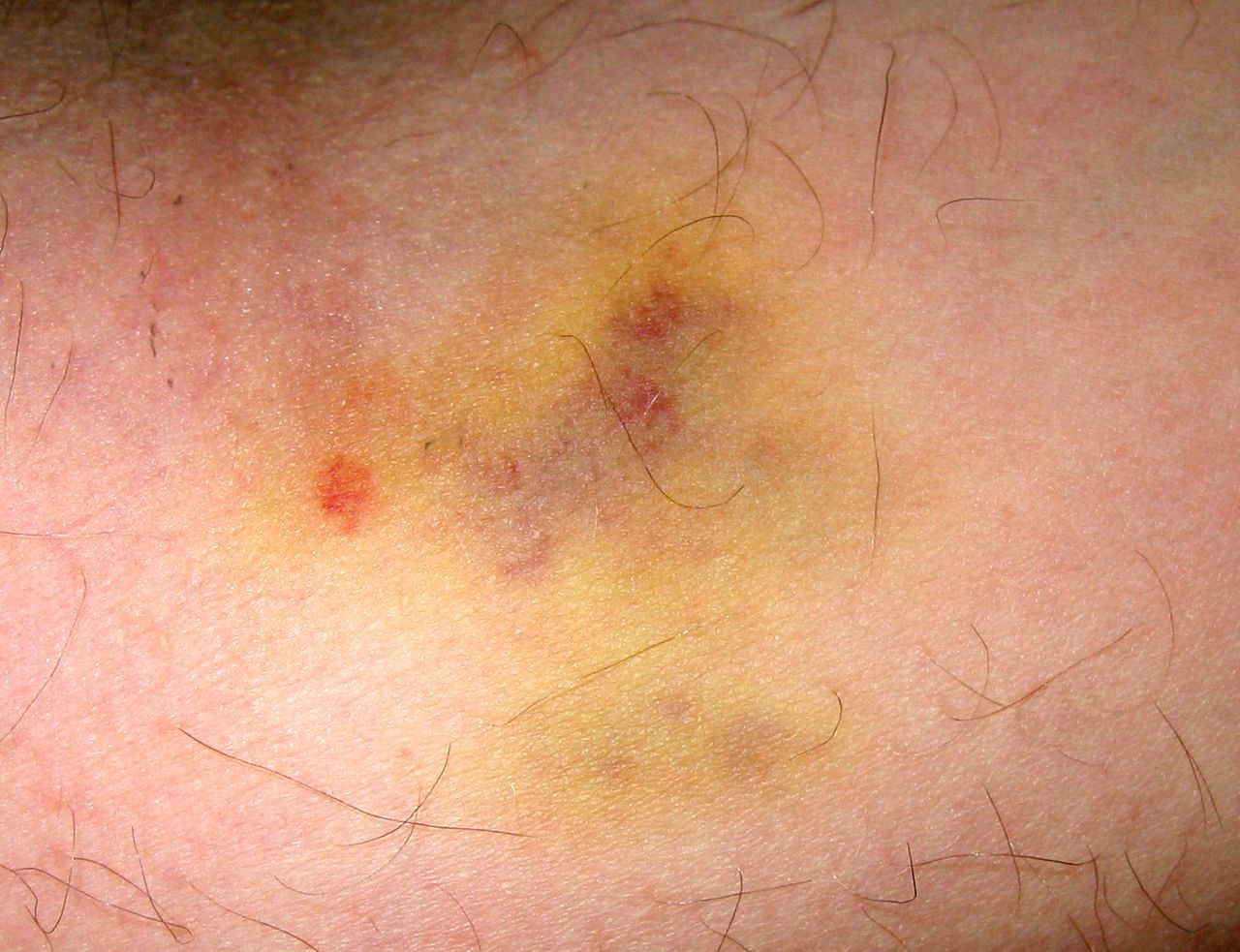
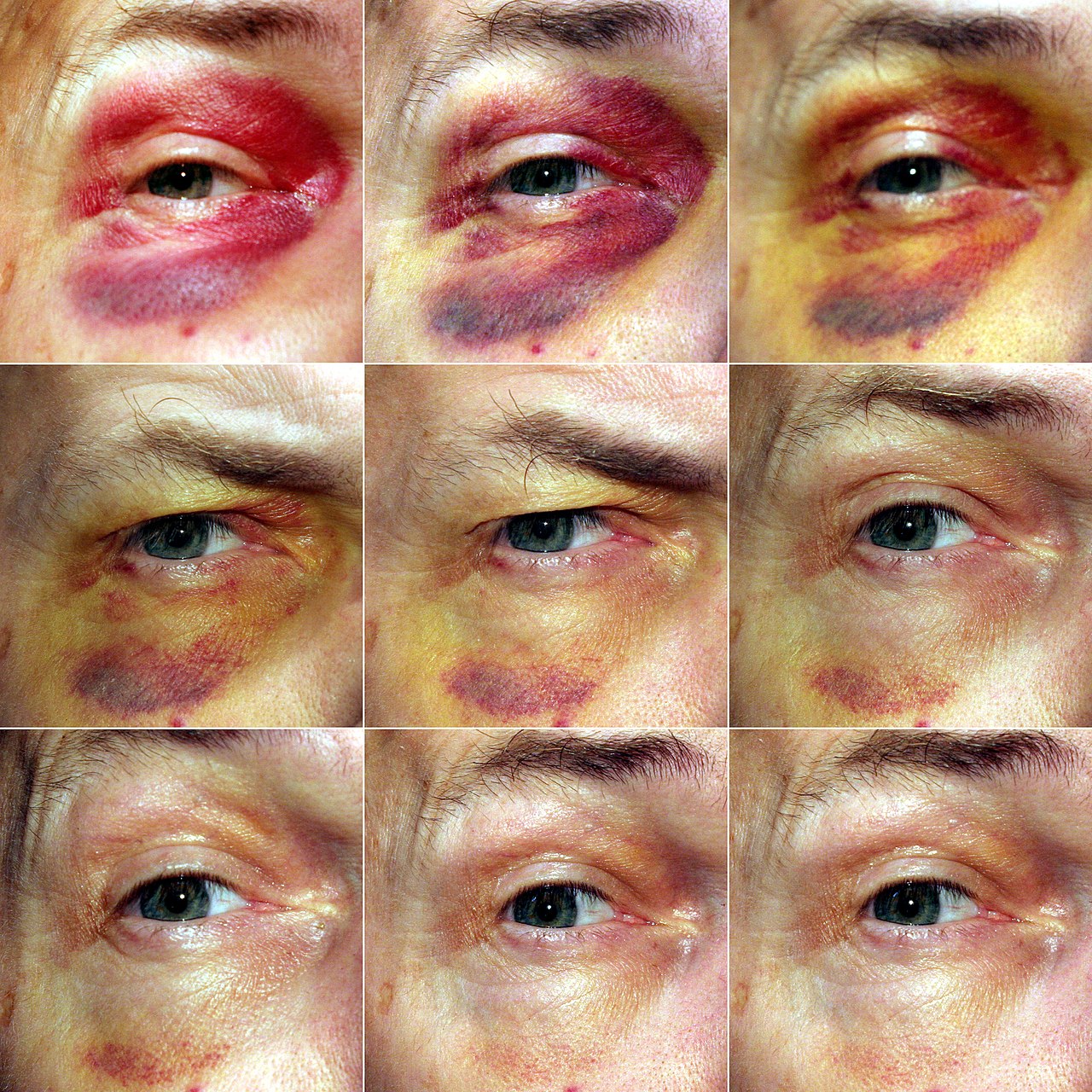


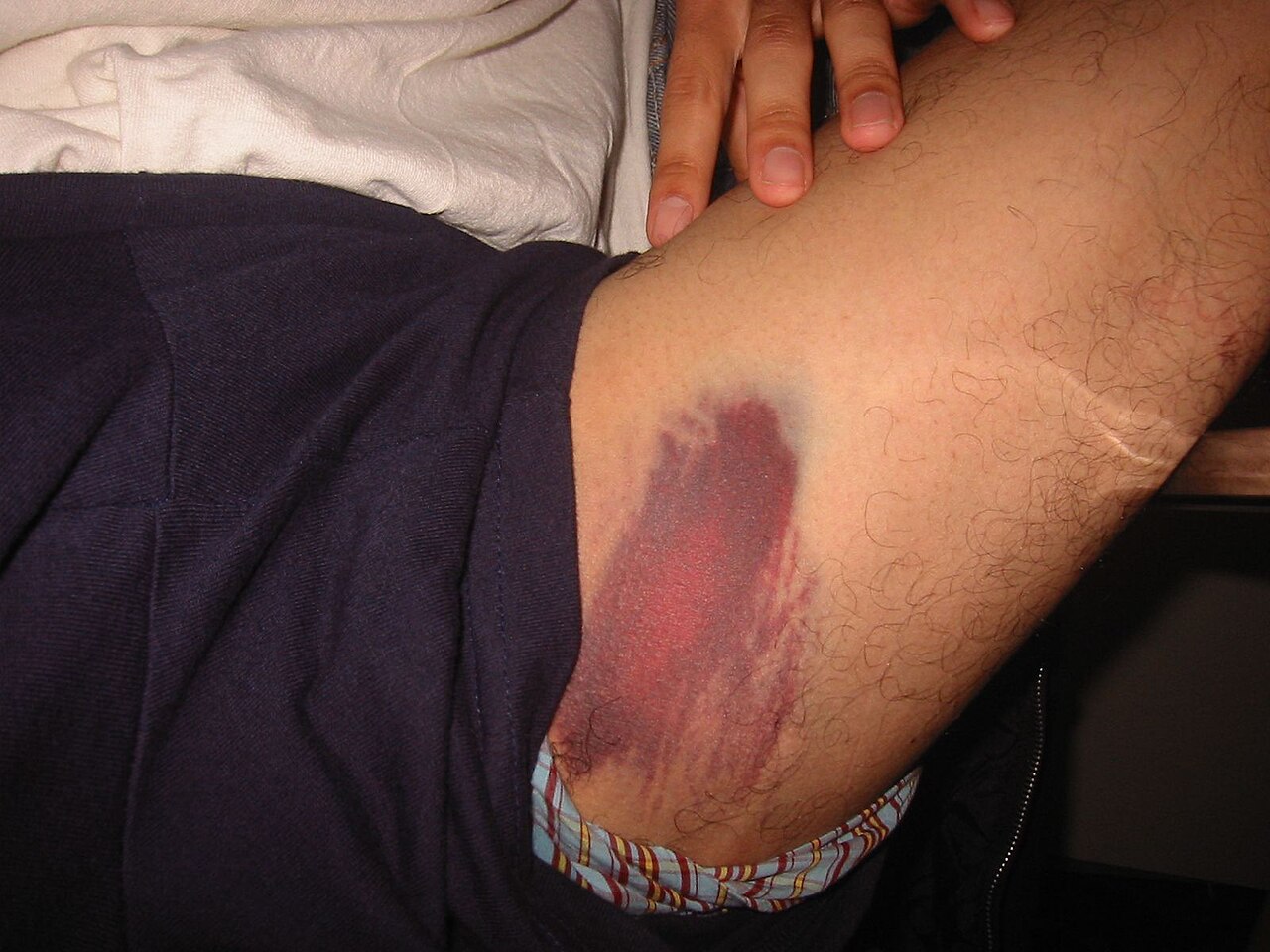


Causes and mechanism
Most bruises result from blunt force or pressure that damages capillaries and allows red blood cells to collect in surrounding tissues. The visible color changes reflect chemical breakdown of hemoglobin into bilirubin and hemosiderin. Common causes include falls, impacts during sports, bumping into objects, or pinching. Certain medications (for example anticoagulants and some antiplatelet drugs), bleeding disorders, and thinning skin with age increase susceptibility. Bruises may also appear after medical procedures or without obvious trauma in older adults.
Symptoms and warning signs
- Pain, tenderness, and localized swelling around the area—pain often accompanies the discoloration; see pain management approaches.
- Color progression: red → blue/purple → green → yellow → fading over days to weeks.
- Warning signs that warrant medical attention: rapidly expanding or very painful swelling, bruises after minimal or unknown trauma, bruises accompanied by bleeding from other sites, recurring unexplained bruising, or symptoms suggesting internal injury (dizziness, fainting).
- Bruises near the head, eye, abdomen, or over a joint may indicate a more serious injury such as an underlying fracture or internal bleeding—investigate further if suspected associated injuries.
Diagnosis and related terms
Health professionals usually diagnose bruises by clinical examination and patient history. Distinctions to note: petechiae are tiny pinpoint spots caused by capillary bleeding, purpura are larger patches, and ecchymoses are broad areas of bleeding beneath the skin. A hematoma is a collection of pooled blood that may feel raised. If a deeper injury is suspected, imaging (X-ray, ultrasound, CT) or blood tests for clotting may be ordered.
Treatment, first aid and prevention
Most bruises heal without medical treatment. Initial first aid often follows the RICE approach: Rest, Ice (apply cold for short intervals during the first 24–48 hours), Compression (if appropriate), and Elevation to reduce swelling. After the first couple of days, gentle heat can promote circulation and resolution. For pain, acetaminophen is commonly recommended; nonsteroidal anti-inflammatory drugs and aspirin may increase bleeding risk for some people and should be used with caution if bleeding tendency or anticoagulant use is present. Preventive measures include protective clothing during activities, careful medication review, and fall-prevention strategies for older adults.
Prognosis and notable facts: Bruises typically fade over one to three weeks as the body clears the pooled blood. In elderly people and those on blood-thinning medicines, bruises can be larger and take longer to resolve. Recurrent unexplained bruising, unusually large bruises, or bruises with systemic symptoms merit evaluation to exclude clotting disorders, platelet abnormalities, or other underlying conditions.
For additional general guidance and illustrations, consult trusted medical resources or speak with a healthcare professional. External resources: color guide, visual examples, pain and care, injury assessment.
Questions and answers
Q: What is a bruise?
A: A bruise, also called a contusion or an ecchymosis, is a visible bluish or purplish mark or patch appearing beneath the surface of the skin, resulting from blood that leaked out of the deeper layers of the tissues.
Q: What causes bruises?
A: Bruises are usually caused by a blow or pressure. In older people, bruises may also occur without a special reason.
Q: Do bruises cause pain?
A: Yes, bruises often cause pain but are normally not dangerous.
Q: Can bruises be serious?
A: Yes, sometimes bruises can be serious and lead to other more life-threatening forms of hematoma, or they can be associated with serious injuries such as fractures and internal bleeding.
Q: How can minor bruises be recognized in people with light skin color?
A: Minor bruises may be easily recognized in people with light skin color by their characteristic blue or purple appearance (idiomatically described as "black and blue") in the days following the injury.
Q: Are there any other names for a bruise?
A: Yes, other names for a bruise include contusion and ecchymosis.
Related articles
Author
AlegsaOnline.com Bruise (contusion, ecchymosis): causes, symptoms, diagnosis and care Leandro Alegsa
URL: https://en.alegsaonline.com/art/14860
Sources
- kidshealth.org : "Bruises"
- britannica.com : "bruise (pathology) -- Britannica Online Encyclopedia"
- webmd.com : "WebMD article on bruising"