
W. D. Hamilton — kin selection, inclusive fitness, and evolutionary theory
English evolutionary biologist W. D. Hamilton developed kin selection and inclusive fitness theory, formulated Hamilton's rule, and shaped modern thinking on altruism, sex ratios, and the gene-centered view of evolution.
William Donald (W. D.) Hamilton (1 August 1936 – 7 March 2000) was an English evolutionary biologist whose theoretical work transformed how scientists understand social behaviour and the genetics of cooperation. He is best known for formulating the genetic logic of kin selection and inclusive fitness, ideas that explain why organisms sometimes perform acts that benefit relatives at a cost to themselves. His contributions helped establish the gene-centered perspective on evolution and influenced later popular and scientific syntheses such as the work of Richard Dawkins and E. O. Wilson. For a concise overview of his life and work see biographical notes.
Image gallery
1 Image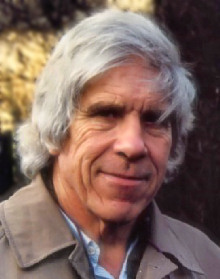
Core ideas and major contributions
Hamilton's central insight was that natural selection can favour genes that promote behaviours beneficial to related individuals because relatives share genes. This principle is often summarized by Hamilton's rule, commonly written as rb > c, where r is genetic relatedness, b is the benefit to the recipient, and c is the cost to the actor. Hamilton articulated these concepts in influential papers during the 1960s that remain foundational in evolutionary biology. For primary sources and classic papers, consult collections of scientific papers.
- Kin selection and inclusive fitness: formalizes how genes for altruistic behaviour can spread if they increase the reproductive success of relatives.
- Altruism and social behaviour: provided a quantitative framework for interpreting cooperation, alarm-calling, and eusociality in insects.
- Sex ratios and evolution of sex: developed models explaining biased sex ratios and contributed to debates about why sexual reproduction persists.
- Gene-centred view: supported the perspective that selection acts on genes rather than on individuals or species, influencing later synthesis works like popular treatments.
Development, context, and reception
Hamilton published his landmark papers in the 1960s; they initially provoked debate because they reframed social traits in genetic terms rather than purely behavioural or ecological ones. Over subsequent decades his ideas were refined, extended, and tested empirically across animals and plants. His theories became central to the field of sociobiology and stimulated work on inclusive fitness models and comparative studies in natural populations. For historical context and critical analysis see historical reviews.
Some debates about the generality and application of inclusive fitness persist, and modern researchers continue to discuss the best mathematical and empirical formulations. Nevertheless, Hamilton's framework provides a unifying language for diverse phenomena—from cooperative breeding birds to sterile worker castes in social insects—and remains a standard component of evolutionary theory. Introductory and advanced treatments can be found through educational resources such as teaching materials and review articles.
Career, honours, and legacy
Hamilton held academic positions in the United Kingdom and spent his later years as a Royal Society Research Professor at the University of Oxford from 1984 until his death in 2000. He was widely recognized by peers and influenced multiple generations of biologists. His work also crossed into philosophy of biology and public science discussion, shaping how scientists and the public think about the evolution of cooperation. For information on his career and awards see career summaries and institutional pages.
Hamilton continued to publish on diverse topics, including sex-ratio theory and the evolution of sex, where he explored conditions that favour particular allocation of reproductive effort between male and female offspring. His arguments on sex ratios helped explain empirical patterns observed in insects and other organisms and are summarized in reviews and textbooks, for example academic summaries and specialist chapters.
W. D. Hamilton died in 2000 after contracting malaria while travelling in central Africa. His passing was widely noted in obituaries and retrospectives that emphasize both his technical achievements and the broad intellectual influence he exerted on evolutionary science. See contemporary remembrances at memorial articles and scholarly tributes at research archives and institutional obituaries.
Hamilton's theories remain central to ongoing research into social evolution. They continue to inform empirical studies, comparative analyses, and theoretical refinements, making him a pivotal figure in 20th-century biology whose ideas endure in contemporary evolutionary thought.
Questions and answers
Q: Who was William Donald Hamilton?
A: William Donald Hamilton was an English evolutionary biologist who is considered one of the greatest evolutionary theorists of the 20th century.
Q: What did Richard Dawkins say about him?
A: Richard Dawkins praised Hamilton as one of the greatest evolutionary theorists of the 20th century.
Q: What kind of work did he do?
A: Hamilton became famous through his theoretical work on kin selection and altruism, which he explained had a genetic basis. He also published important work on sex ratios and the evolution of sex.
Q: How did he influence E.O Wilson?
A: His work was a key part in forming Wilson's gene-centered view of evolution, and thus was a big influence on him.
Q: Where did he teach from 1984 to 2000?
A: From 1984 to his death in 2000, Hamilton was the Royal Society Research Professor at Oxford University.
Q: How did he die? A: He died from malaria contracted in the Democratic Republic of Congo.
Author
AlegsaOnline.com W. D. Hamilton — kin selection, inclusive fitness, and evolutionary theory Leandro Alegsa
URL: https://en.alegsaonline.com/art/147350