
Violet (color): properties, history, and cultural significance
Violet is a short-wavelength spectral color at the inner edge of the rainbow. This article explains its physical qualities, differences from purple, historical naming, pigments and common cultural uses.
Overview
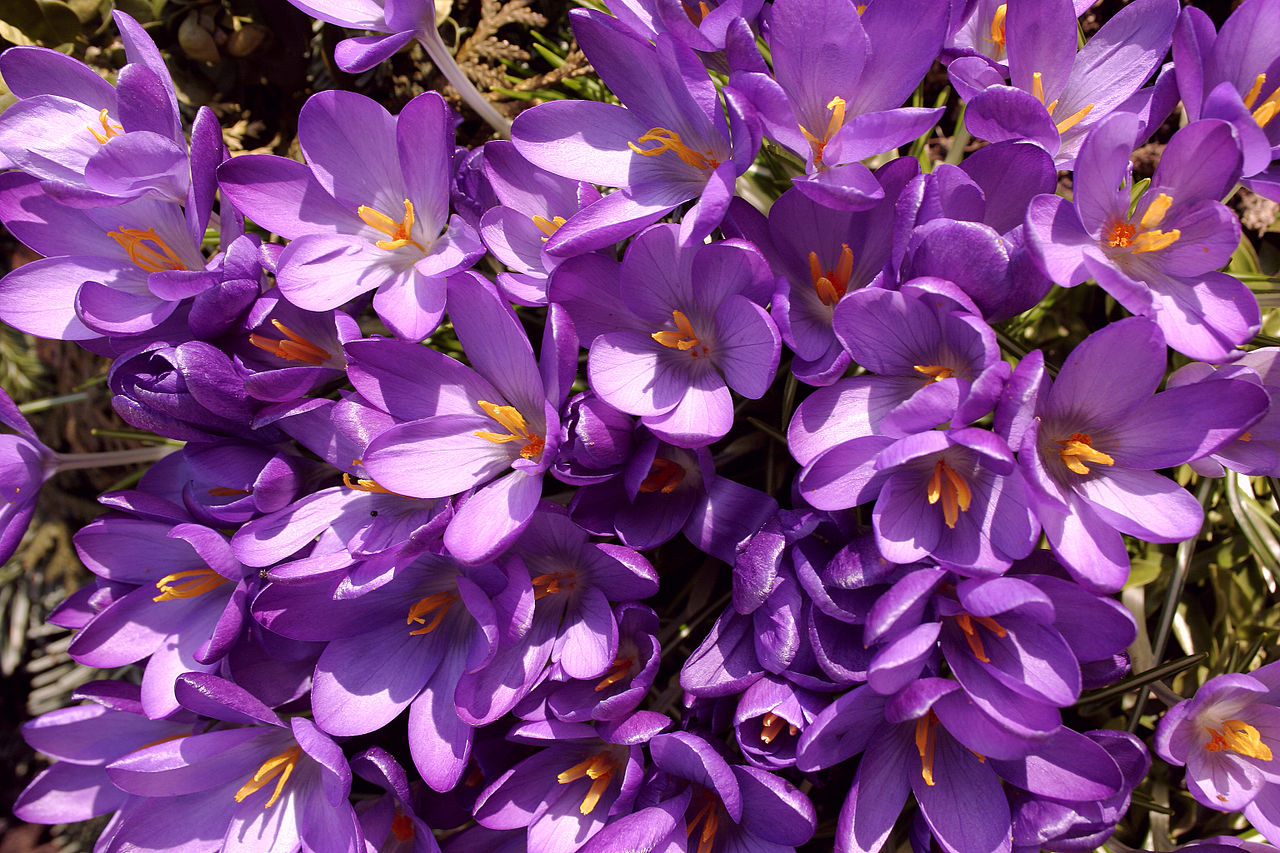
Violet is a spectral color seen at the short-wavelength end of visible light. It appears on the inner edge of a rainbow, next to blue and often distinguished from purple. The color takes its common English name from the violet flower, a compact plant cultivated in many regions of the world. Historically and in common usage, "violet" can refer either to the spectral hue itself or to a family of similar bluish–reddish shades.
Image gallery
10 Images




Physical characteristics
In optics, violet corresponds roughly to light wavelengths near the boundary with ultraviolet; it is commonly cited as approximately 380–450 nanometres. Because true spectral violet occupies the extreme of visible wavelengths, it has higher photon energy than blue or green light. On devices that reproduce color by mixing red, green and blue primaries, some spectral violets are difficult to match exactly and are instead approximated by combinations that the display gamut can produce.
Violet versus purple
The distinction between violet and purple is important in color theory: violet is a spectral color (a single wavelength), whereas purple is a non‑spectral mixture of red and blue light. In painting and design, purple may refer to a wide range of hues that appear similar to violet to the eye but have different spectral compositions.
History and naming
The word "violet" in English derives from Latin and the name of the flower. The plant and its color have been noted since antiquity for their delicate bluish tint. The earliest recorded use of "violet" as a color name in English dates back to 1370, reflecting long familiarity with both the blossom and the hue. Advances in chemistry during the 19th century produced synthetic dyes—most famously the discovery of mauveine—that broadened the availability of violet and related shades for textiles and printing.
Uses and cultural meanings
Violet appears frequently in art, fashion and decoration where it conveys associations of creativity, refinement and sometimes spirituality. It has been used in liturgical garments, ceremonial accents and modern branding. In horticulture and gardening, cultivated violet varieties are appreciated for their scent and compact flowers. Although cultural interpretations vary, violet often occupies a niche between the stability of blue and the intensity of red.
Notable facts and distinctions
- Spectral placement: violet lies at the inner rainbow edge, adjacent to indigo and blue (blue).
- Reproduction limits: some spectral violets cannot be exactly reproduced on standard RGB displays because they approach ultraviolet.
- Terminology: the same common name may refer to the flower (violet), a paint or dye shade, or the spectral hue; context matters.
- Historical note: the lexical use in English appears in the medieval period (see earliest attestation: 1370).
- Global cultivation: violet flowers are grown in many parts of the world and used ornamentally (flower).
For visual examples and practical color specifications in design or printing, consult color charts and device profiles appropriate to your medium; technical reproduction and naming conventions differ between industries and historical periods.
Questions and answers
Q: What is violet?
A: Violet is a color that is the seventh color of the rainbow.
Q: Where is violet in the rainbow?
A: Violet is on the inner edge of the rainbow.
Q: What colors is violet between?
A: Violet is between blue and purple.
Q: Why is it called violet?
A: It is called violet because it is named after the violet flower, which is grown in most parts of the world.
Q: When was the first written use of "violet" as a color name in English?
A: The first written use of "violet" as a color name in English was in 1370.
Q: Is violet a popular color?
A: Yes, violet is a popular color used in fashion, interior design, and art.
Q: What is the significance of violet in symbolism?
A: In Western culture, violet is often associated with royalty, luxury, and spirituality. In some Eastern cultures, it is associated with mourning.
Author
AlegsaOnline.com Violet (color): properties, history, and cultural significance Leandro Alegsa
URL: https://en.alegsaonline.com/art/147314