
United States Marshals Service
Federal law enforcement agency that supports the federal judiciary, apprehends fugitives, transports prisoners, runs witness protection, and manages asset forfeiture for U.S. courts.
The United States Marshals Service (USMS) is the federal law enforcement arm charged with supporting the work and safety of the federal judiciary. Created by the Judiciary Act of 1789, it is one of the oldest federal law enforcement agencies and operates to ensure that courts can function securely and that judicial orders are enforced. The Service works directly with federal courts and court personnel nationwide.
Image gallery
10 Images







Primary duties
- Judicial security: Protecting judges, jurors and court staff, and securing federal courthouses; the Service provides protective details for threatened judicial officers such as judges.
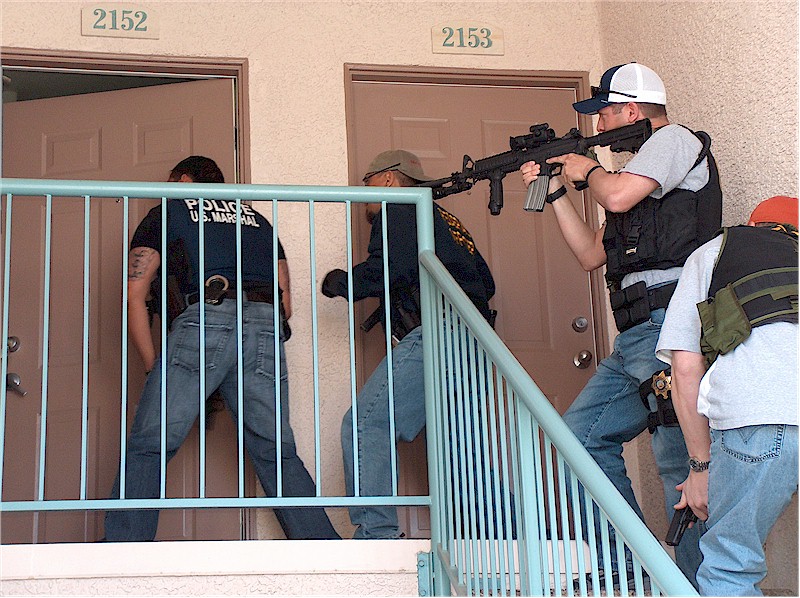
- Fugitive operations: Locating and apprehending fugitives sought on federal and often state warrants; marshals specialize in tracking and arresting individuals wanted by the justice system.
- Process and arrests: Serving subpoenas, civil process and executing arrest procedures as required by federal law, including serving warrants.
- Prisoner transport: Managing secure movement of persons in federal custody and overseeing the logistics of detention transport across districts.
- Witness protection: Operating the Witness Security Program (WITSEC), which protects vulnerable witnesses and their families when their safety is at risk.
- Asset forfeiture and court order enforcement: Seizing assets tied to criminal activity and enforcing court judgments.
USMS organization is district-based, with marshals assigned to the federal judicial districts that cover the United States. The Service maintains specialized units for fugitive pursuit, tactical operations, and coordination of long-distance prisoner movement. It often works alongside other federal agencies when investigations or operations overlap with broader national priorities handled by organizations such as the FBI, including cases that touch on organized crime or national security concerns.
History and development
Since its establishment in the late 18th century, the Marshals Service has adapted from serving writs and supporting the early federal court system to running complex national programs. Over time its responsibilities expanded to include formal witness protection, centralized prisoner transportation, and coordinated fugitive task forces that combine federal, state and local resources.
The Service is distinctive for its close connection to the federal courts and for roles that emphasize custody, security and enforcement of court orders rather than broad investigative mandates. That division of labor helps clarify when the U.S. Marshals will lead an operation and when investigative agencies will take primary responsibility.
Because much of its work is operational—ensuring people, evidence and court proceedings are safe and enforceable—the USMS is an essential but often less-publicly visible component of the federal justice system. Its duties keep courtroom functions secure, bring fugitives to justice, protect witnesses whose testimony is critical to prosecutions, and enforce the physical orders of the courts.
For more information about specific programs, procedures and local field offices, see official resources and the Service's public materials. Federal court procedures, protection details for judges, processes for serving arrest documents, and the execution of warrants are regularly coordinated through the Marshals, often in cooperation with agencies such as the FBI on matters like investigations into organized crime.
Questions and answers
Q: What does the U.S. Marshals Service do?
A: The U.S. Marshals Service does law enforcement for federal courts.
Q: Who does the U.S. Marshals Service protect in court buildings?
A: The U.S. Marshals Service is mainly responsible for protecting court officers like judges in court buildings.
Q: What is the U.S. Marshals Services' responsibility regarding fugitives?
A: The U.S. Marshals Service is responsible for finding fugitives.
Q: What is the responsibility of the U.S. Marshals Service for serving arrest warrants?
A: The U.S. Marshals Service is responsible for serving arrest warrants.
Q: How is the U.S. Marshals Service different from the FBI?
A: The U.S. Marshals Service is different from the FBI which is responsible for things like counter-terrorism and going after organized crime.
Q: In how many countries does the FBI operate?
A: The FBI operates in multiple countries, not just the USA.
Q: What is the U.S. Marshals Service's responsibility regarding prisoner transport?
A: The U.S. Marshals Service is responsible for prisoner transport.
Author
AlegsaOnline.com United States Marshals Service Leandro Alegsa
URL: https://en.alegsaonline.com/art/147104