
Three for the Show (1955) — American musical film
1955 Technicolor musical comedy directed by H. C. Potter, starring Betty Grable and Jack Lemmon; a stage-play adaptation featuring song-and-dance numbers and Golden Age Hollywood choreography.
Overview
Three for the Show is a 1955 American musical film directed by H. C. Potter. Produced and released during the studio-era peak of Hollywood musicals, it adapts W. Somerset Maugham's 1919 play Home and Beauty into a cinematic, song-filled comedy. The picture is best known for its star Betty Grable and for including one of the early screen appearances by Jack Lemmon.
Image gallery
1 Image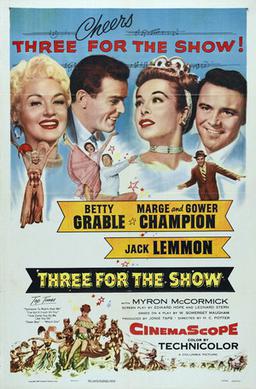
Cast and production
The main cast features Betty Grable, Jack Lemmon, dancers and performers Gower Champion and Marge Champion, and character actor Myron McCormick. The film was distributed by Columbia Pictures and produced in the mid-1950s studio system, employing the era's color processes and musical production values. Choreography and elaborate dance staging reflect the Champions' dance background and Hollywood's appetite for spectacle.
Plot and themes
Rather than a straight transfer of Maugham's stage comedy, the film reshapes the original material into a light romantic musical. It centers on romantic complications and misunderstandings common to mid-century musical comedies, playing up theatrical performances, mistaken identities and comic rivalry. Themes include love, social expectation, and the contrast between private lives and public performance—elements that translated from stage to screen with an emphasis on entertainment over dramatic realism.
Musical style and choreography
The picture showcases large musical numbers typical of the period: ensemble routines, partner dances, and show-stopping sequences designed for Technicolor presentation. While specific song titles are less frequently cited than the film's production values, the movie emphasizes dance-driven set pieces and the comic talents of its leads. The presence of established dancers in the cast influenced the staging and movement-focused sequences.
Reception and legacy
Upon release, Three for the Show entered a crowded market of postwar musicals. Critical responses varied: some reviewers appreciated the performers and choreography, while others found the adaptation lightweight compared with Maugham's original play. The film is often remembered today for its cast associations—showcasing a major musical star of the 1940s and one of Jack Lemmon's early screen roles—and as an example of how midcentury studios converted stage works into colorful, dance-oriented films.
Notable distinctions
- Adaptation: based on a 1919 play by W. Somerset Maugham, reworked into a musical-comedy format.
- Cast: pairs a veteran musical star with emerging screen talent and established professional dancers.
- Studio context: reflects 1950s studio production values and the era's preference for Technicolor spectacle.
For further information on performers and production details, consult filmographies and studio records that document midcentury Hollywood musicals and stage-to-screen adaptations.
Author
AlegsaOnline.com Three for the Show (1955) — American musical film Leandro Alegsa
URL: https://en.alegsaonline.com/art/146745