
The Notorious B.I.G. (Biggie Smalls) — Life, Music, and Legacy
Encyclopedic overview of Christopher 'The Notorious B.I.G.' Wallace: his Brooklyn upbringing, rise to fame with Ready to Die, role in 1990s hip hop, unsolved death, and lasting cultural influence.
Christopher George Latore Wallace (May 21, 1972 – March 9, 1997), known professionally as The Notorious B.I.G. or Biggie Smalls, was an American rapper and songwriter whose vocal tone, rhythmic flow, and storytelling reshaped mainstream hip hop in the 1990s. Born and raised in Brooklyn, his work mixed personal narrative with cinematic depictions of street life, ambition, and the costs of sudden fame.
Image gallery
9 Images

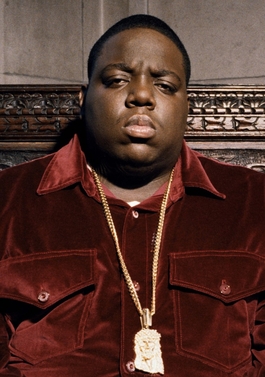



Early life and background
Wallace grew up in the Bedford–Stuyvesant area of Brooklyn, and his childhood and adolescence in that neighborhood informed much of his material. Accounts of his early years describe a youth marked by close family ties, early interest in music, and local performances. He began recording demo tapes and freestyling at local shows, gradually attracting attention from producers and record executives who recognized his voice and lyrical detail. His connections to Bedford–Stuyvesant and the wider cultural fabric of the borough figure prominently in discussions of his artistic identity and public persona within New York City.
Career and breakthrough
Biggie's commercial breakthrough came with his debut album, Ready to Die (1994), which combined vivid autobiographical songs with radio-ready singles. The album established him as a leading voice of the East Coast scene and introduced elements—such as measured cadence, layered storytelling, and dark humor—that became hallmarks of his style. He signed to a prominent New York label and collaborated with well-known producers and fellow artists, which expanded his profile nationally.
Artistic style and themes
Wallace's lyrics are noted for narrative clarity, character-driven vignettes, and a commanding delivery that emphasized rhythm and internal rhyme. He blended street-level subject matter with reflections on success, vulnerability, and mortality. Producers often matched his verses with mid-tempo, sample-based beats that highlighted his phrasing and the drama of his narratives. His technique influenced later generations of rappers who adopted similar storytelling approaches.
Second album and posthumous releases
At the time of his death, Wallace was completing a second album. That project, released shortly after his death, broadened his musical palette and featured more expansive production and guest artists. Posthumous releases, compilations, and reissues have kept his catalog in circulation and contributed to continuing assessment of his place in popular music history.
East Coast–West Coast tensions
In the mid-1990s, a high-profile rivalry developed between artists and labels associated with opposite U.S. coasts. Wallace became identified with the East Coast side of that divide, and public disputes involving some West Coast figures became a major element of media coverage. The feud is frequently discussed in connection with the 1996 death of rapper Tupac Shakur, an event that, together with Wallace's own murder, has remained a focal point for commentary about violence, media, and the music industry.
Death and investigations
On March 9, 1997, Wallace was fatally shot in a drive-by shooting in Los Angeles. He was 24 years old. His killing has been the subject of multiple investigations, journalistic inquiries, and public speculation. No criminal conviction has fully resolved the case, and the circumstances continue to be discussed in relation to policing, entertainment industry dynamics, and the broader cultural moment. For ongoing coverage of legal and historical aspects, see work linked to official investigations and long-form reporting.
Legacy and cultural influence
Wallace is widely regarded as a formative figure in modern hip hop. Critics and artists cite his phrasing, narrative depth, and ability to balance commercial appeal with lyrical complexity. His influence extends to production styles, vocal delivery, and the ways later rappers approached autobiographical material. He is frequently referenced in histories of East Coast hip hop and 1990s popular music, and his recordings continue to be reissued, sampled, and studied.
- Noted albums: Ready to Die; a second album released around the time of his death.
- Artistic hallmarks: narrative lyricism, distinctive cadence, and cinematic storytelling.
- Cultural discussion: his life and death are commonly examined in studies of music industry practices, media representation, and urban cultural history.
Further reading and resources
Authoritative resources on Wallace include contemporary music journalism, documentary reporting, and retrospective analyses that place his work in the context of 1990s hip hop and American popular culture. Archives of interviews, album liner notes, and artist profiles offer additional insight into his creative process and public reception. For structured exploration, consult label histories, cultural studies of Brooklyn, and timelines of the mid-1990s music scene.
Related topics for study include the development of East Coast hip hop, the social geography of New York City, and the interplay of music, media, and urban life in late 20th-century America. Further materials and curated collections may be found through music libraries, academic surveys, and documentary series that examine the era and its principal figures.
Questions and answers
Q: What was the real name of The Notorious B.I.G.?
A: His real name was Christopher George Latore Wallace.
Q: Where did The Notorious B.I.G grow up?
A: He grew up in Brooklyn, New York City.
Q: When did The Notorious B.I.G die?
A: He died on March 9, 1997 at age 24 in Los Angeles, California.
Q: What year was his first album released?
A: His first album Ready to Die was released in 1994.
Q: How old was he when he died?
A: He was 24 years old when he died in 1997.
Q: Who is considered by many music enthusiasts to be one of the greatest rappers of all time?
A: The Notorious B.I.G is considered by many music enthusiasts to be one of the greatest rappers of all time.
Q: What feud did Wallace become heavily involved with while recording his second album?
A: Wallace became heavily involved with the East Coast/West Coast hip hop feud while recording his second album, which record companies from both sides of the United States fostered between New York-based and California-based artists
Author
AlegsaOnline.com The Notorious B.I.G. (Biggie Smalls) — Life, Music, and Legacy Leandro Alegsa
URL: https://en.alegsaonline.com/art/146654