
The Legend of Korra
An animated follow-up to Avatar: The Last Airbender, The Legend of Korra follows Korra, the next Avatar, through political turmoil, spiritual growth, and social change in a modernizing world.
The Legend of Korra is an American animated series created as a sequel to Avatar: The Last Airbender. It centers on Korra, a young woman from the Southern Water Tribe who is the current incarnation of the Avatar — the person able to bend all four classical elements and tasked with maintaining balance. The series was produced for Nickelodeon and is set several decades after the events of its predecessor in a more industrial and cosmopolitan era.
Image gallery
10 Images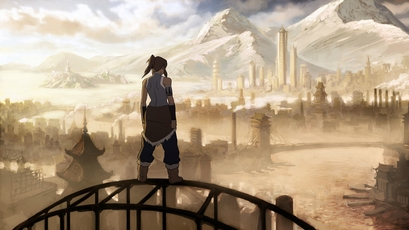


Setting and characters
The story is primarily located in Republic City, a sprawling, multicultural metropolis where benders and non-benders coexist and where rapid technological development and urbanization have reshaped social life. Korra is supported by a small circle of allies including benders Mako and Bolin, the engineer and friend Asami Sato, and the airbending master Tenzin, who represents the previous Avatar generation. Villains and antagonists vary across the show’s serialized story arcs, often reflecting the era’s political and social tensions.
Structure and major arcs
The programme is divided into four labeled seasons (or "Books"), each focusing on a central theme such as ideological conflict, spiritual matters, societal change, and reconciliation. Episodes combine martial-arts influenced action choreography with serialized storytelling that explores both external conflicts and Korra’s inner development.
Themes, style and production
The series is known for blending elements of fantasy, early 20th-century design, and social commentary. It treats topics such as authoritarianism, social inequality, radicalism, and identity with greater tonal complexity than many children’s shows. Animators and writers emphasized dynamic fight animation, detailed backgrounds, and a soundtrack that mixes traditional and modern influences. The show’s creators sought to expand the franchise’s scope by introducing a more modern setting and mature themes.
Reception and legacy
Critics and audiences praised the series for its animation quality, character development, and willingness to address political and emotional issues. It is also noted for advancing representation in animated television, particularly in its final episodes where the protagonist’s personal relationships were portrayed with nuance. The show has sustained a dedicated fanbase and contributed to ongoing discussions about storytelling, genre blending, and inclusivity in animation.
- Notable elements: strong female lead, urban fantasy setting, mature themes.
- Related work: serves as a sequel to the original Avatar series.
- Useful for: studies of modern animation, youth media, and representation.
Questions and answers
Q: What is The Legend of Korra?
A: The Legend of Korra is an American animated television series aired on Nickelodeon.
Q: Who is the main character of The Legend of Korra?
A: The main character of The Legend of Korra is an eponymous female Avatar and a native to the water tribe.
Q: What is Republic City?
A: Republic City is a place where people of all nations, benders and non-benders, live together.
Q: Where is The Legend of Korra set?
A: The Legend of Korra is set in Republic City.
Q: What challenges do the characters face in The Legend of Korra?
A: The characters in The Legend of Korra face challenges such as crime and an anti-bender revolt in Republic City.
Q: How is The Legend of Korra different from its predecessor, Avatar: The Last Airbender?
A: Unlike Avatar: The Last Airbender, The Legend of Korra is set in Republic City and explores more mature themes.
Q: What is the main goal of the main character in The Legend of Korra?
A: The main goal of the main character in The Legend of Korra is to bring peace to the world during the cycle.
Author
AlegsaOnline.com The Legend of Korra Leandro Alegsa
URL: https://en.alegsaonline.com/art/146631