
The Green Book — Muammar Gaddafi's political tract
A concise overview of The Green Book, Muammar Gaddafi's 1975 statement of the Third Universal Theory, its structure, themes, historical role in Libya, and international reception.
The Green Book is a short political treatise authored by Libyan leader Muammar al-Gaddafi and first published in 1975. Written as a statement of what Gaddafi called the "Third Universal Theory," the book sets out an alternative to both Western parliamentary democracy and Soviet-style communism. It served as the ideological foundation for Libya's official political system under Gaddafi and was widely promoted inside the country and translated into other languages.
Image gallery
5 Images

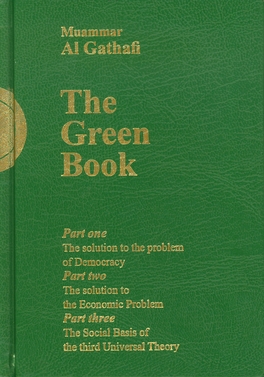


Structure and main themes
The work is divided into three parts that address governance, economics, and social life. Those parts are commonly titled:
- The solution of the problem of democracy: the authority of the people
- The solution of the economic problem: socialism
- The social basis of the Third Universal Theory
Key themes include a rejection of representative political parties and parliamentary institutions in favor of direct popular rule through local committees and congresses; an emphasis on collective or social ownership of production; and prescriptions about family, education and social relations. Supporters regarded the book as a blueprint for a participatory polity; critics saw many of its proposals as vague or utopian.
Historical context and implementation
Gaddafi wrote The Green Book during the early years of his rule following the 1969 coup in Libya. It was presented as a new ideological alternative and became required reading in Libyan schools and institutions. The concepts were put into practice through the so-called "Jamahiriya" institutions — a system of people's committees and congresses that Gaddafi described as direct democracy. In practice, power remained highly centralized and Gaddafi retained ultimate control.
Reception and legacy
The Green Book attracted attention both inside Libya and abroad. Some activists and intellectuals found parts of its critique of representative politics thought-provoking, while many scholars and human rights groups criticized the regime's authoritarian practices and the disparity between the book's rhetorical advocacy of popular rule and the realities of governance. Translations and abridged editions circulated internationally, and the title is often invoked when discussing modern experiments in political ideology.
Further reading and references
For the original Arabic name see al-Kitāb al-Akhḍar. Biographical context on the author is available via Muammar al-Gaddafi, and background on the state he led is discussed in sources about Libya. The book is commonly described as expressing a social and political philosophy that Gaddafi labeled the Third Universal Theory.
Notable facts include the book's prominent role in Libyan public life under Gaddafi, its characteristic green cover and symbolic color, and the continued debate over its ideas versus the political realities experienced by Libyans during his rule.
Questions and answers
Q: Who wrote The Green Book?
A: The Green Book was written by Muammar al-Gaddafi.
Q: What is The Green Book about?
A: The Green Book explains Muammar al-Gaddafi's social and political philosophy.
Q: Why did Muammar al-Gaddafi want everyone to read The Green Book?
A: Muammar al-Gaddafi believed that his philosophy outlined in The Green Book could make the world a better place.
Q: When was The Green Book first published?
A: The Green Book was first published in 1975.
Q: What language was The Green Book originally written in?
A: The Green Book was originally written in Arabic.
Q: What was Muammar al-Gaddafi's occupation before writing The Green Book?
A: Muammar al-Gaddafi was the leader of Libya before writing The Green Book.
Q: What happened in 2011 in relation to Muammar al-Gaddafi?
A: Muammar al-Gaddafi was no longer the leader of Libya in 2011.
Author
AlegsaOnline.com The Green Book — Muammar Gaddafi's political tract Leandro Alegsa
URL: https://en.alegsaonline.com/art/146614