
The Breach (1970 film)
A 1970 French-Italian-Belgian psychological thriller directed by Claude Chabrol, adapted from Charlotte Armstrong's novel The Balloon Man; notable for its ensemble cast and Chabrol's exploration of domestic suspense.
Overview
The Breach is a 1970 psychological thriller directed by Claude Chabrol. Presented as a European co-production, the film adapts elements of Charlotte Armstrong's novel The Balloon Man and relocates its themes into Chabrol's recurring interest in domestic tension, social manners and slow-building suspense. The director also appears on screen in a small role.
Image gallery
1 Image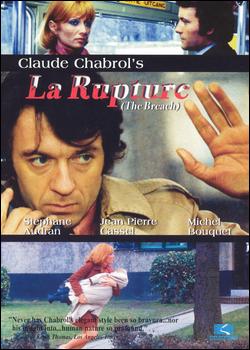
Plot and Genre
While avoiding a full plot summary that could spoil the film, The Breach unfolds as a study of paranoia and fraying relationships. It uses thriller conventions — suspicion, moral ambiguity, hidden motives — to create pressure within ordinary settings. The narrative focuses on personal conflicts that escalate into danger, a pattern common to psychological thrillers of the period.
Production and Adaptation
The screenplay derives from Charlotte Armstrong's novel The Balloon Man, though Chabrol's adaptation shifts emphasis to reflect his cinematic concerns and to suit a European cast and production context. Shot and produced in the late 1960s and released in 1970, the film reflects contemporary filmmaking practices in France, Italy and Belgium, combining location work with studio craftsmanship typical of Chabrol's films from that era.
Principal Cast
- Stéphane Audran — a frequent collaborator with Chabrol, noted for restrained but intense performances.
- Jean-Pierre Cassel — brings a blend of charm and unease that suits the film's tonal shifts.
- Michel Bouquet — provides a gravitas often used to ground Chabrol's moral dramas.
- Annie Cordy — a versatile performer whose presence broadens the film's emotional texture.
- Jean-Claude Drouot, Jean Carmet, Catherine Rouvel — supporting actors who contribute to the ensemble dynamic.
- Director Claude Chabrol also appears in the cast, a practice he occasionally adopted.
Style, Themes and Significance
Chabrol's approach in The Breach emphasizes measured pacing, careful composition and a focus on character psychology rather than rapid action. Themes include mistrust within families or couples, the collapse of social façades, and the moral complications that arise when ordinary people confront extraordinary pressures. The film is often discussed alongside Chabrol's wider body of work exploring bourgeois life and concealed violence.
Reception and Further Resources
Contemporary critical reaction ranged from praise for performances and atmosphere to debate over the film's pacing and fidelity to its literary source. Over time it has attracted interest from scholars and fans of European thrillers and Chabrol's oeuvre. For basic production details, credits and cast biographies consult related filmographies and archives; further reading and archival material can be found via referenced resources and catalogs. For more on the director and principal performers see the linked entries above.
Author
AlegsaOnline.com The Breach (1970 film) Leandro Alegsa
URL: https://en.alegsaonline.com/art/146575