
The Bitter Tears of Petra von Kant
1972 West German drama film by Rainer Werner Fassbinder, adapted from his play. A stylized chamber piece about love, power and dependency in an obsessive relationship, notable for its all-female principal cast.
Overview
The Bitter Tears of Petra von Kant (German: Die bitteren Tränen der Petra von Kant) is a 1972 West German drama film written and directed by Rainer Werner Fassbinder. Adapted by Fassbinder from his own stage play, the film is a tightly staged, dialogue-driven portrait of emotional possession and social performance, presented largely within the confined setting of a single apartment.
Image gallery
2 Images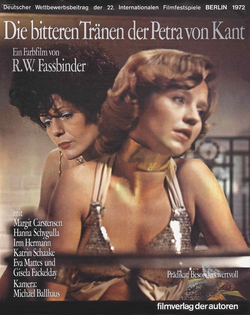

Plot and characters
The story follows Petra von Kant, a successful but emotionally needy fashion designer, whose life is dominated by her relationships with other women. When a younger woman enters Petra's household, an intense and imbalanced liaison develops, revealing patterns of control, adulation and abandonment. The film's drama grows from the shifting roles of lover, servant and confidante among the women who surround Petra.
Production and style
Fassbinder stages the film with theatrical economy: decorated interiors, mannequins and tightly composed interiors function as both set and psychological landscape. The camera work and lighting emphasize artificiality and performative behavior rather than naturalism. The principal cast is female, with Margit Carstensen in the leading role and supporting performances by Irm Hermann, Hanna Schygulla, Eva Mattes and others—actors who frequently collaborated with Fassbinder.
Themes and critical reception
Commonly discussed themes include the intersections of love, power and dependency, gendered roles within intimate relationships, and the costs of emotional possession. Critics have noted the film's melodramatic tone and its interrogation of bourgeois affect; it has been influential in queer cinema studies and remains a key work of the New German Cinema movement.
Legacy and notable facts
- Origin: adapted from Fassbinder's stage play, retaining a theatrical sense of space and performance.
- Cast: features an all-female principal ensemble, a deliberate artistic choice that focuses attention on interpersonal power dynamics.
- Distribution: the film reached international audiences through art-house distributors and screenings, helping to solidify Fassbinder's reputation abroad.
The Bitter Tears of Petra von Kant remains studied for its formal boldness and emotional intensity, and it continues to be shown and discussed in contexts of film history, gender studies and theatrical adaptation.
Author
AlegsaOnline.com The Bitter Tears of Petra von Kant Leandro Alegsa
URL: https://en.alegsaonline.com/art/146569