
Thừa Thiên Huế province — central Vietnam, heritage and landscape
Province in central Vietnam centered on the imperial city of Huế. Known for its UNESCO sites, royal history, coastal scenery, national park and cultural traditions.
Overview
Thừa Thiên Huế is a coastal province in central Vietnam whose administrative center is the city of Huế. The province combines an historic urban core with rural plains, forested highlands and a scenic shore. It is best known for its role as the seat of the Nguyễn dynasty and for a concentration of monuments and cultural traditions linked to Vietnam's imperial past.
Image gallery
10 Images




Geography and subdivisions
The landscape ranges from the coastal plain along the South China Sea to the foothills of the Annamite Range. A major river, commonly called the Perfume River, runs through the provincial capital and has shaped local settlement and culture. Administratively the province includes Huế city and several rural districts, with coastal bays and mountain forests important for biodiversity and scenic tourism.
History and heritage
Huế served as the imperial capital under the Nguyễn dynasty in the early nineteenth century, a legacy visible in palaces, royal tombs and ceremonial architecture. The Complex of Huế Monuments is a designated UNESCO World Heritage Site. The area also witnessed major events in modern history, including intense conflict during the Vietnam War, which affected its urban fabric and population.
Culture, tourism and notable sites
- Imperial City and royal tombs (examples include those of several emperors)
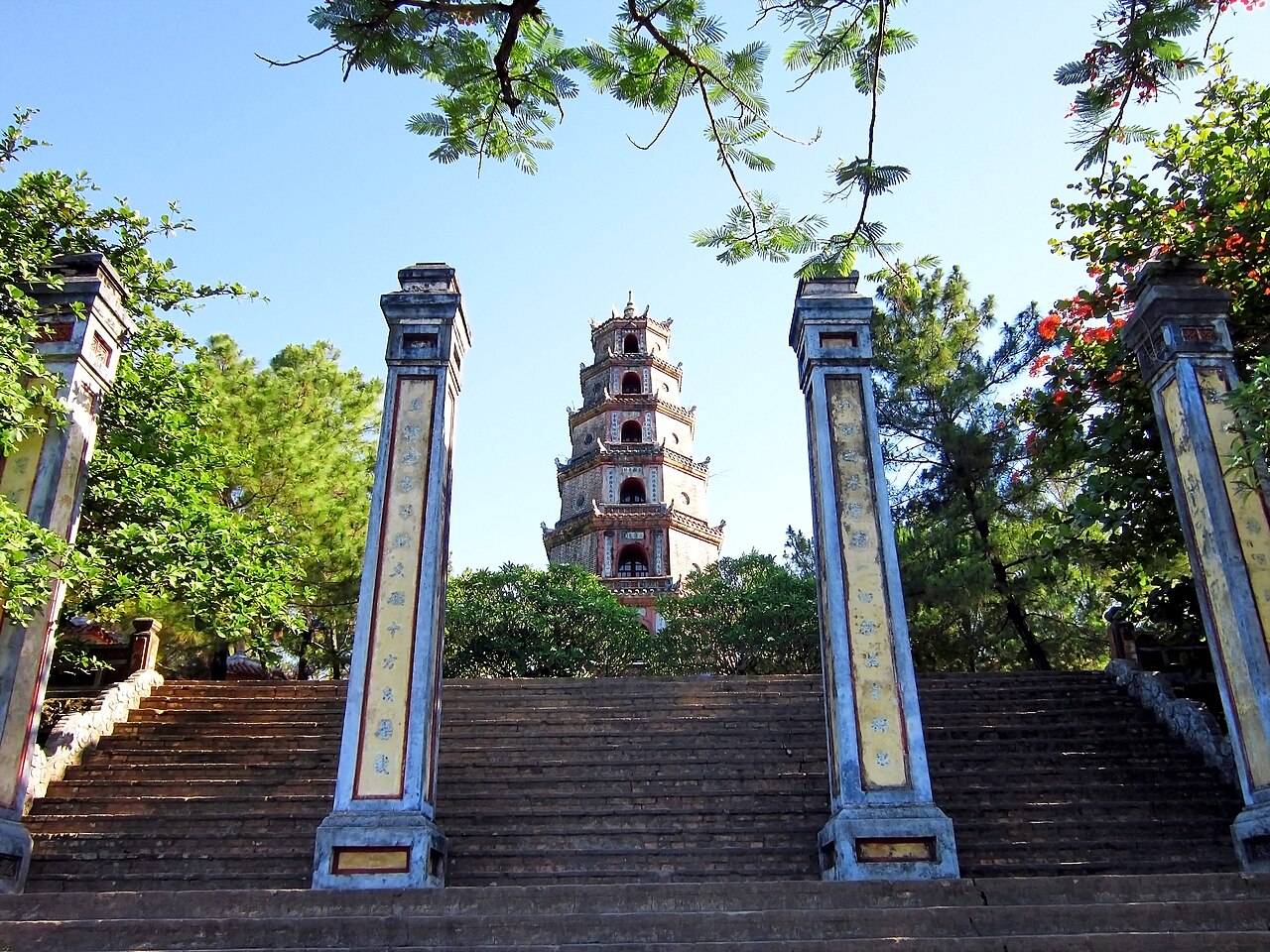
- Thien Mu Pagoda and the citadel precincts
- Traditional court music (Nhã nhạc) and royal cuisine; a biennial cultural festival draws visitors
- Natural attractions such as Bach Ma National Park and Lăng Cô Bay
Economy and infrastructure
The province's economy mixes tourism and services centered on Huế with agriculture, aquaculture and forestry in rural zones. Small industrial parks, a regional airport and road links connect the province to larger urban centers, supporting education and research institutions such as Hue University.
Distinctive facts
Thừa Thiên Huế is often highlighted for the density of preserved historical structures in a single provincial area, its living traditions of court art and cuisine, and the contrast between coastal scenery and mountainous forests. These features make it a focal point for heritage conservation and cultural tourism in Vietnam.
Author
AlegsaOnline.com Thừa Thiên Huế province — central Vietnam, heritage and landscape Leandro Alegsa
URL: https://en.alegsaonline.com/art/146541