
Super Mario Bros. (1985 video game)
Super Mario Bros., released by Nintendo in 1985 for the NES/Famicom, is a landmark side-scrolling platform game by Shigeru Miyamoto with music by Kōji Kondō; it shaped the platformer genre and popular culture.
Overview
Super Mario Bros. is a side-scrolling platform video game released by Nintendo in 1985 for the Famicom/Nintendo Entertainment System (NES). The player controls Mario — and in alternating two-player mode, his brother Luigi — as they travel through the Mushroom Kingdom to rescue Princess Toadstool (the character now known as Princess Peach) from the antagonist Bowser. The title expanded the concept first seen in the arcade and earlier console game Mario Bros. and established a clear, accessible game world with responsive controls and memorable themes. For a basic summary of the game, see a general game overview.
Image gallery
10 Images






Gameplay and design
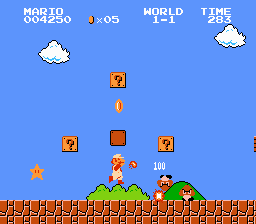
Gameplay proceeds from a side view: the player runs, jumps, and interacts with enemies and objects across linear but varied levels. Stages are grouped into themed worlds — such as overworld, underground, underwater and castle stages — each introducing hazards, enemies and platforming challenges. Core power-ups include the Super Mushroom, which increases size and resilience; the Fire Flower, which allows projectile attacks; and the Starman, which grants temporary invincibility. Hidden blocks, warp pipes and warp zones reward exploration and skillful play. A countdown timer limits each stage, adding pressure to progress while searching for secrets.
- Enemies range from Goombas and Koopa Troopas to later sub-bosses and castle guardians; many teach players how to react through simple, consistent behavior.
- Level design combines short, teachable encounters and longer challenges to guide player learning without explicit tutorials.
- Two-player mode lets players take alternating turns; Luigi typically mirrors Mario but is often presented with slightly different visual attributes.
Development and release
Directed by Shigeru Miyamoto, Super Mario Bros. was developed to make full use of the NES/Famicom hardware and to create a living game world that encouraged exploration while feeling precise to control. The soundtrack and sound effects, composed by Kōji Kondō, provided some of the most recognizable melodies in video games and helped tie together levels and thematic moments. Upon release, the game became a flagship title for Nintendo and played a central role in the commercial success of the NES worldwide.
Reception and commercial impact
Critically and commercially successful, Super Mario Bros. is widely cited as a turning point for the video game industry. It popularized the side-scrolling platformer and turned Mario into a cultural mascot for Nintendo. For many years it was the best-selling video game of all time until it was surpassed by Wii Sports. The game's combination of tight controls, intuitive level progression and memorable audio left a lasting impression on players and reviewers, and it continues to appear on lists of influential and greatest video games.
Music and sound
The soundtrack, created by Kōji Kondō, introduced motifs that were reused and adapted throughout later entries in the franchise. Themes from Super Mario Bros. are commonly recognized even by people with only passing familiarity with games, and the music has been rearranged in concert settings, compilations and remixes across many media.
Ports, re-releases and preservation
Super Mario Bros. has been re-released and preserved through many formats: it has appeared in collections and remakes, has been offered on Nintendo's download and classic-console services, and is included in subscription and compilation offerings to allow new generations to play it. These re-releases helped maintain the title's visibility and ensured historic access to its design and music for players and scholars alike.
Legacy and influence
The game's influence extends across level design, character branding and how platformers teach players through incremental challenge. It spawned a long-running franchise with numerous sequels, spin-offs and adaptations across media, transforming Mario into one of the most recognizable characters in entertainment. Super Mario Bros. is also studied as an example of effective game pedagogy: its environments teach mechanics through placement of obstacles and rewards rather than explicit instruction.
Further reading and context
For more background, development context and creator commentary, readers can consult primary and curated sources from Nintendo and interviews with creators such as Miyamoto and Kondō. General overviews and retrospective pieces provide additional perspective on its design and place in gaming history; see a concise game overview and related materials from Nintendo and industry retrospectives. For comparisons about historical sales milestones, see references that discuss titles such as Wii Sports and other commercial benchmarks.
Questions and answers
Q: What is Super Mario Bros.?
A: Super Mario Bros. is a video game made by Nintendo in 1985.
Q: On what gaming system is Super Mario Bros. played?
A: Super Mario Bros. is played on the Nintendo Entertainment System (NES).
Q: What is the objective of Super Mario Bros.?
A: In Super Mario Bros., Mario goes in the Mushroom Kingdom to save Princess Toadstool (later Princess Peach) from Bowser.
Q: Can players use Luigi during gameplay?
A: Yes, players can use Luigi during two-player mode.
Q: Who made Super Mario Bros.?
A: Super Mario Bros. was made by Shigeru Miyamoto.
Q: Who made the music for Super Mario Bros.?
A: The music for Super Mario Bros. was made by Kōji Kondō.
Q: Why is Super Mario Bros. considered an important game?
A: Super Mario Bros. was a very important game because it quickly changed how games were made, turned Mario into a famous symbol, and greatly helped the video game industry. It was also the best-selling video game ever before being beat by Wii Sports in 2009 and made the NES successful.
Author
AlegsaOnline.com Super Mario Bros. (1985 video game) Leandro Alegsa
URL: https://en.alegsaonline.com/art/146310