
San José, Costa Rica — capital, culture and metropolitan hub
San José is Costa Rica’s capital and largest city, a political and economic center in the Central Valley known for its cultural institutions, transport connections and role within the metropolitan area.
Overview
San José is the capital city of Costa Rica and the principal urban center of the country's Central Valley. Named for Saint Joseph, the city serves as the seat of government and as the focal point of a larger metropolitan region often called the Gran Área Metropolitana. While the city proper has a population in the low hundreds of thousands, the wider metropolitan area contains a substantial portion of the nation's inhabitants and functions as the principal labor and service market for surrounding towns.
Image gallery
10 Images


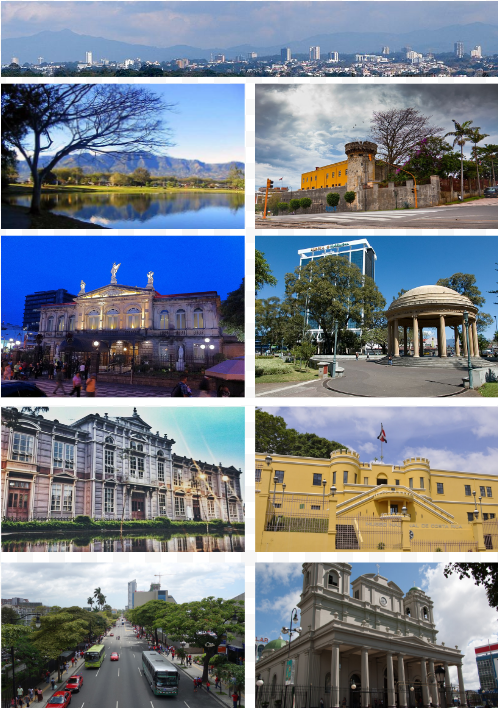


Characteristics and urban features
San José is a compact downtown surrounded by residential districts, commercial corridors and parks. Notable urban landmarks include the National Theatre, museums that collect pre-Columbian and republican-era artifacts, the central market (Mercado Central) and broad pedestrian streets such as Avenida Central. La Sabana Metropolitan Park, adjacent to the city, provides major open space and is home to national sports facilities. The city sits at moderate elevation, giving it a temperate, tropical highland climate relative to coastal areas.
History and development
The settlement that became San José grew from small colonial-era agricultural communities into the political center of an independent republic in the 19th century. Its growth accelerated with the development of coffee exports and later modernization, drawing government institutions, universities and the banking sector. Over time the metropolitan area expanded outward, integrating nearby municipalities into a continuous urban and suburban region.
Economy, transport and institutions
As the country’s principal economic hub and political center, San José concentrates ministries, corporate headquarters, international NGOs and a range of professional services. It is the main transportation node for road, bus and air travel; the country’s principal international airport serves the metro area, and many domestic routes radiate from the city. Education and health institutions, including major universities and hospitals, draw daily commuters from across the valley.
Culture, tourism and notable facts
San José hosts a lively cultural scene with theaters, galleries and festivals. Museums present both archaeological collections and contemporary art, and the city is often used as a base for visitors exploring nearby volcanoes and natural attractions. It has been recognized in regional cultural initiatives and is considered, by several comparative measures, one of the safer urban centers in its region. The city’s mix of civic institutions, commercial life and cultural venues makes it central to public life in Costa Rica.
Practical distinctions
- Geography: central valley location with surrounding volcanic landscapes.
- Role: national capital, main transport node and economic center.
- Culture: home to major theaters, museums and festivals.
- Metropolitan character: a dense downtown serving a much larger commuter population.
For more information about administrative roles and travel, consult local government and tourism sources or regional overviews of urban development in Central America. Costa Rica, its capital and its institutions continue to evolve as the country balances conservation, tourism and urban growth.
Questions and answers
Q: What is San José?
A: San José is the capital of Costa Rica, head of San José Province, and the largest city in the country.
Q: What is the population of the city of San José?
A: The population of the city of San José is 288,054.
Q: What is the Gran Area Metropolitana?
A: The Gran Area Metropolitana is the metropolitan area of the Central Valley where San José is located.
Q: What is the significance of San José in Costa Rica?
A: San José is the center of political and economic activity and the main transportation hub of Costa Rica. It is also the most important working area in the country.
Q: Is San José a safe city?
A: Yes, according to studies in Latin America, San José is one of the safest and least violent cities in the region.
Q: What accolades has San José received?
A: In 2006, San José was appointed Ibero-American Capital of Culture. It is also the sixth most important destination in Latin America according to The MasterCard Global Destinations Cities Index 2012.
Q: How did San José rank in the world's top 20 fastest-growing destination cities by visitor cross-border spending?
A: San José obtained the 15th position in the global ranking of the world's top 20 fastest-growing destination cities by visitor cross-border spending.
Author
AlegsaOnline.com San José, Costa Rica — capital, culture and metropolitan hub Leandro Alegsa
URL: https://en.alegsaonline.com/art/145430