
Sœur Emmanuelle (Madeleine Cinquin): Life, work and legacy
Belgian-born French nun who lived with Cairo garbage collectors, became a prominent advocate for the poor, and expressed progressive views on contraception and clerical marriage; founder of a lasting charity.
Sœur Emmanuelle, born Madeleine Cinquin (1908–2008), was a Belgian-born woman who became widely known as a French-speaking Roman Catholic religious sister and social advocate. Her public profile rests on two linked dimensions: a long career in education and religious life, and a later decades-long commitment to living among and supporting marginalized waste collectors in Cairo. Those who study twentieth-century religious engagement with urban poverty often cite her as an example of a figure who combined personal austerity, direct service, and a readiness to voice controversial opinions.
Image gallery
1 Image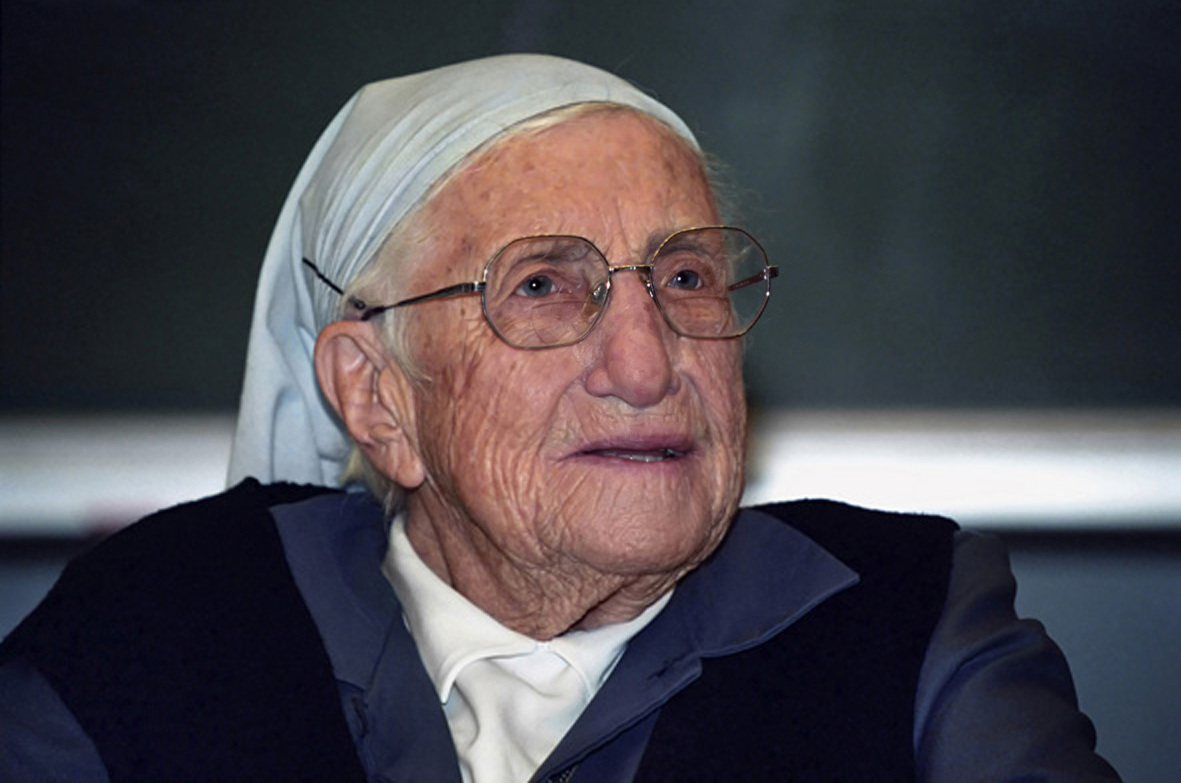
Early life and formation
Madeleine Cinquin was born in Brussels into a family that made lingerie and small garments; childhood events, including the early loss of her father, shaped her outlook. She pursued higher studies in Paris, earning a university degree in philosophy, and in 1929 she entered religious life. Her choice to become a nun followed several years of study and reflection and led to a lifetime of teaching, parish work and volunteer service within congregations that combined educational mission and social action. See more about her origins at Belgian-born and her French associations at French. The term nun is often used in general descriptions of her vocation.
Teaching, international experience and the interwar period
In the 1930s she taught at Notre-Dame de Sion high school in Istanbul and later worked in schools and institutions that emphasized moral and intellectual formation. Her academic background in philosophy informed a reflective approach to education and social questions. Biographical summaries typically mention her Brussels birthplace (Brussels) and the family business in lingerie (lingerie) as contextual details that contrast with the humble lifestyle she chose as an adult.
Life among Cairo's poorest and charitable work
In 1971 she encountered extremely poor communities of informal waste collectors in Cairo and decided to live among them to better understand daily needs and to organize practical assistance. She spent more than two decades working closely with families who made a living from collecting and sorting refuse, advocating for shelter, education and health services. Her sustained presence in Cairo in Egypt became a defining chapter of her life; she remained there until the early 1990s before returning to Europe.
Return to France, media presence and public reception
After returning to France she gained a new level of public visibility. Television programs, interviews and biographies introduced her story to broad audiences and interviewers praised her direct manner and practical approach to poverty. French viewers and talk-show hosts welcomed her candid speech, and she became a frequent guest on media programs, attracting affection from many segments of the public while also drawing critical attention from others. Media interest included documentary programming; for instance, French television broadcast a program about her life in the early 2000s (French television and broadcast).
Views, controversies and public debates
Alongside her service, she expressed opinions that some in the church considered unconventional. She spoke sympathetically about the availability of birth control and suggested that allowing priests to marry might be a pastoral option in certain contexts. These positions placed her at some distance from official church teaching in areas where doctrine and pastoral practice were debated. Commentators often framed her remarks in the context of broader questions about modern religious life and the role of conscience; these discussions touched on the nature of religion itself and the scope for pastoral adaptation. Her readiness to speak openly about such matters is one reason she was sometimes compared to other prominent charitable figures — a comparison to Mother Teresa occurred in media accounts, though she herself resisted that equation.
Legacy, organizations and lasting influence
Her death in 2008 prompted reflections on the balance she struck between personal asceticism, practical charity and public witness. She left an organizational legacy: a charitable grouping known as Les Amis de Sœur Emmanuelle (The Friends of Sister Emmanuelle) continues to support projects that were central to her work. That group is based in Brussels and works on housing, education and social programs for marginalized communities; it is identified in many summaries as a formal way her projects have been sustained (charitable organization). Biographical treatments also note the popular esteem she enjoyed among French-speaking audiences (audiences) even as scholars and church officials debated some of her statements (views).
Notable facts and further reading
- Birth name: Madeleine Cinquin; commonly known as Sœur Emmanuelle (Belgian-born and later active in France).
- Early tragedy and education: family background in lingerie; degree in philosophy and years of teaching.
- Main field of service: long-term work with waste-collecting communities in Cairo, Egypt.
- Public profile: frequent media appearances and a dedicated documentary on French television (broadcast).
- Positions debated within the church: comments on birth control and the possibility of married priests (marry), which triggered wider reflection on religion and pastoral practice.
- Organizational legacy: Les Amis de Sœur Emmanuelle continues parts of her work from Brussels.
For readers seeking primary sources or audiovisual material, program archives and specialized biographies offer more detailed chronologies of her life, the institutions she served and the projects she initiated. General introductions to twentieth-century Catholic social engagement also place her activity in a broader historical and theological context.
Questions and answers
Q: Who was Sœur Emmanuelle?
A: Sœur Emmanuelle (born Madeleine Cinquin) was a Belgian-born French nun.
Q: What happened to her father when she was six years old?
A: When she was six years old, she saw her father drown.
Q: What did Sœur Emmanuelle do in the 1930s?
A: In the 1930s, she worked in Notre-Dame de Sion high school in İstanbul.
Q: Why did Sœur Emmanuelle move to Cairo, Egypt?
A: She moved to Cairo, Egypt after seeing how poorly trash collectors were doing and deciding to live with them.
Q: How is Sœur Emmanuelle different from other religious figures?
A: She had views that are not like how religion normally is, such as being for the use of birth control and being for the idea of priests to marry.
Q: What organization is based in Brussels related to Soeur Emmanuelle?
A: Les Amis de Soeur Emmanuelle (The Friends of Sister Emmanuelle) is a charitable organization based in Brussels.
Author
AlegsaOnline.com Sœur Emmanuelle (Madeleine Cinquin): Life, work and legacy Leandro Alegsa
URL: https://en.alegsaonline.com/art/145222