
Roe v. Wade: the 1973 U.S. Supreme Court ruling on abortion rights
Landmark 1973 Supreme Court decision that recognized a constitutional right to abortion under privacy, set a trimester framework, influenced decades of law and politics, and was overturned in 2022.
Overview
Roe v. Wade was a landmark United States Supreme Court decision issued in 1973 that addressed whether state laws could prohibit or restrict abortion. The Court held that a woman's right to privacy, grounded in the Constitution, encompassed the decision to terminate a pregnancy and therefore invalidated many state statutes that broadly banned abortion. The opinion applied a framework that balanced the woman's interests against the state's interests in maternal health and potential life. The case is commonly identified by the name of the anonymous plaintiff, "Jane Roe," and the Texas statute that prohibited most abortions was the immediate legal target of the challenge. For the original decision see the 1973 ruling.
Image gallery
10 Images


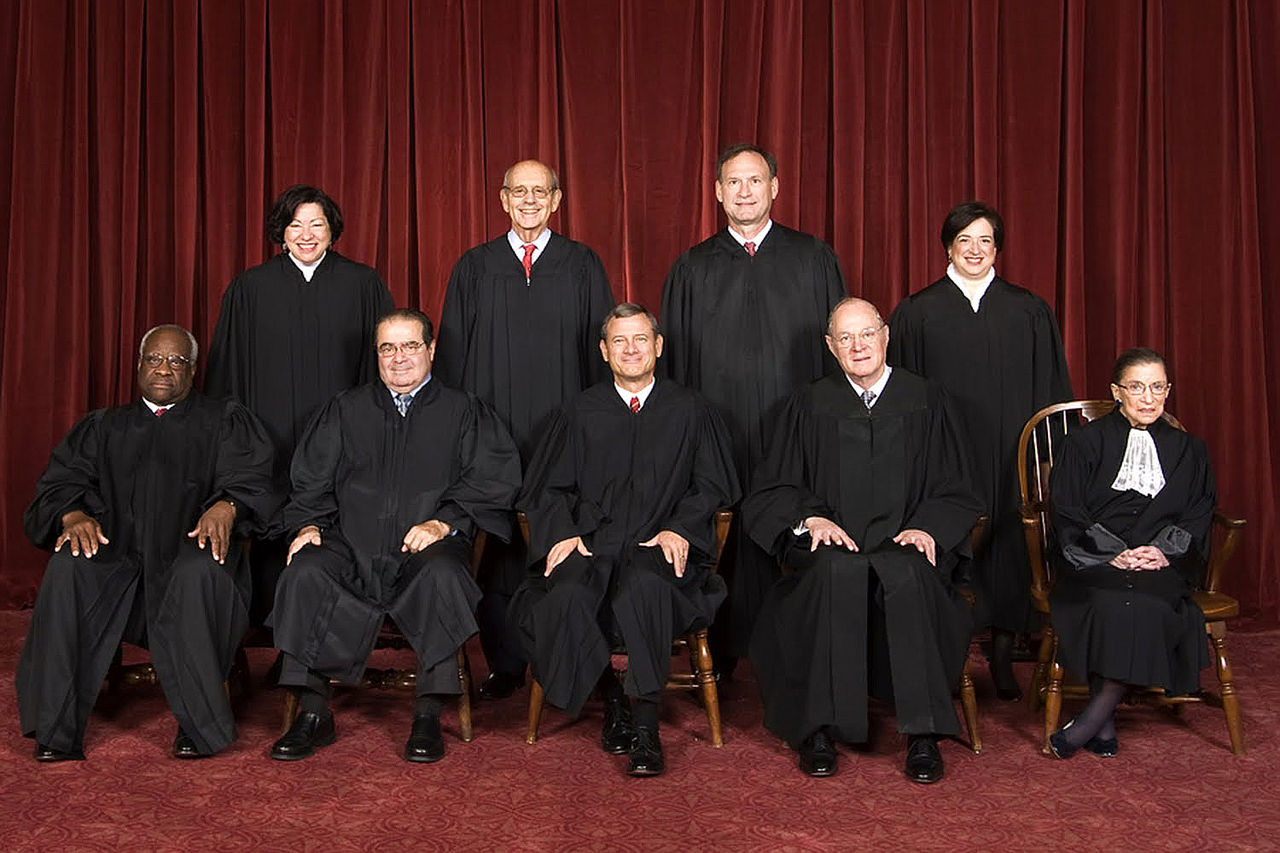


Legal reasoning and procedural framework
The Court's majority opinion—authored by Justice Harry A. Blackmun—found that the Constitution protected certain privacy rights that were broad enough to cover a woman's decision whether to carry a pregnancy to term. To structure the rule, the Court introduced a trimester-based approach. In the first trimester, the Court held, the woman's choice should generally be left to her and her physician; during the second trimester, the state could impose regulations reasonably related to maternal health; by the third trimester, when the fetus reached viability, the state could regulate or prohibit abortions except when necessary to protect the life or health of the pregnant person. The opinion recognized competing interests: the pregnant person's liberty and privacy, the state's interest in protecting health, and the state's interest in protecting potential human life.
Historical background
Roe grew from a challenge to a Texas law that criminalized most abortions. The named plaintiff, known in the record as "Jane Roe," brought the suit against the state district attorney, and the case made its way to the high court. The Court decided the case by a 7–2 vote. Chief Justice Warren E. Burger joined the majority; the two dissenting justices were William Rehnquist and Byron White. Details of the parties and the early procedural posture are often discussed in legal histories of abortion jurisprudence and in narratives about American social movements.
Impact, controversy, and public response
The decision quickly became a focal point of national debate and helped crystallize two opposing movements commonly called pro-choice and pro-life. Supporters of the ruling emphasized individual autonomy, medical privacy, and access to reproductive health care. Opponents argued that the ruling failed to protect the rights of the fetus and that the issue should be resolved by democratically accountable legislatures. The case also reshaped politics, influencing electoral campaigns, lobbying, public demonstrations, and the work of advocacy organizations across the United States. Over time, state legislatures and courts would test and refine the boundaries of permissible regulation.
Subsequent jurisprudence and eventual overturning
Roe did not remain untouched. Later Supreme Court decisions modified its framework. In Webster v. Reproductive Health Services (1989) the Court permitted some state restrictions, and in Planned Parenthood v. Casey (1992) the Court rejected the strict trimester scheme in favor of an "undue burden" standard that allowed more state regulation while still protecting core pre-viability rights. Decades of litigation and legislation produced a complex landscape of state laws, regulatory requirements, and court challenges. In 2022 a draft majority opinion in a case brought against Mississippi's law was publicly leaked, drawing intense attention. Later that year the Supreme Court issued a decision that overruled Roe and returned regulatory authority over abortion to the states, changing the legal framework that had governed for nearly fifty years.
Key features, criticisms, and notable facts
- Primary holding: the constitutional right to privacy included a woman's decision to have an abortion, subject to state interests.
- Framework: the Court's trimester approach sought to balance individual and state interests but was subsequently replaced by other standards.
- Authorship and vote: the opinion was written by Justice Blackmun and joined by a seven-justice majority; dissenters included William Rehnquist and Byron White.
- Plaintiff and context: the case challenged a Texas law that banned most abortions; the original plaintiff is commonly known as Jane Roe and the defendant was the state official enforcing the statute.
- Legacy: Roe shaped legal debate, political mobilization, and policy development for decades and prompted ongoing discussion about constitutional interpretation, federalism, and the role of the courts.
For readers seeking more detailed primary-source material and historical accounts, there are many accessible compilations and analyses that trace the case's origins, the Court's reasoning, subsequent rulings that adjusted its doctrine, and the social movements it influenced. See resources on the decision itself and later developments for a fuller chronology and legal documentation: state law context, abortion policy, medical and ethical considerations, and specific references to the Court's treatment of pregnancy stages such as the first trimester. Historical actors and institutional roles are discussed in legal histories that reference figures including Chief Justice Burger and others who shaped the Court's membership and decisions.
The story of Roe v. Wade illustrates how constitutional law, medical practice, social movements, and politics can intersect. Its immediate legal effects were significant, and its longer-term political and cultural reverberations continue to influence debates about rights, public policy, and the allocation of authority between federal and state governments.
Questions and answers
Q: What was the Roe v. Wade decision?
A: The Roe v. Wade decision was a 1973 landmark ruling by the US Supreme Court that declared a state law banning abortion unconstitutional.
Q: How did the court view abortion during the first trimester?
A: The court viewed that during the first trimester, an abortion was no more dangerous than carrying the fetus to full term.
Q: Who supported and opposed this decision?
A: The 7-2 decision was supported by Chief Justice Warren E. Burger and six other Justices and was opposed by Justices William Rehnquist and Byron White.
Q: What are pro-life supporters' views on abortion?
A: Pro-life supporters argue that the unborn baby has the same right to life as other people and that the government should intervene to protect it.
Q: What are pro-choice supporters' views on abortion?
A: Pro-choice supporters believe that the unborn baby is not the same as a person, that the woman has the right to choose what she wants to do with her body and that the government should not intervene.
Q: How did Roe v. Wade get limited later on?
A: Roe v. Wade was limited by a later decision, Webster v. Reproductive Health Services (1989), which allowed for regulation of abortions in some cases.
Q: When did leaked draft of Supreme Court's decision overturning Roe v Wade get published?
A: In May 2022, a leaked draft of Supreme Court's decision overturning Roe v Wade got published .
Author
AlegsaOnline.com Roe v. Wade: the 1973 U.S. Supreme Court ruling on abortion rights Leandro Alegsa
URL: https://en.alegsaonline.com/art/145031
Sources
- pbs.org : "Roe v. Wade (1973)"
- endroe.org : "The Court's Abortion Jurisprudence; An Analysis of Roe and Related Cases"
- oyez.org : "Roe v. Wade"
- huffingtonpost.com : "Roe v. Wade Still Under Siege, 39 Years Later"
- ushistory.org : "57d. Roe v. Wade and Its Impact"
- law.cornell.edu : "Roe v. Wade"
- cnn.com : "Roe v. Wade Fast Facts"
- landmarkcases.org : "Roe v. Wade (1973)"
- endroe.org : "Justice William Rehnquist; Dissent in Roe v. Wade"
- mic.com : "Roe v. Wade: A Simple Explanation Of the Most Important SCOTUS Decision in 40 Years"
- aclu.org : aclu.org
- law2.umkc.edu : "The Right of Privacy"
- legal-dictionary.thefreedictionary.com : "Penumbra"