
Rodney E. Slater
American attorney and Democratic politician who served as U.S. Secretary of Transportation (1997–2001) after directing the Federal Highway Administration; known for infrastructure policy and minority inclusion.
Overview
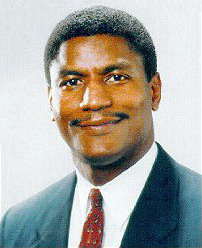
Rodney E. Slater (born February 23, 1955) is an American politician and attorney who served in senior federal transportation posts during the administration of Bill Clinton. A member of the Democratic Party, Slater is best known for his tenure as United States Secretary of Transportation and for earlier leadership of the Federal Highway Administration.
Image gallery
3 Images

Early life and education
Slater was born and raised in Marianna, Arkansas. He completed undergraduate studies at Eastern Michigan University in 1977 and earned a Juris Doctor degree from the University of Arkansas School of Law in 1980. His legal training and early public service formed the foundation for a career focused on transportation policy and regulatory affairs.
Federal transportation roles
After the 1992 election, Slater joined the Department of Transportation and in 1993 became the first African American to lead the Federal Highway Administration (FHWA). He was later appointed U.S. Secretary of Transportation in 1997 and served through the end of the Clinton administration. Slater was the second African American to hold the cabinet-level transportation post.
Policy focus and responsibilities
As a senior transportation official, Slater administered programs that shaped federal investment, regulatory oversight, and safety policy across multiple modes. Major themes of his tenure included strengthening surface transportation funding, promoting highway and bridge repair, improving aviation and transit systems, and encouraging greater participation by minority- and women-owned businesses in federal contracting.
- Oversight of federal highway and transit grant programs
- Emphasis on infrastructure investment and preservation
- Efforts to improve transportation safety and modernization
- Support for intermodal connections among roads, rail, and air
Legacy and later activities
Following his service in government, Slater continued to engage with the private sector, legal practice, and public policy discussions related to transportation and infrastructure. He is often cited for his role in implementing late-1990s transportation legislation and for advancing inclusion in federal contracting. His career illustrates the intersection of law, administration, and long-term infrastructure planning.
Author
AlegsaOnline.com Rodney E. Slater Leandro Alegsa
URL: https://en.alegsaonline.com/art/145027