
R.E.M. (American rock band)
R.E.M. was an influential American rock band formed in Athens, Georgia, in 1980. Pioneers of alternative rock, they combined jangly guitars, literate lyrics and college‑radio roots to achieve wide success.
Overview
R.E.M. was an American rock band formed in 1980 in Athens, Georgia. Over three decades the group helped define what became known as alternative rock, taking a sound rooted in chiming, arpeggiated guitar work and literate, often oblique lyrics from local college radio playlists to international audiences. Their approach contrasted with mainstream rock of the time and proved influential on later generations of bands.
Image gallery
10 Images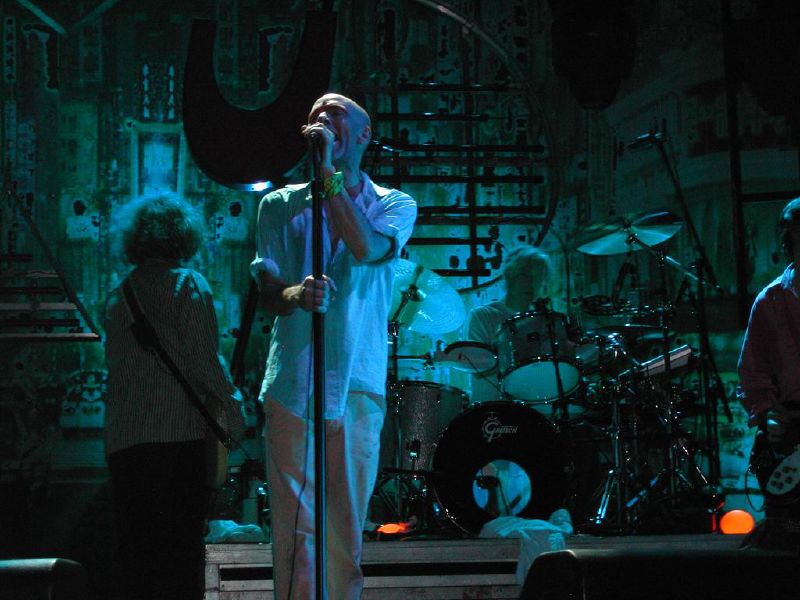


Formation and early years
The band coalesced from friends and local musicians who shared an interest in concise songwriting and distinct tonal textures. Their first single, "Radio Free Europe," appeared in 1981 and found an early audience on college stations. A series of early recordings and tours built a devoted following in the 1980s and established the band as a critical favorite among independent and campus outlets, helping the wider independent scene gain visibility.
Sound and influences
R.E.M.'s sound combined jangly, Rickenbacker-influenced guitar lines with melodic bass and evocative vocal delivery. Guitarist Peter Buck contributed signature chiming riffs, while bassist and multi-instrumentalist Mike Mills supplied harmonies and melodic counterpoint. Lead singer Michael Stipe was noted for a voice that could move from murmur to clear enunciation, and for lyrics that ranged from cryptic to direct as the band's career progressed. The group drew on elements of 1960s pop, post‑punk, folk and country in varying measures.
Members and roles
- Michael Stipe — lead vocals and principal lyricist
- Peter Buck — guitar
- Mike Mills — bass, keyboards, backing vocals
- Bill Berry — drums and occasional songwriter (left the band in the late 1990s)
Key albums and notable songs
R.E.M. released a succession of albums that balanced critical respect with growing commercial reach. Their early records introduced many of their signature traits. In 1987 they reached a wider international audience with singles such as "The One I Love" and the rapid-fire lyricism of "It's the End of the World as We Know It (And I Feel Fine)." Later albums contained enduring songs like "Losing My Religion" and "Everybody Hurts" that broadened the band's popular recognition and radio presence while retaining distinctive songwriting choices.
Commercial success and later career
By the late 1980s and early 1990s R.E.M. were among the best-known alternative bands worldwide. They moved from independent labels to major-label distribution while maintaining a reputation for thoughtful records and consistent touring. After several decades of recording and performance, the band announced it would disband in 2011. Members have since pursued solo projects, occasional collaborations and archival releases.
Legacy and recognition
R.E.M.'s influence is felt across rock, indie and alternative music: their emphasis on melody, texture and literate lyrics became a model for later artists. They were regularly cited in discussions of how college and independent radio helped reshape the American music industry. The band has received institutional recognition for its impact, including induction into the Rock and Roll Hall of Fame, and extensive retrospective coverage in music histories and documentary accounts.
Cultural impact and activism
Beyond recordings, R.E.M. were known for occasional public engagement with environmental and political causes, and for supporting fellow artists and nonprofit initiatives. Their role in bringing independent-minded music to wider audiences altered expectations about how such bands could reach popular attention and helped expand the cultural space for alternative voices in mainstream media.
Further reading and resources
For a concise band overview and timeline, consult reputable music reference sites and published biographies. Local histories of Athens and regional scenes in Georgia provide context for the environment that shaped their early work. Scholarly and popular accounts of the alternative rock movement and the role of college radio document how independent acts reached wider audiences. Interviews with members, including Stipe, and archival materials illuminate songwriting, production and lineup changes across the band's career.
Researchers and fans can also explore concert archives, retrospective compilations and museum exhibits to trace R.E.M.'s evolving public profile and continuing influence on contemporary music scenes. For curated collections and institutional records, see resources linked through archival hubs and official acknowledgments (honors, institutional listings and curated exhibitions).
Questions and answers
Q: When was R.E.M. formed?
A: R.E.M. was formed in Athens, Georgia in 1980.
Q: What kind of rock band is R.E.M.?
A: R.E.M. is an American rock band.
Q: Which song did R.E.M. release as their first single?
A: R.E.M. released its first single, "Radio Free Europe" in 1981.
Q: Who was the lead singer of R.E.M.?
A: The lead singer of R.E.M. was Michael Stipe.
Q: When did R.E.M. become successful internationally?
A: R.E.M. became successful internationally in 1987, when they released the songs, "The One I Love" and "It's The End Of The World As We Know It (And I Feel Fine)".
Q: When did R.E.M. break-up?
A: R.E.M. broke-up in 2011.
Q: Have R.E.M. been inducted into the Rock and Roll Hall of Fame?
A: Yes, R.E.M. have been inducted into the Rock and Roll Hall of Fame.
Author
AlegsaOnline.com R.E.M. (American rock band) Leandro Alegsa
URL: https://en.alegsaonline.com/art/144590