
Progressive Party (United States, 1912) — the Bull Moose movement
A concise account of the 1912 Progressive Party formed by Theodore Roosevelt, its platform (New Nationalism), contest in 1912, brief electoral impact, decline by 1920, and lasting reform legacy.
The Progressive Party was a short-lived but consequential third party in the United States formed in 1912 after a major split in the Republican ranks. Its founder, Theodore Roosevelt, launched the party following his failed effort to regain the Republican presidential nomination from incumbent William Howard Taft. Roosevelt and his allies created an independent organization to press a set of proposals they believed were too bold for the conventional party structure.
Image gallery
10 Images




Platform and principles
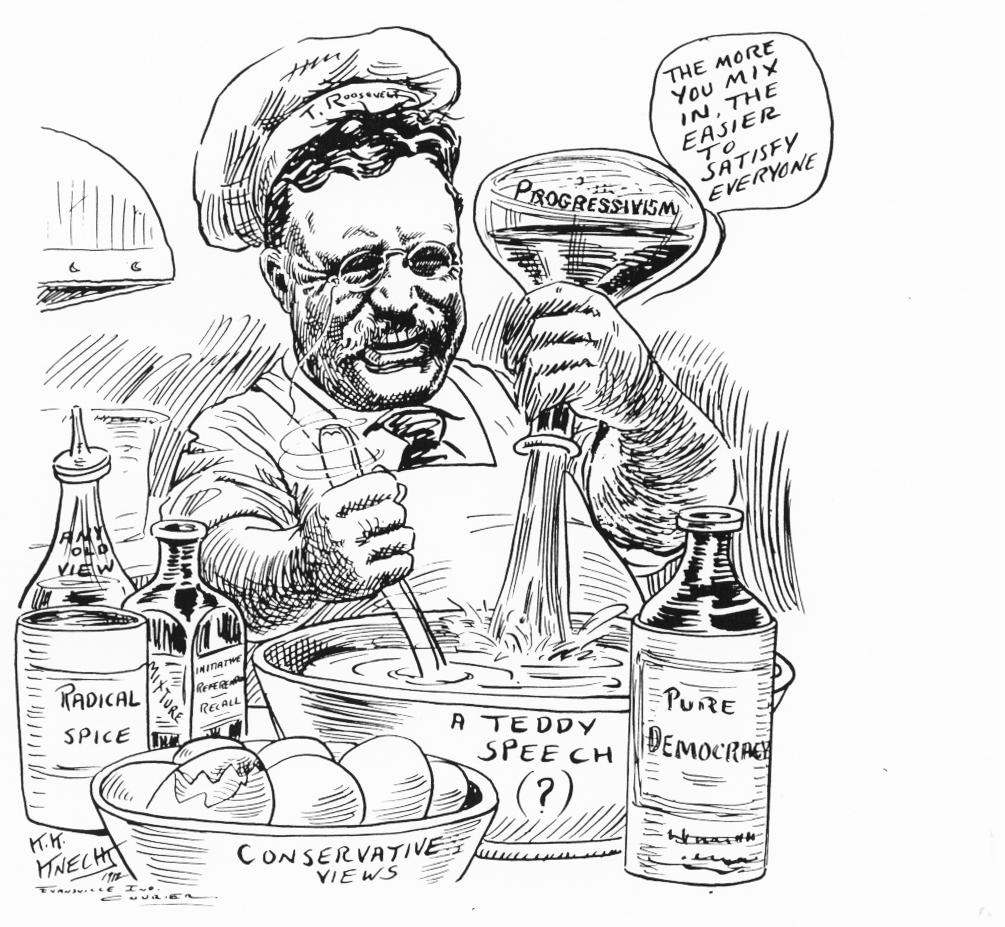
The new organization advocated an activist federal government and a program of social and economic reforms often described as progressive and populist in orientation. Roosevelt framed much of the party’s agenda under the rubric of “New Nationalism,” calling for stronger regulation of large corporations, labor protections, and social measures intended to reduce economic insecurity.
- Greater regulation of trusts and large business combinations
- Labor protections, including limits on child labor and support for collective bargaining
- Social insurance programs for unemployment and old age
- Democratic reforms such as direct primaries, initiative, referendum and recall
- Support for broader political participation, including measures that would later be associated with suffrage and electoral reform
1912 campaign and electoral effect
In the 1912 election the Progressive Party mounted a vigorous campaign with Roosevelt as its presidential nominee. The contest reshaped the immediate political landscape: the split in the traditional Republican coalition helped the Democratic nominee win the presidency, while the Progressive ticket achieved a remarkable popular showing for a third party and finished ahead of the incumbent Republican ticket in many contests. That performance demonstrated both the appeal of reformist rhetoric and the fragility of party coalitions when internal divisions were acute.
Decline and legacy
Despite its energetic debut, the Progressive Party lost momentum after the 1912 campaign. Many supporters returned to the Republican fold or shifted allegiances to other movements; by the late 1910s the organization had diminished as an electoral force. It saw rapidly reduced success in subsequent contests through 1918 and had largely disappeared as an organized national party by 1920. Nonetheless, several ideas the party championed found life later in federal and state reforms.
Notable features and enduring significance
The party is commonly associated with the nickname "Bull Moose", which came from Roosevelt’s boast that he felt "as strong as a bull moose" after an assassination attempt earlier in the campaign. The movement also attracted a range of prominent reformers and activists who pressed for concrete policy changes rather than purely rhetorical adjustments. While the organization itself was brief, its advocacy contributed to the diffusion of progressive proposals—such as regulatory oversight of large corporations and expanded social protections—that influenced later legislation and shaped the broader trajectory of American reform in the 20th century.
Readers seeking more detail on personalities, state-level campaigns, and the party’s written platform can consult specialized historical accounts and collections of primary documents for a fuller picture of how the 1912 Progressive Party affected American politics.
Further reading on Roosevelt | Republican Party context | Progressive ideas | Populist influences | National background
William Howard Taft | 1912 election overview | Post-1912 developments | 1920 aftermath | Bull Moose nickname
Questions and answers
Q: What was the Progressive Party?
A: The Progressive Party was a third party in the United States.
Q: Who created the Progressive Party?
A: The Progressive Party was created by former President Theodore Roosevelt after he lost the presidential nomination of the Republican Party to incumbent President William Howard Taft.
Q: What were some of the positions the Progressive Party took?
A: The Progressive Party was known for taking advanced positions on progressive and populist reforms.
Q: Who did the Progressive Party attract?
A: The Progressive Party attracted famous national reformers.
Q: Did the Progressive Party enjoy electoral success?
A: After the party's defeat in 1912, it went into rapid decline in elections until 1918, disappearing by 1920.
Q: What was the nickname for the Progressive Party?
A: The Progressive Party was often called the "Bull Moose Party" since Roosevelt often said that he felt "strong as a bull moose."
Q: Is the Progressive Party still active today?
A: No, the Progressive Party disappeared by 1920.
Author
AlegsaOnline.com Progressive Party (United States, 1912) — the Bull Moose movement Leandro Alegsa
URL: https://en.alegsaonline.com/art/144504