
Pont Saint-Bénézet (Pont d'Avignon)
Medieval bridge in Avignon spanning the Rhône: its origin, structure, partial remains, cultural role and UNESCO status.
The Pont Saint-Bénézet, commonly called the Pont d'Avignon, is a medieval river crossing in the city of Avignon in southern France. Built originally to link Avignon with Villeneuve-lès-Avignon across the Rhône, the bridge became one of the region's best-known monuments. Although most of the historic crossing has collapsed, surviving piers, a small chapel and a fortified gate continue to define its silhouette and attract scholars, visitors and artists. The structure is widely described as a medieval bridge and is frequently referenced in discussions of medieval engineering and urban communication.
Image gallery
10 Images


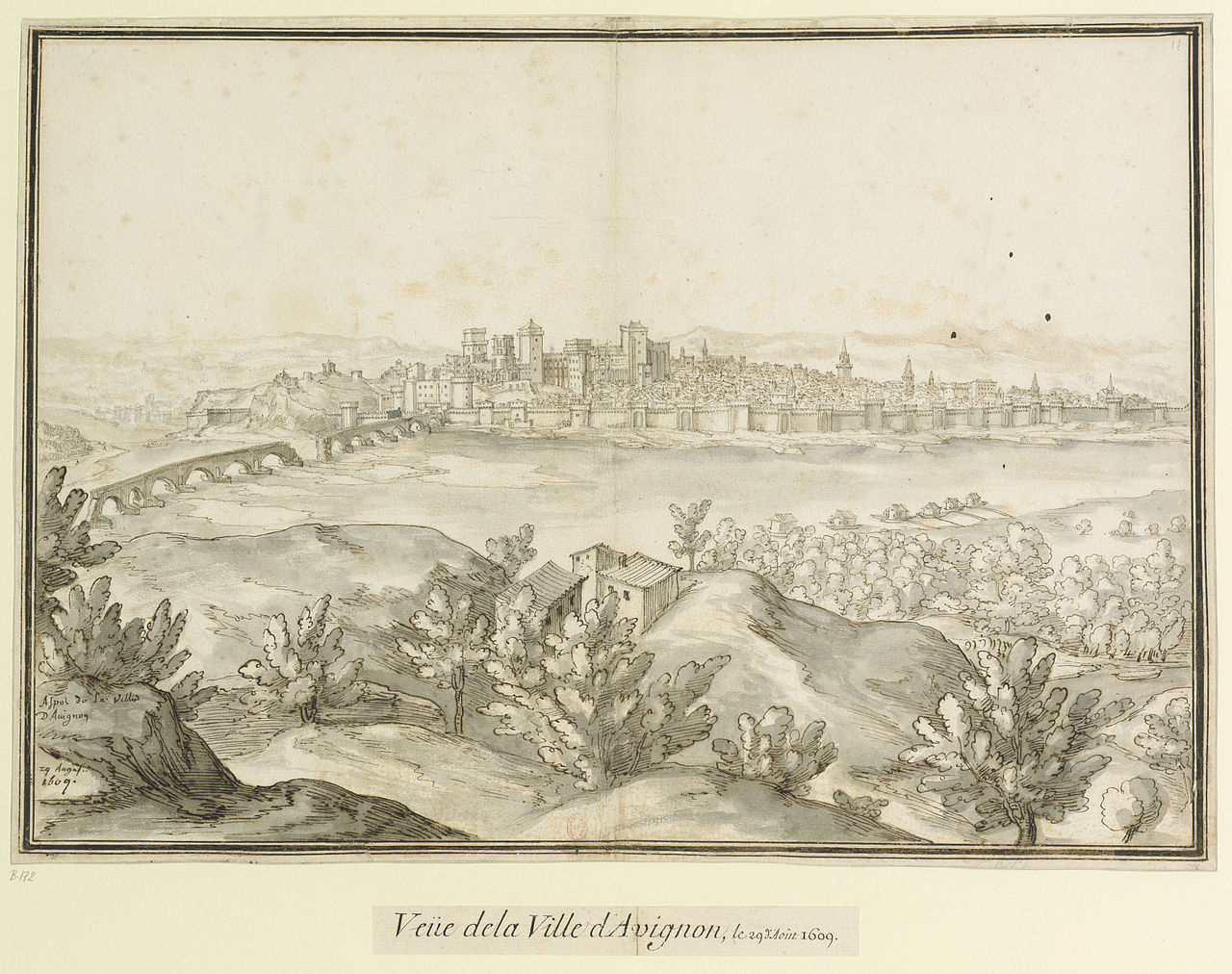


Characteristics and surviving elements
The crossing that later became the stone bridge began as a wooden structure in the late 12th century. When rebuilt in stone it comprised some 22 arches and extended for roughly nine hundred metres; its usable width was narrow—about 4.9 metres across including parapets—reflecting medieval traffic needs and construction limits. Repeated damage from strong currents and high water meant that only a handful of arches remain today. Visitors can still see four standing arches at the Avignon end, the fortified gatehouse that protected the city approach, and the small Chapel of Saint Nicholas perched on the second pier. The western approach is marked by the surviving Tour Philippe-le-Bel, a defensive tower that once controlled movement onto the bridge.
History and construction
Local tradition holds that a young shepherd, Saint Bénézet, received a divine command to build a bridge; this legend helped to inspire early support and donations for construction. The first documented crossing was a wooden bridge erected between 1177 and 1185. That original structure was destroyed in 1226 when forces under King Louis VIII attacked the city during the Albigensian Crusade. Construction of a more durable stone bridge resumed in the decades that followed, producing the multi-arched crossing commonly described in medieval records. The river's strength, fluctuating flow and seasonal ice jams repeatedly stressed the stone piers and arches. Each significant flood event proved costly to repair and eventually led to the abandonment of the full crossing in the 17th century when the remaining arches successively collapsed.
Use, management and decline
For centuries the bridge served both commercial and military purposes: merchants, pilgrims and local traffic used the link to cross the Rhône, while city authorities maintained defensive works at either end. The presence of the chapel and gatehouse reflects the mixed religious and practical functions typical of medieval bridges. Over time the economic burden of frequent repairs outweighed the benefits of keeping the entire span open. Recurrent floods undermined foundations and removed arches, and by the middle of the 1600s the structure had been largely abandoned as a through route.
Legacy, cultural importance and protection
The Pont Saint-Bénézet has had a lasting cultural afterlife. It inspired the popular French folk tune "Sur le pont d'Avignon", and its partially ruined form has become an emblematic landmark of Avignon's medieval landscape. In 1995 the bridge's remaining arches and associated medieval buildings were included, together with the Palais des Papes and the cathedral of Avignon, on UNESCO's list as a World Heritage Site. Conservators and local authorities maintain the surviving sections and interpretive displays, while ongoing archaeological study and historical research continue to refine understanding of the bridge's construction techniques and role in regional communications.
Notable facts and points of interest
- Initial wooden crossing built late 12th century; later rebuilt in stone with about 22 arches.
- Destroyed during hostilities in 1226 and repeatedly damaged by river floods.
- Surviving features include the chapel on the second pier, four arches and the gatehouse.
- The bridge's history blends engineering, legend and civic organization; it remains a subject of study for medievalists and engineers.
Questions and answers
Q: What is the Pont Saint-Bénézet?
A: The Pont Saint-Bénézet is a famous medieval bridge in the town of Avignon, France.
Q: When was it built?
A: A wooden bridge was built between 1177 and 1185, and then rebuilt with 22 stone arches in 1234.
Q: How long was the bridge?
A: The stone bridge was about 900 meters (980 yards) long.
Q: How wide was it?
A: It was only 4.9 meters (16 feet 1 inch) wide, including the parapets at the sides.
Q: Why did it become abandoned?
A: The arches collapsed each time the Rhône river flooded, making it very expensive to maintain and repair.
Q: What still exists from the original structure?
A: Four arches and the gatehouse at the Avignon end of the bridge still exist, as well as a Chapel of Saint Nicholas on one of its piers, and a western terminus called Tour Philippe-le-Bel.
Q: What recognition has been given to this landmark?
A: In 1995, UNESCO classified its arches together with other nearby landmarks such as Palais des Papes and Cathédrale Notre-Dame des Doms as a World Heritage Site.
Author
AlegsaOnline.com Pont Saint-Bénézet (Pont d'Avignon) Leandro Alegsa
URL: https://en.alegsaonline.com/art/144343