
Planet of the Apes (1968 film)
1968 science-fiction film directed by Franklin J. Schaffner, adapted from Pierre Boulle’s novel; noted for its makeup, social satire and iconic twist ending that shaped a long-running franchise.
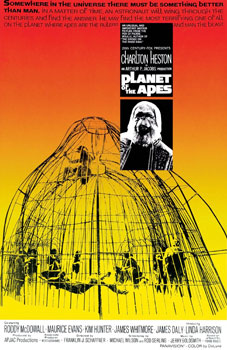
Planet of the Apes (1968) is a landmark American science-fiction film directed by Franklin J. Schaffner and released by 20th Century Fox. The screenplay was adapted from the French novel La planète des singes by Pierre Boulle. The film is widely remembered for its ambitious prosthetic makeup, thought-provoking social themes and a dramatic final image that became a touchstone of popular culture. For further reference see film entry and its classification as science fiction.
Image gallery
9 Images


Overview and themes
The story follows an astronaut-led expedition that crash-lands on a distant world where apes are the dominant, talking species and humans are primitive and mute. Beyond the adventure premise, the film explores ideas about civilization, the abuse of power, prejudice, and human self-destruction. Many critics and viewers interpret it as a satirical reflection on contemporary anxieties of the 1960s, including fears tied to war and social upheaval.
Production, design and special effects
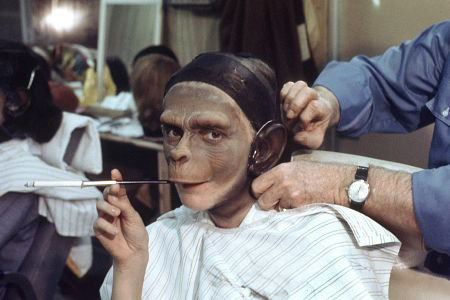
Production is notable for its extensive ape prosthetic makeup, which allowed actors to portray ape society with believable facial movement and expression. The makeup work, overseen by John Chambers, received special recognition and helped set a new standard for character makeup in cinema. Combined with location shooting, set design and costume work, the film created a convincing and unsettling alternate world.
Cast and performances
The film stars Charlton Heston as the lead astronaut, supported by a cast that includes Roddy McDowall, Linda Harrison, James Whitmore, Kim Hunter and Maurice Evans. Performances balance physicality—required by the ape roles—with grounded dramatic work that sells the film’s moral and emotional stakes.
Reception and legacy
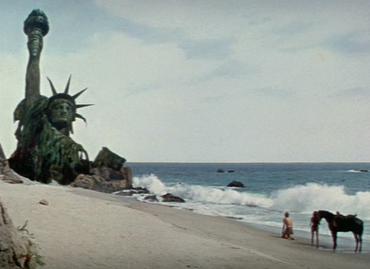
Upon release the film drew strong audience interest and critical discussion. It became influential both artistically and commercially: praised for bold ideas and spectacle, and credited with inspiring a franchise of sequels, television projects and later reinterpretations. The film’s ending — a reveal that reframes the narrative’s setting — is often cited as one of cinema’s most memorable climaxes. The original novel and its author remain part of the work’s lineage; see the novel and Pierre Boulle for context.
Notable facts and further reading
- The movie helped popularize mature science-fiction themes for mainstream audiences.
- Its makeup artistry earned industry recognition and influenced later character-driven prosthetics.
- It launched a multimedia franchise that includes sequels, a television series and modern reboots.
- For cast details and career notes see links on key actors: Charlton Heston, Roddy McDowall, and additional cast pages such as James Whitmore and Linda Harrison.
Questions and answers
Q: When was the movie Planet of the Apes released?
A: The movie Planet of the Apes was released in 1968.
Q: Who directed the movie Planet of the Apes?
A: The movie Planet of the Apes was directed by Franklin J. Schaffner.
Q: What was the novel that the movie Planet of the Apes was based on?
A: The movie Planet of the Apes was based on the novel La planète des singes written by Pierre Boulle and released in 1963.
Q: Who starred in the movie Planet of the Apes?
A: Charlton Heston starred in the movie Planet of the Apes, along with actors such as Roddy McDowall, Kim Hunter, Maurice Evans, James Whitmore, James Daly, and Linda Harrison.
Q: Which film studio released the movie Planet of the Apes?
A: The movie Planet of the Apes was released by 20th Century Fox.
Q: What genre does the movie Planet of the Apes fall under?
A: The movie Planet of the Apes falls under the science fiction genre.
Q: Was the movie Planet of the Apes an American production?
A: Yes, the movie Planet of the Apes was an American science fiction movie.
Author
AlegsaOnline.com Planet of the Apes (1968 film) Leandro Alegsa
URL: https://en.alegsaonline.com/art/144262