
Of Love and Shadows (1994 film)
1994 romantic drama film directed by Betty Kaplan, adapted from Isabel Allende's novel; stars Antonio Banderas and Jennifer Connelly and explores love, political violence, and memory under a repressive regime.
Overview
Of Love and Shadows is a 1994 romantic drama film directed by Betty Kaplan, adapted from the 1984 novel by Isabel Allende. The picture stars Antonio Banderas and Jennifer Connelly, alongside Stefania Sandrelli, Patricio Contreras and Jorge Rivera López. The film was released internationally and distributed by Miramax Films. It is an international co-production that brings a literary tale of love and political violence to the screen.
Image gallery
1 Image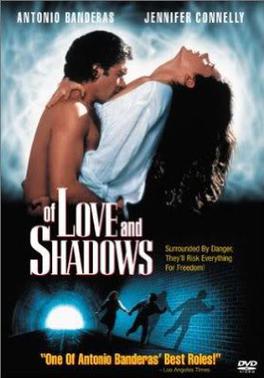
Plot and themes
The narrative follows two central characters: a young woman from a privileged background who becomes unexpectedly involved in political investigation, and a photographer or journalist whose work uncovers state crimes and disappearances. Their professional and romantic partnership exposes human-rights violations carried out under a repressive military regime. Major themes include the costs of silence, the moral duty to bear witness, memory, and the transformative power of intimate connection amid danger.
Production and adaptation
Betty Kaplan's cinematic adaptation condenses the novel's wide scope to focus on the personal journey of the protagonists and the most dramatic episodes of political repression. The screenplay translates literary material into visual scenes of investigation, clandestine archives and tense encounters with authorities. As with many novel-to-film adaptations, some subplots and secondary characters were streamlined to fit the film's runtime while retaining the book's core moral conflicts.
Cast and performances
- Jennifer Connelly – plays the young woman who becomes entangled in the investigation.
- Antonio Banderas – portrays the photographer/journalist who pursues the truth.
- Stefania Sandrelli – supporting role reflecting family and social ties.
- Patricio Contreras and Jorge Rivera López – character actors in key dramatic parts.
Reception and legacy
Critical response to the film was mixed: reviewers often praised the central performances and the film's attempt to dramatize difficult historical material, while some critics noted that the adaptation occasionally favored melodrama over the novel's more expansive social critique. The film helped introduce Isabel Allende's work to audiences less familiar with Latin American literature and remains of interest to viewers studying cinematic portrayals of political repression and human rights.
Notable facts and context
The story is rooted in the context of military dictatorships in Latin America and the international conversation about disappearances and government violence that intensified during the late 20th century. As a literary adaptation, the film is often discussed alongside other works that translate testimonial and political fiction into narrative cinema. Though not a blockbuster, it is noted for bringing together international talent and for its role in keeping cultural memory of these events alive.
Author
AlegsaOnline.com Of Love and Shadows (1994 film) Leandro Alegsa
URL: https://en.alegsaonline.com/art/143585