
Ningali Cullen (1942–2012)
Aboriginal Australian activist and co-chair of the National Sorry Day Committee who worked to raise awareness of the Stolen Generations and to promote reconciliation and community healing.
Ningali Cullen (1942–2012) was an Aboriginal Australian activist best known for her leadership with the National Sorry Day movement. Over several decades she helped bring public attention to the experiences of the Stolen Generations and supported survivors and their families in seeking recognition, understanding and healing.
Image gallery
1 Image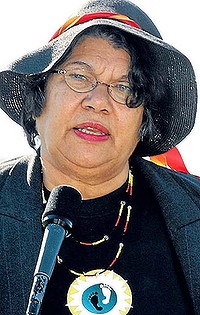
Overview
Cullen combined community advocacy with public education to highlight the legacy of child removals and other policies that harmed Indigenous families. She served as co-chair of the National Sorry Day Committee, a body that organises annual events to remember those affected and to press for social and political change.
Activities and roles
- Co-chair of the National Sorry Day Committee, guiding commemorative events and awareness campaigns.
- Public speaker and community organiser, working with survivors and younger generations to preserve stories and support healing.
- Advocate for reconciliation, emphasising the need for truth-telling, acknowledgement and policy reform.
Her work connected grassroots communities with national conversations about historical injustice, government responsibility, and cultural recovery. The committee she co-led played a part in the wider movement that kept issues raised by the Bringing Them Home inquiry and other reports in the public eye.
Context and significance
National Sorry Day, observed each year on 26 May, commemorates the removal of Aboriginal and Torres Strait Islander children from their families and recognises the enduring impacts of those practices. Cullen's leadership contributed to public understanding of that history and to efforts aimed at reconciliation. Many who encountered her work recall a focus on listening to survivors and on creating respectful spaces for remembering.
While details of her personal biography are not widely published, Ningali Cullen's public role as a co-chair of the National Sorry Day Committee marked her as an important figure in late 20th- and early 21st-century Indigenous advocacy in Australia. Her legacy is tied to ongoing campaigns for acknowledgement, cultural repair and stronger community-based support for Indigenous peoples. See also Aboriginal community resources for broader context.
Author
AlegsaOnline.com Ningali Cullen (1942–2012) Leandro Alegsa
URL: https://en.alegsaonline.com/art/143405
Sources
- womenaustralia.info : "Cullen, Ngingali (1942 - 2012)"
- theage.com.au : "Champion of healing and Sorry Day"
- au.iofc.org : "'Our people aren't victims any more'"
- aiatsis.gov.au : Beyond sandy blight : five Aboriginal experiences as staff on the National Trachoma and Eye Health Program
- nsdc.org.au : "The History of NSDC"