
Navajo language (Diné Bizaad): overview, structure, history and use
Navajo (Diné Bizaad) is a Southern Athabaskan language spoken primarily on the Navajo Nation in the United States. This article describes its features, history, writing, and contemporary use.
The Navajo language, known to its speakers as Diné Bizaad, is a Southern Athabaskan language traditionally spoken by the Navajo (Diné) people of the American Southwest. Its core territory lies within the Navajo Nation across parts of the United States, especially in what are now the states of Arizona, New Mexico and Utah. Navajo is the most widely spoken Native American language in the U.S. and has been prominent both as a living community language and historically, famously, for its role in secure communications by Navajo Code Talkers during World War II.
Image gallery
10 Images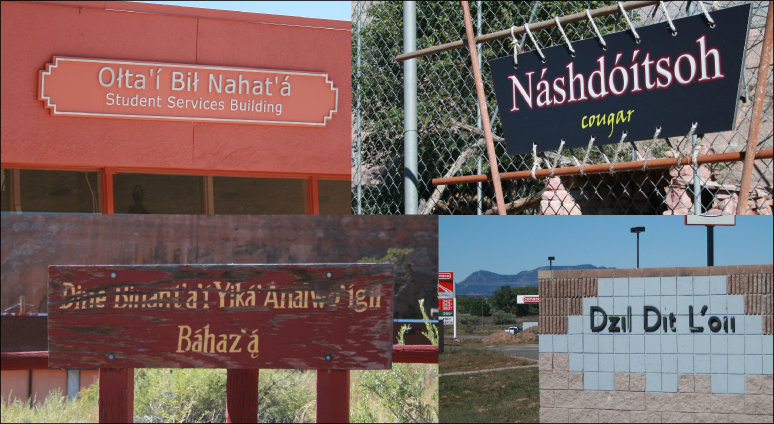


Key characteristics
Navajo is typified by a rich sound system and complex word structure. It is a tonal language: differences in pitch can change the meaning of a word, a feature that distinguishes it from English. Its consonant inventory includes sounds uncommon in English, such as glottalized and ejective consonants, and combinations of sounds that can be challenging for nonnative learners. Vowel quality, length, and tone all contribute to lexical contrasts.
Morphology and grammar
The language is highly polysynthetic and verb-centered: much of the information that other languages express with separate words or word order is encoded inside the verb. Verbs are built from stems surrounded by a sequence of prefixes and sometimes suffixes; these affixes mark aspects like mode, tense, negation, and participants (who is doing or receiving an action). A typical Navajo clause places the verb toward the end (often described as subject–object–verb order), though word order can vary depending on emphasis and discourse context.
History and writing
Navajo descends from the Athabaskan language family, which has relatives in Alaska, western Canada and other parts of the North American interior. Contact with Spanish, English and neighboring Indigenous languages has affected vocabulary and usage, but Navajo retains a primarily native lexicon. An orthography based on the Latin alphabet was developed in the early 20th century and refined through the 1930s; this system represents tone and several sounds not found in English and remains the standard for education and published material.
Use, vitality, and revitalization
Historically an oral language, Navajo has been transmitted through families and community institutions. In modern times it is used in homes, local government, radio, and educational programs. Around 2011, roughly 170,000 people were reported to speak Navajo at home, making it the largest Indigenous language community in the country. Like many Indigenous languages, Navajo faces pressures from dominant languages and uneven intergenerational transmission, and communities and institutions have developed immersion schools, adult classes, digital resources and media to support learning and maintenance.
Notable facts and distinctions
- Its status as a Southern Athabaskan language links it to a larger family that stretches across western North America.
- Navajo vocabulary and grammar allow for precise descriptions of events and relationships through verb morphology rather than separate auxiliary words.
- Its role in World War II brought attention to the language globally, but the language’s everyday importance is cultural and communal rather than military.
For readers seeking introductory materials, many community programs and language centers offer courses and media in Navajo; examinations of authentic texts and recordings are especially valuable because of the language’s tonal and morphological complexity. Further scholarly and pedagogical resources can provide guided entry into pronunciation, verb structure, and conversational norms for learners and researchers alike.
Selected links: Nation overview, Arizona region, New Mexico region, Utah region.
Questions and answers
Q: What is the Navajo language?
A: The Navajo language is a Southern Athabaskan language spoken in the United States, specifically in the Navajo Nation (in the states of Arizona, New Mexico, and Utah).
Q: How widely is Navajo spoken in the United States?
A: Navajo is the most widely spoken Native American language in the US and the most spoken Indigenous language in the Americas north of the US-Mexico border. In 2011, almost 170,000 Americans spoke Navajo at home.
Q: Why is Navajo famous?
A: Navajo is famous for being used by the Navajo Code Talkers during World War II (Pacific Theater).
Q: What makes Navajo difficult for English speakers to learn?
A: Navajo has a lot of sounds, including many that are not found in the English language. Navajo is also a tonal language, like Chinese, which means that pitch is used to make words different from each other.
Q: How are new words made in Navajo?
A: In Navajo, new words are made by adding prefixes and suffixes to a part of a word called the stem. These prefixes and suffixes add meaning, such as tense, who is doing the action, and so on.
Q: How are sentences arranged in Navajo?
A: In Navajo, sentences are arranged as subject-object-verb although they can be arranged in other ways too.
Q: How is the Navajo language written?
A: The Navajo language is written with the Latin alphabet, just like English. The current alphabet was developed in the 1930s. Before this, the Navajo did not have their own alphabet.
Author
AlegsaOnline.com Navajo language (Diné Bizaad): overview, structure, history and use Leandro Alegsa
URL: https://en.alegsaonline.com/art/143192