
M66 motorway
Short motorway in Greater Manchester linking Bury to the Manchester orbital and wider motorway network; around 8 miles long and forming part of local commuter and freight routes.
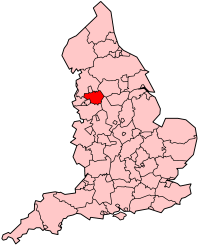
The M66 is a short but important motorway in North West England. Running for roughly eight miles (about 13 km), it provides a direct high-capacity link between Bury and the Manchester orbital system, carrying traffic between the town and the wider national motorway network.
Image gallery
2 Images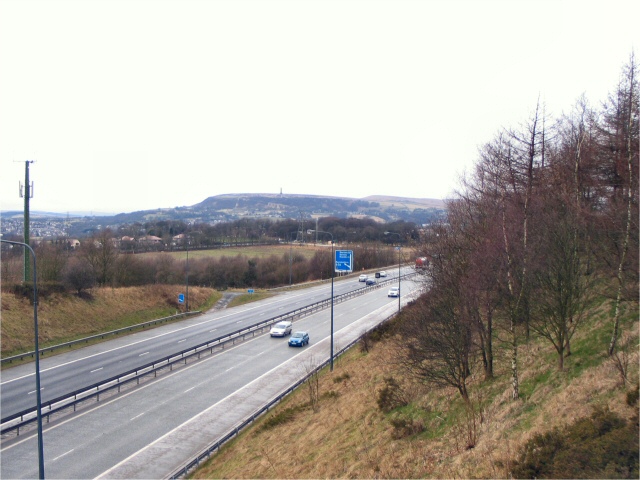
Route and characteristics
The motorway begins near Bury and continues south to meet the Manchester orbital M60 and the trans-Pennine M62. North of its southern junctions the carriageway continues as the A56, which in turn connects to the M65 further afield. As a short radial motorway it is primarily used for commuter movements, local freight and as a feeder into the larger motorway network.
History and development
The M66 was built in stages during the second half of the 20th century to improve access between towns north of Manchester and the emerging high-speed network. Sections of the original route and nearby connecting links were later reclassified or incorporated into the greater Manchester orbital route. Responsibility for routine maintenance and strategic management rests with the national highway authority.
Connections and junctions
- Manchester via the M60 and local A-roads
- Direct link to M60 (orbital motorway)
- Connection to M62 for east–west journeys
- Continues as the A56 toward the M65 and north-west routes
The motorway classification (motorway) gives it design and operational standards intended to support higher speeds and heavier traffic than surrounding A-roads. It is signposted and managed to integrate with local junctions, park-and-ride facilities and industrial access where present.
Importance and notable facts
Although short compared with many UK motorways, the M66 plays a clear role in regional mobility: easing commuting into Manchester, enabling onward freight movement and linking several radial routes. Its scale and function make it a frequent subject of local traffic planning and occasional upgrade proposals to improve capacity and safety.
Questions and answers
Q: What is the M66 motorway?
A: The M66 is a motorway located in North West England.
Q: What cities does the M66 connect?
A: The M66 connects Manchester and Bury in North West England.
Q: Which other motorways does the M66 link with?
A: The M66 links with the M60 and M62 motorways in addition to the A56 which joins onto the M65.
Q: Is the M66 a long motorway?
A: No, the M66 is about 8 miles (13 km) long.
Q: Does the M66 link with any other major motorways or highways?
A: Yes, the M66 links with the M60, M62, and M65 motorways.
Q: Where does the M66 continue after Bury?
A: The M66 continues as the A56 highway after Bury.
Q: What regions of England does the M66 cover?
A: The M66 covers the North West region of England.
Author
AlegsaOnline.com M66 motorway Leandro Alegsa
URL: https://en.alegsaonline.com/art/141983