
M602 motorway: short urban link into Manchester
The M602 is a short motorway in Greater Manchester linking the M62 and M60 into Salford and Manchester. It serves commuter and freight traffic, follows part of an abandoned M52 plan, and is about 4 miles long.
Overview
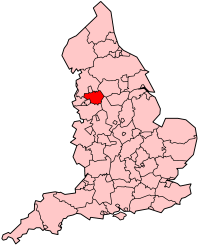
The M602 is a short urban motorway in England, located within Greater Manchester. At roughly 4 miles (6.4 km) in length, it provides a direct east–west connection from the M62 and M60 corridor into the Salford and city-centre approaches of Manchester. The route passes close to Eccles and is heavily used by commuter traffic and vehicles travelling from the west into the city.
Image gallery
2 Images
Route and characteristics
The motorway functions as a short radial link rather than a long-distance trunk. It begins where traffic from the M62 and surrounding routes merges toward the Manchester suburbs and then runs eastwards to meet urban road networks that serve Salford and central Manchester. The M602's compact length and position make it an important distributor road for local and regional journeys.
Key junctions and features
- Western connection to the M62/M60 network, allowing westbound traffic a straight route toward Manchester.
- Interchanges serving Eccles and adjacent suburbs, which provide access to local roads and industrial areas.
- Terminus junctions that link into the Salford and Manchester arterial roads and urban street network.
History and planning
The M602 was built as part of post‑war motorway development around Manchester and reflects the era's emphasis on creating direct links from trunk routes into major urban centres. It was originally intended to form part of a larger scheme (historically referred to in planning as the M52), but that broader motorway was never completed, leaving the M602 as a short but strategic spur.
Uses and importance
Despite its brief length, the M602 plays a notable role in regional traffic patterns. It channels traffic from the M62 corridor into Manchester's western approaches and relieves some pressure on inner urban routes. It is regularly used by commuter traffic, local deliveries and longer-distance traffic diverting toward the city. The route is managed and maintained by national road authorities responsible for England's motorways.
Notable facts
The M602 exemplifies how fragments of planned motorway networks can remain as useful local links when larger schemes are curtailed. Its remaining identity as a short motorway rather than a connecting urban road highlights the layered history of motorway planning around Manchester and the west‑to‑east movement of traffic into the city centre. For connections to the wider motorway network see the adjacent M60 and M62 corridors.
Questions and answers
Q: Where is the M602 motorway located?
A: The M602 motorway is located in Greater Manchester, England.
Q: What does the M602 motorway link to?
A: The M602 motorway links the M60 and M62 motorways from the west to Salford and Manchester.
Q: Which town does the M602 motorway pass through?
A: The M602 motorway passes through Eccles.
Q: How long is the M602 motorway?
A: The M602 motorway is about 4 miles (6.4 km) long.
Q: What is the main purpose of the M602 motorway?
A: The main purpose of the M602 motorway is to provide a straight route into Manchester for traffic coming from the M62 to the west.
Q: Was the M602 motorway part of a planned motorway system?
A: Yes, the M602 motorway was going to be part of a new motorway, the M52, but this was never built.
Q: What is the significance of the M602 motorway in the Greater Manchester area?
A: The M602 motorway is an important connection point for the Greater Manchester area, linking major motorways and providing a key route into Manchester.
Author
AlegsaOnline.com M602 motorway: short urban link into Manchester Leandro Alegsa
URL: https://en.alegsaonline.com/art/141976