
Succession to the British throne
How the order of inheritance to the United Kingdom’s crown is determined: rules, history, recent reforms, current examples, and notable exclusions and implications.
The succession to the British throne is the legal and constitutional system that determines which person becomes monarch when the reigning sovereign dies or abdicates. It establishes a ranked order — the line of succession — among eligible members of the royal family so that there is a clear, lawful successor at any given time. The rules combine statute law, historic precedent and political agreement among the realms that share the sovereign.
Image gallery
9 Images


Overview
Succession is hereditary: the crown passes to an eligible descendant of a specified royal ancestor according to a fixed order. For many centuries the order favoured male heirs ahead of their sisters, but modern reforms have removed that preference for those born after a set date. The succession rules also address legitimacy, religion, and certain marriage requirements, and are adjusted only through legislation or inter‑governmental agreement where the monarch is shared with other countries.
Key rules and characteristics
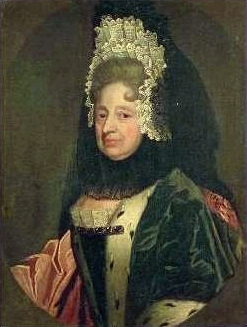
- The basic pool of claimants are legitimate, Protestant descendants of a designated ancestor in the royal line (historically traced to the Electress Sophia of Hanover).
- Since a recent reform, for people born after 28 October 2011 the eldest child succeeds regardless of sex, a system known as absolute primogeniture.
- Catholics are excluded from inheriting the throne; until reforms in the 2010s marrying a Roman Catholic could also disqualify a claimant, though that latter restriction has been relaxed.
- When a person in the line has children, those children take places immediately after their parent and ahead of more distant relatives; births, deaths and legal changes therefore alter the order continually.
- The sovereign’s consent to certain marriages remains a legal requirement for those near the front of the line; this preserves stability and prevents unforeseen disqualifications.
History and recent reforms
The present legal structure draws on centuries of statutes and conventions. The Act of Settlement (1701) and subsequent laws established the Protestant line of succession and limited inheritance to descendants of specific ancestors. Over time other statutes, and royal prerogatives, regulated marriage and succession. In the early 21st century, Commonwealth governments agreed to modernise several points.
Under the agreement reached at Perth in 2011, and implemented by domestic legislation in the United Kingdom, the change from male‑preference to absolute primogeniture applies to those born after 28 October 2011. The relevant UK law came into force in March 2015 and also amended the rules about marriage to Catholics and the requirement for sovereign consent to marriages of those close to the throne.
Current order and examples
The practical effect of these rules is visible in today’s line. The first place in the succession is held by the monarch’s eldest son, Prince William, Prince of Wales, followed by his children in order of birth; for example, his eldest son is second in line: Prince George of Wales. As births occur within the royal family, the list is updated so that each child’s position reflects their relationship and date of birth relative to others.
Notable distinctions and implications
Succession law is constitutional rather than purely familial: it affects the head of state for the United Kingdom and, in many cases, for several independent Commonwealth realms that share the same person as sovereign. Because of that shared role, significant changes in succession historically required consultation or agreement across those realms. The rules also mean that personal choices — such as marrying a person of a particular faith without the required consent — can have legal consequences for succession rights.
Finally, succession should not be confused with royal titles or styles, which follow separate traditions and laws. The line of succession determines who becomes sovereign; the conferment of titles, honours and styles is a distinct matter handled by the Crown and government.
Questions and answers
Q: Who is first in line to the British throne?
A: William, Prince of Wales is currently first in line to the British throne.
Q: What system of inheritance does the British monarchy use?
A: The British monarchy uses a system of inheritance called absolute primogeniture.
Q: How did the law change on 26 March 2015 regarding succession?
A: On 26 March 2015, the law changed so that for people born after 28 October 2011, succession was decided only by age; older children come before younger children.
Q: When someone who is in line to the throne has a child, where does that child stand in terms of succession?
A: When someone who is in line to the throne has a child, that child comes after them and their older children but before anyone else in the line of succession.
Q: Are Catholics allowed to be part of the royal family's line of succession?
A: No, Catholics are excluded from being part of the royal family's line of succession.
Q: Are illegitimate children allowed to be part of the royal family's line of succession?
A: No, illegitimate children are not allowed to be part of the royal family's line of succession.
Tags
Related articles
Author
AlegsaOnline.com Succession to the British throne Leandro Alegsa
URL: https://en.alegsaonline.com/art/141556