
Brick Lane — history, culture and contemporary life in London's East End
Brick Lane is a historic street in London's East End, known for its Bangladeshi community, markets, curry restaurants, street art, creative industries and layered immigrant and industrial history.
Overview
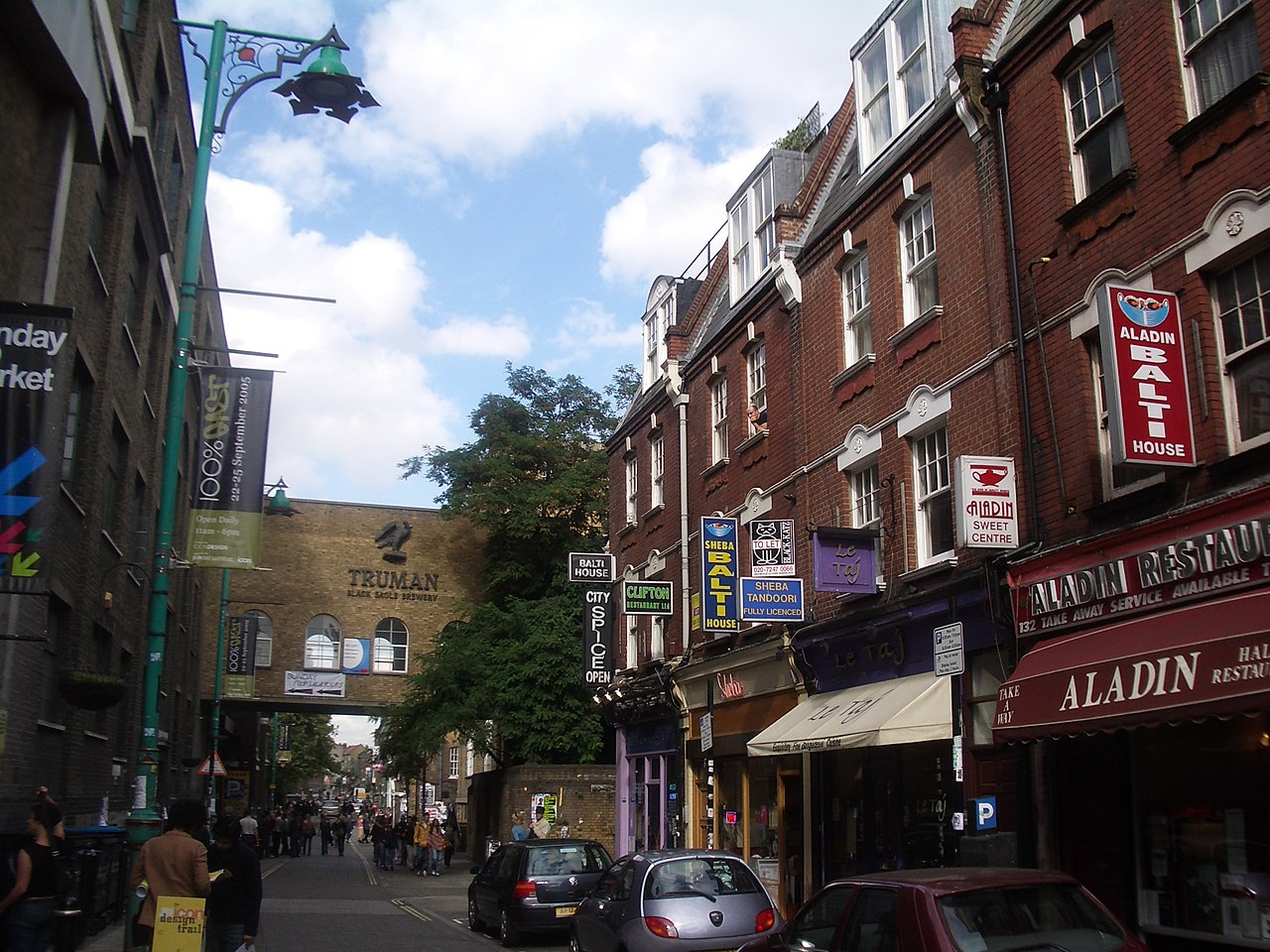
Brick Lane is a long street and neighbourhood in the East End, within the London Borough of Tower Hamlets and part of the wider East End landscape that includes nearby areas such as Bethnal Green, Whitechapel and Spitalfields. The name evokes the area’s brick-making and industrial past, while today the street is widely recognised as the heart of the city’s Bangladeshi community and for a dense concentration of restaurants, markets and cultural venues.
Image gallery
10 Images



Historical background
Brick Lane developed from industrial and artisan activity on the city’s eastern fringe. Over several centuries the neighbourhood absorbed waves of migrants and refugees who worked in weaving, tailoring and other trades. French Huguenot weavers settled in the area in early modern times, later joined by Jewish communities who established shops, synagogues and businesses in the 19th and early 20th centuries. From the later 20th century onward, migrants from Bangladesh made the area their focal point, opening businesses and community institutions that reshaped the street’s identity.
Architecture and landmarks
The built environment is a mix of former factories, workshop terraces, warehouses and religious buildings that reflect successive communities. Several former chapels and synagogues have been repurposed as mosques, community centres, galleries or event spaces, illustrating the layered history of worship and communal life along the street. Large former industrial sites nearby have been adapted for markets, creative studios and cultural venues.
Markets, food and culture
Brick Lane is renowned for its food scene, particularly its many South Asian restaurants and informal street-food traders. A dense row of curry houses along and near the street has contributed to its reputation across London; visitors often look to local listings and guides for current options for the many curry houses and street-food stalls. Weekend markets offer antiques, vintage clothing, craft goods and international food, and the area has become a regular destination for locals and tourists seeking diverse produce and goods.
Creative life and street art
In recent decades Brick Lane has attracted artists, designers and independent retailers. Former industrial buildings now host galleries, studios and creative enterprises, contributing to a lively cultural scene. The street is also known for its street art — large-scale murals and changing graffiti that draw photographers and enthusiasts, and which form part of the neighbourhood’s contemporary urban identity.
Community identity and contemporary issues
The Bangladeshi community has played a defining role in local life, with Bengali-run businesses, cultural celebrations and religious institutions concentrated here. At the same time, Brick Lane exemplifies common urban tensions: conservation of historic character, pressures from development, rising rents and gentrification. Debates about preserving local communities versus new investment feature in local discourse and planning.
Visiting and further information
- Getting there and local administration: consult the borough and neighbourhood resources for practical details.
- Nearby areas and context: explore the histories and amenities of Bethnal Green, Whitechapel and Spitalfields for a fuller sense of the East End.
- Community and culture: local directories and community pages provide information about the Bangladeshi community and events.
- Food and markets: current listings and guides list the many restaurants and food traders that make Brick Lane a popular eating destination.
Whether approached as a historic street shaped by industry and immigration, a centre of South Asian culture and commerce, or a contemporary creative quarter, Brick Lane remains an emblematic part of London’s evolving urban story. For detailed walking routes, market hours and community contacts, consult local tourism and borough pages, community directories and cultural listings.
Questions and answers
Q: Where is Brick Lane located?
A: Brick Lane is located in the London Borough of Tower Hamlets in the East End of London.
Q: What other areas are included in the old area where Brick Lane is found?
A: The old area where Brick Lane is found includes Bethnal Green, Whitechapel, Spitalfields, and Petticoat Lane.
Q: What is Brick Lane known as to some people?
A: Brick Lane is known as Banglatown to some people.
Q: What is the heart of the city's British Bangladeshi community?
A: Brick Lane is the heart of the city's British Bangladeshi community.
Q: What is Brick Lane famous for?
A: Brick Lane is famous for its many curry houses.
Q: Is Brick Lane an important part of London's history?
A: Yes, Brick Lane is part of an old area that has played an important part in London's history.
Q: What are some other notable features or landmarks in the Brick Lane area?
A: Other notable features or landmarks in the Brick Lane area include street art, vintage shops, and the Brick Lane Market.
Related articles
Author
AlegsaOnline.com Brick Lane — history, culture and contemporary life in London's East End Leandro Alegsa
URL: https://en.alegsaonline.com/art/14045
Sources
- towerhamlets.gov.uk : Spitalfields and Banglatown (London Borough of Tower Hamlets)
- british-history.ac.uk : 'Stepney: economic history', a history of the County of Middlesex: Volume 11: Stepney, Bethnal Green (1998), pp. 52-63
- british-history.ac.uk : Bethnal Green: settlement and building to 1836, A history of the County of Middlesex: Volume 11: Stepney, Bethnal Green (1998), pp. 91-5
- british-history.ac.uk : The Jews, a history of the County of Middlesex: Volume 1: Physique, archaeology, Domesday, ecclesiastical organization, the Jews, religious houses, education of working classes to 1870, private education from sixteenth century (1969), pp. 149-51
- spacesyntax.tudelft.nl : The spatial form of Bangladeshi Community in London's East End Iza Aftab (UCL)
- british-history.ac.uk : The Black Eagle Brewery, Brick Lane, Survey of London: volume 27: Spitalfields and Mile End New Town (1957), pp. 116-122
- mytowerhamlets.co.uk : A brief history of Mosque
- imagesofengland.org.uk : Images of England — details from listed building database (205992)