
James Madison Sr. (1723–1801) — Virginia Planter and Militia Colonel
Virginia tobacco planter, large Orange County landowner and militia officer; father of President James Madison and proprietor of Montpelier plantation.
Overview
James Madison Sr. (March 27, 1723 – February 27, 1801) was a leading Virginia planter and local political figure in 18th-century Orange County. He managed a substantial tobacco plantation that came to be known as Montpelier and served as a colonel in the county militia during the American struggle for independence. His household and estate provided the material foundation for his children, most notably his son James Madison, who became the fourth President of the United States.
Image gallery
2 Images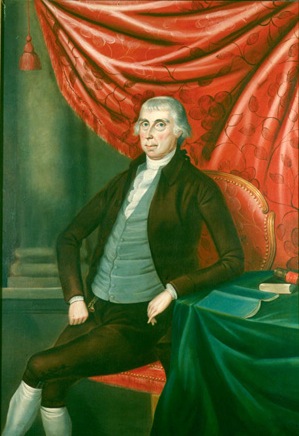

Family, estate, and economy
Madison inherited Mount Pleasant, later called Montpelier, a large tobacco plantation in central Virginia. Over time he acquired additional acreage, and at one point controlled roughly 5,000 acres, making him the largest landowner in Orange County. Like other Virginia planters of his era, Madison organized the estate around cash-crop agriculture and relied on enslaved labor to work the fields and maintain the household. The size and profitability of the plantation shaped the family's social status and enabled investments in education and public life for his children.
Military and public roles
In local affairs James Madison Sr. held militia rank and responsibilities characteristic of leading landholders. He was a colonel in the county militia and took part in organizing men and resources during the turbulent years of the American Revolutionary War. His position combined military, economic, and civic duties: commanding militia units in defense and contributing to county governance and security.
Children and legacy
Madison's household produced several children who pursued public and military careers. His eldest surviving son, James Madison, rose to national prominence as a political thinker, statesman, and later President. Other descendants continued to serve in military and civic roles; members of the extended family, over generations, included officers who were active in later American conflicts. The estate itself is widely remembered as the lifelong home associated with the Madison family and is often referenced under its later name, Montpelier.
Historical context and significance
Madison Sr.'s life illustrates the interconnected roles of landownership, slavery, and local authority in colonial and Revolutionary Virginia. Wealth derived from plantations provided social influence and civic responsibilities, and families like the Madisons played central parts in county government and militia organization. The transfer of family property and position to the next generation helped shape the upbringing and opportunities of leaders who took part in the founding of the United States.
Notable facts
- Born in 1723 and died in 1801, he lived through the colonial era, the Revolution, and the early national period.
- He served as a colonel in the militia during the American Revolutionary War.
- As proprietor of Montpelier, he became the largest landowner in Orange County after expanding his holdings.
- He was the father of President James Madison, whose national prominence linked the family estate to broader American history.
The record of James Madison Sr. is principally that of a prosperous planter and local leader whose economic and social position influenced the next generation. Montpelier and the Madison family remain subjects of historical interest because of their connections to early American politics, plantation economy, and the Revolutionary era.
Questions and answers
Q: Who was James Madison Sr.?
A: James Madison Sr. was a prominent Virginia planter and politician, who was also a colonel in the militia during the American Revolutionary War.
Q: What was the name of the tobacco plantation inherited by James Madison Sr.?
A: James Madison Sr. inherited Mount Pleasant, later known as Montpelier, which was a large tobacco plantation in Orange County, Virginia.
Q: How much property did James Madison Sr. acquire in his lifetime?
A: James Madison Sr. acquired more property over time and had 5,000 acres, making him the largest landowner in Orange County, Virginia.
Q: Who were James Madison Sr.'s children and grandchildren?
A: James Madison Sr. was the father of James Madison, 4th President of the United States, and Lieutenant General William Taylor Madison. He was also the grandfather of Confederate Brigadier General James Edwin Slaughter.
Q: What was the later name of the tobacco plantation inherited by James Madison Sr.?
A: The later name of the tobacco plantation inherited by James Madison Sr. was Montpelier.
Q: Aside from being a planter, what was the other occupation of James Madison Sr.?
A: James Madison Sr. was also a politician.
Q: During which war did James Madison Sr. serve as a colonel in the militia?
A: James Madison Sr. served as a colonel in the militia during the American Revolutionary War.
Author
AlegsaOnline.com James Madison Sr. (1723–1801) — Virginia Planter and Militia Colonel Leandro Alegsa
URL: https://en.alegsaonline.com/art/140264