
J. J. Thomson — discoverer of the electron and pioneer of atomic physics
Overview of Sir J. J. Thomson (1856–1940): discovery of the electron, early atomic model, mass‑analysis work that revealed isotopes, Nobel Prize, leadership at the Cavendish Laboratory and scientific legacy.
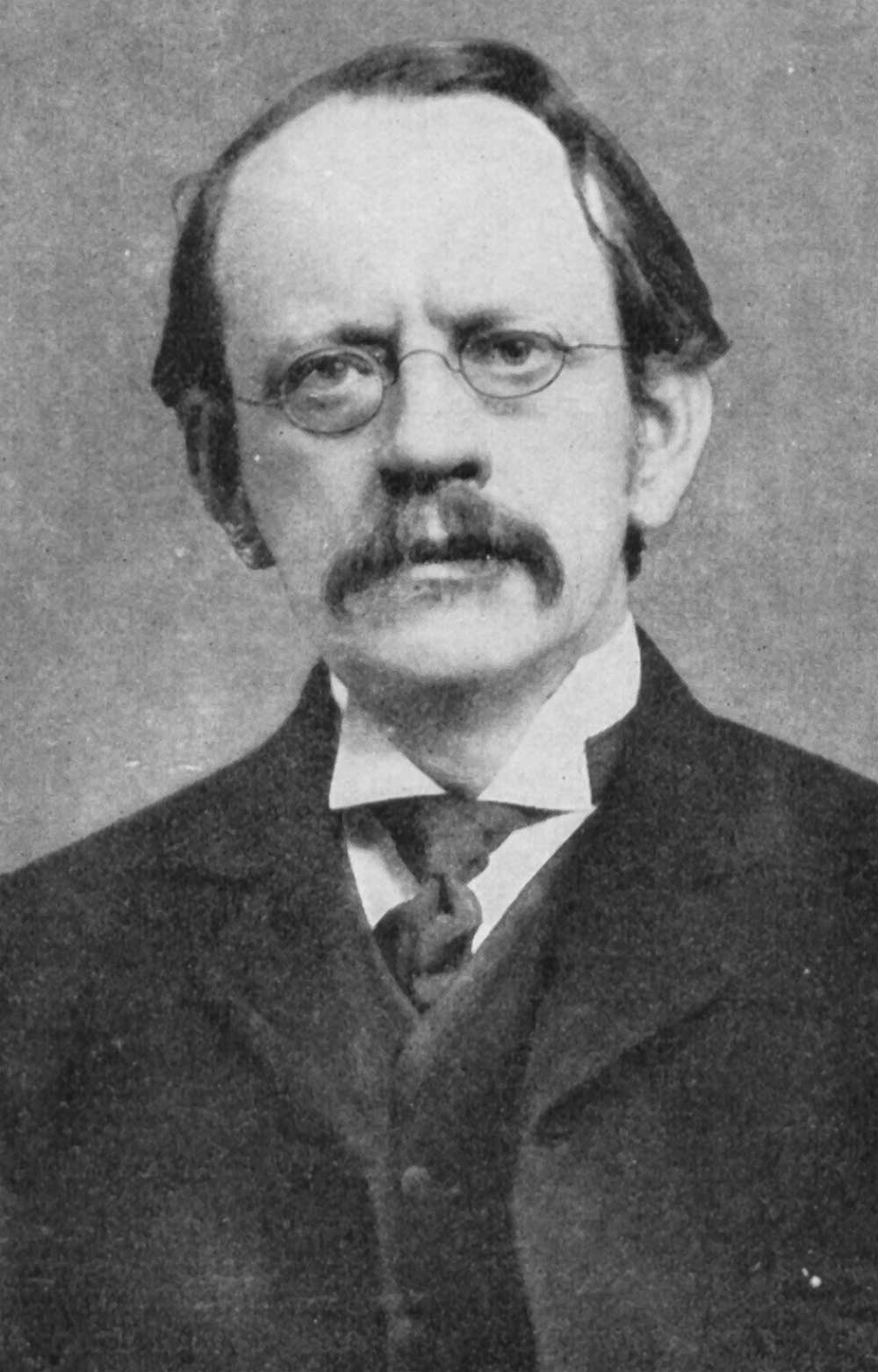
Sir Joseph John "J. J." Thomson (18 December 1856 – 30 August 1940) was a British physicist whose experimental work in the late 19th and early 20th centuries transformed ideas about the structure of matter. He is best known for identifying the electron and for developing techniques to study charged particles, achievements that earned him wide recognition as a Nobel laureate and as a central figure in the emergence of modern atomic physics.
Image gallery
10 Images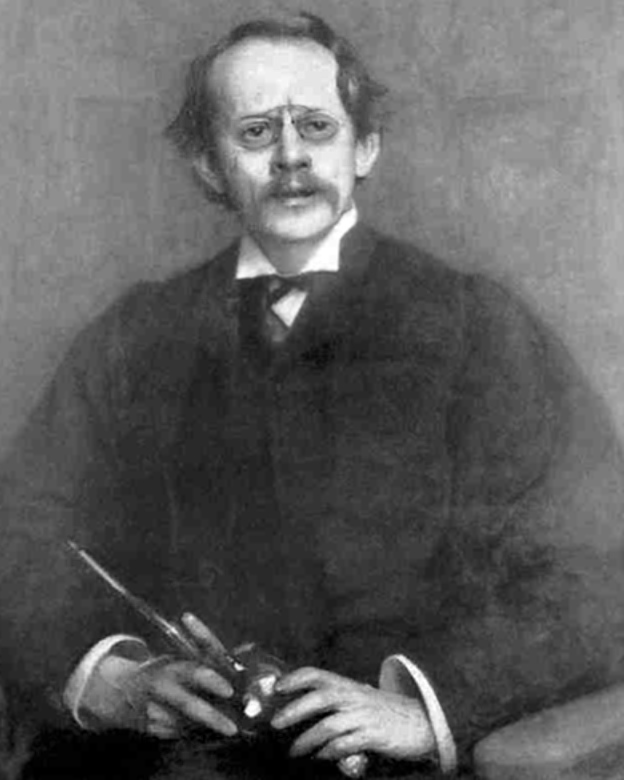





Life and career
Thomson was educated in Manchester and at Cambridge, where he later became director of the Cavendish Laboratory at the University of Cambridge. During his tenure he combined careful experimentation with theoretical arguments and built a laboratory that trained many young researchers who went on to make important contributions to physics. He held several honours and public appointments and remained active in research and teaching for many decades.
Discovery of the electron
In a series of experiments with discharge tubes, cathode rays and magnetic and electric deflection, Thomson showed that the rays were composed of particles much lighter than atoms and carrying negative electric charge. By measuring their deflection he determined a value for the charge-to-mass ratio that indicated these constituents were distinct from known atoms; they became known as the electron, the first identified subatomic particle. Thomson's work on cathode rays established experimental methods that remained central to studies of charged particles.
Atomic model and theoretical ideas
To account for the presence of internal charged components while preserving overall neutrality, Thomson proposed an early model of the atom in which negative charges were embedded in a diffuse positive medium. This picture—often summarized in later accounts—helped shift the debate from indivisible atoms toward models that admitted internal structure and motivated further experimental tests by others. Thomson himself refined his views as new evidence accumulated.
Isotopes and mass analysis
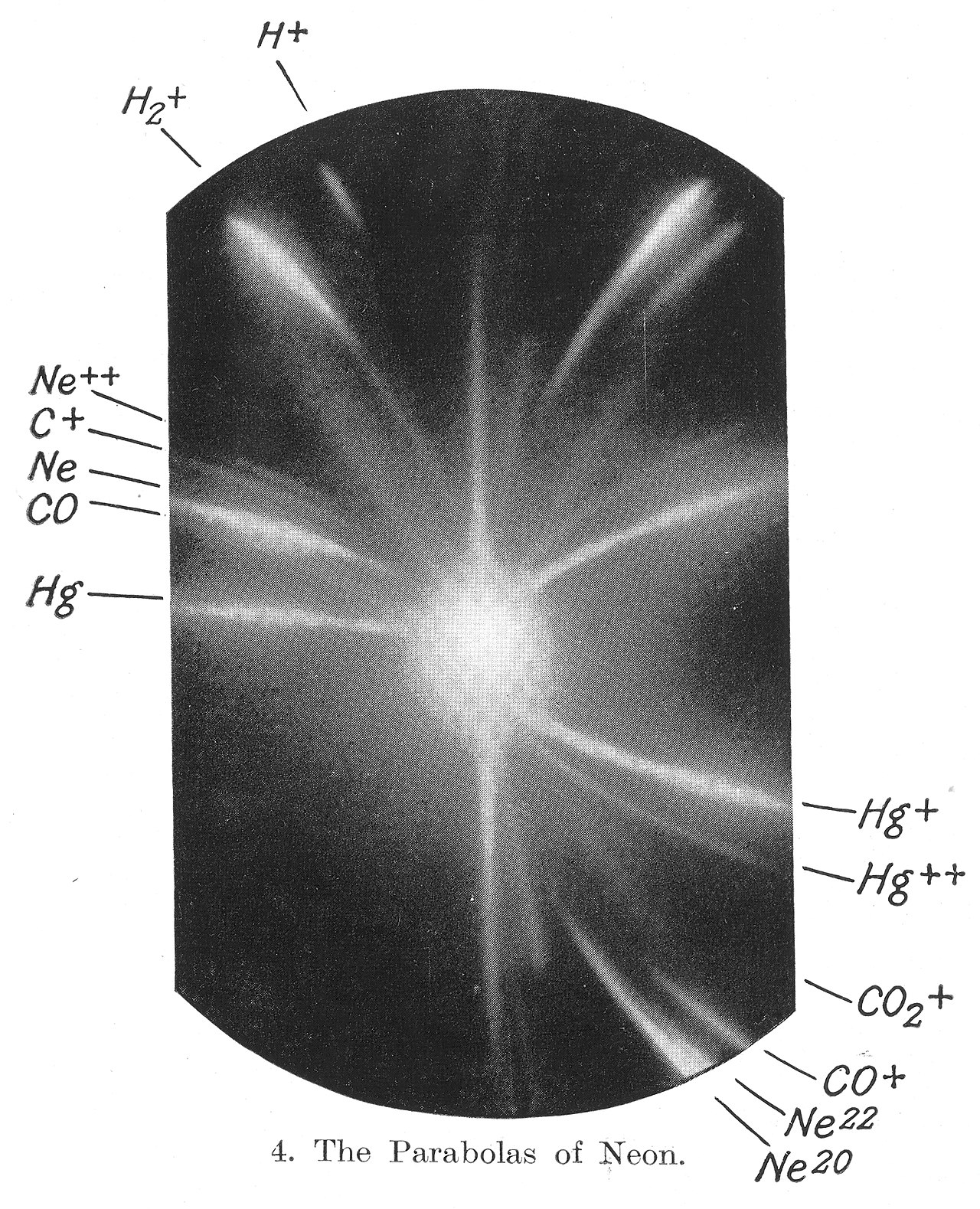
In work on positive rays and ionized gases, Thomson and his collaborators developed instruments for separating ions by mass and charge. These devices were early forms of the mass spectrograph and provided the first experimental evidence that a stable element could exist in atoms of different mass, an observation interpreted as the existence of isotopes. The positive rays consisted of positive cations produced in discharge tubes, and analysis of their behavior under electromagnetic fields allowed the detection of species with differing masses.
Recognition and legacy
Thomson received the Nobel Prize in Physics in 1906 for his investigations into the conduction of electricity in gases and for his discovery of the electron. His laboratory at Cambridge became a center for experimental physics, where rigorous measurement techniques and instrument development were emphasized. Many of his students and assistants later became leading scientists, and the instruments and approaches he pioneered evolved into standard tools across physics, chemistry and geology.
- Established quantitative methods for studying charged particles in fields, influencing later particle physics.
- Proposed an early atomic picture that guided subsequent experimental tests and theoretical developments in atomic theory.
- Developed early mass-analysis instruments that led to the mass spectrometer used in many disciplines.
Thomson's combination of precise experimentation, instrument innovation and mentorship left a durable mark on the physical sciences. For further reading consult specialized histories of the Cavendish Laboratory and accounts of early twentieth‑century experimental physics.
Physicist profile • Nobel recognition • Electron • Cathode rays • Charge-to-mass measurements • Subatomic particle • Isotopes evidence • Positive cations • Atomic theory • Cavendish Laboratory
Questions and answers
Q: Who was Sir Joseph John "J.J." Thomson?
A: Sir Joseph John "J.J." Thomson was a British physicist and Nobel laureate who discovered the electron and isotopes, and invented the mass spectrometer.
Q: What did J.J. Thomson say about electricity in 1893?
A: In 1893, J.J. Thomson said "There is no other branch of physics which affords us so promising an opportunity of penetrating the secret of electricity."
Q: What did J.J. Thomson discover in 1897?
A: In 1897, J.J. Thomson showed that cathode rays were composed of a previously unknown negatively charged particle of very small mass compared to its electric charge - later known as the electron - which was the first subatomic particle to be found.
Q: What did J.J Thompson hypothesize about atoms in atomic theory?
A: In atomic theory he hypothesized that atoms were spheres of evenly spread positive charge, where an individual negatively charged electron resided within each atom sphere .
Q: When did J.J Thompson find evidence for isotopes? A: He found the first evidence for isotopes of a stable (non-radioactive) element in 1913 while studying anode rays (positive cations).
Q: How many famous physicists studied with him at University of Cambridge? A: Many young men who studied and worked with him at University of Cambridge also became famous physicists
Author
AlegsaOnline.com J. J. Thomson — discoverer of the electron and pioneer of atomic physics Leandro Alegsa
URL: https://en.alegsaonline.com/art/140157