
Herbert Asquith, 1st Earl of Oxford and Asquith
British Liberal statesman who served as Prime Minister from 1908–1916, led major social reforms and the UK into World War I, and whose wartime leadership precipitated a political split.
Overview
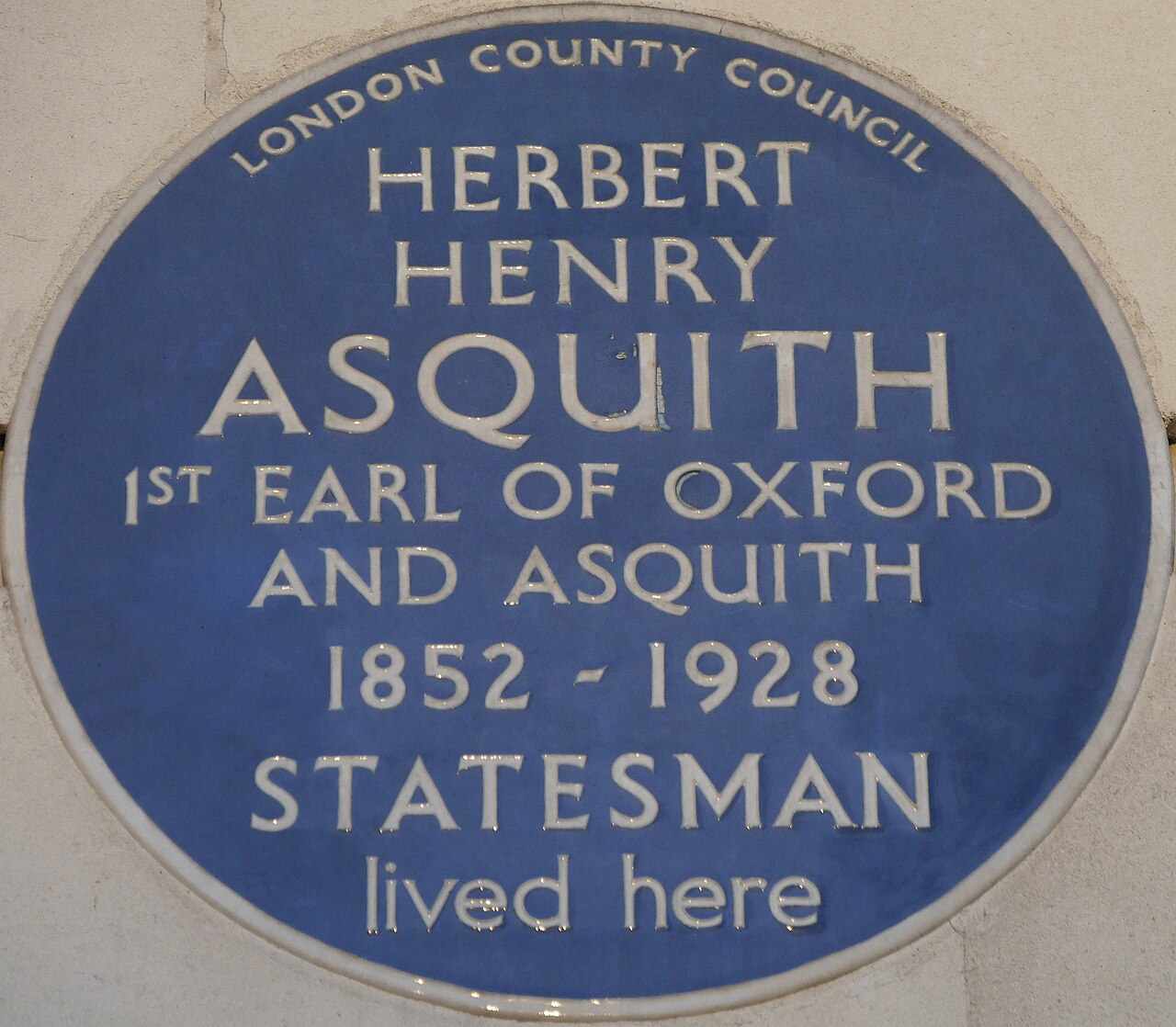
Herbert Henry Asquith (12 September 1852 – 15 February 1928), created 1st Earl of Oxford and Asquith, was a leading figure of the Liberal Party and Prime Minister of the United Kingdom from 1908 until 1916. Trained as a barrister, Asquith became known for his measured parliamentary style and held the premiership during a period of profound social change and the outbreak of the First World War. He led the government that introduced major welfare measures, but his conduct of coalition politics during the war produced a rupture with figures such as David Lloyd George and contributed to the weakening of the Liberal Party.
Image gallery
10 Images




Early career and political outlook
Asquith rose through the ranks of Victorian and Edwardian politics with a reputation for legal knowledge and constitutional interest. He championed classical liberal principles that, while valuing individual liberty, evolved toward acceptance of state intervention to relieve poverty and insecurity. Although he endorsed many domestic reforms, he was notably opposed to the extension of the parliamentary franchise to women for much of his career, a stance that attracted sustained criticism from suffrage movements.
Domestic reforms and constitutional change
As Prime Minister, Asquith presided over a legislative programme that reshaped the British welfare state and the balance of parliamentary power. Key measures enacted under his administration included:
- Old Age Pensions (1908) — a non-contributory pension for the elderly that marked one of the first modern welfare payments in Britain;
- National Insurance Act (1911) — a system of health and unemployment insurance for workers, administered through contributions;
- Parliament Act (1911) — a constitutional statute that curtailed the delaying power of the House of Lords, reducing their veto over money bills and limiting the Lords' ability to block legislation.
These reforms reflected a shift within the Liberal Party toward social legislation intended to mitigate the worst effects of industrial society.
World War I, coalition politics and resignation
The outbreak of the First World War in 1914 fundamentally changed the political landscape. Asquith formed a wartime coalition and presided over national mobilisation, but disagreements over military strategy, the conduct of the war, and cabinet appointments increasingly eroded confidence in his leadership. In late 1916 a political crisis and loss of parliamentary support led to his replacement by David Lloyd George, who led a new coalition government. The personal and political rift between Asquith and Lloyd George fractured the Liberal Party and diminished its influence in the years after the war.
Legacy, assessment and family
Historically, Asquith is remembered both for the social legislation enacted under his government and for the circumstances of his wartime fall. Until 5 January 1988 he was the longest continuously serving prime minister of the twentieth century, a testament to the stability of his earlier years in office. Critics faulted his wartime management and his resistance to women's suffrage; supporters point to the enduring institutions created while he led the government. His descendants include notable public figures: ambassador Dominic Asquith, and actresses such as Helena Bonham Carter and Anna Chancellor (as a later-generation relation).
Notable facts
- He held the hereditary title Earl of Oxford and Asquith in his later life.
- He served as Prime Minister during both a period of social reform and the early years of a major international conflict.
- His disagreement with wartime colleagues contributed to a long-term realignment of British politics.
For further reading on Asquith's life, career and the political context of his premiership see contemporary biographies and parliamentary histories that place his work within the evolution of modern British government and social policy. Additional resources are available via official collections and scholarly studies archived online and in research libraries.
Questions and answers
Q: Who was Herbert Henry Asquith?
A: Herbert Henry Asquith was the Liberal Prime Minister of the United Kingdom from 1908 to 1916.
Q: Was Herbert Henry Asquith in favor of women's suffrage?
A: No, Herbert Henry Asquith was not in favor of the right of women to vote.
Q: What reforms did Herbert Henry Asquith lead during his time as Prime Minister?
A: Herbert Henry Asquith led a series of domestic reforms, including social insurance and the reduction of the power of the House of Lords.
Q: Who replaced Herbert Henry Asquith as Prime Minister in late 1916?
A: David Lloyd George replaced Herbert Henry Asquith as Prime Minister in late 1916.
Q: What was significant about Herbert Henry Asquith's ministry?
A: Herbert Henry Asquith's ministry was significant for the Old Age Pension (1908), National Insurance Act (1911) and the Parliamentary Act (1911), which restricted the power of the House of Lords.
Q: Who are some of Herbert Henry Asquith's descendants?
A: Some of Herbert Henry Asquith's descendants include ambassador Dominic Asquith (great-grandson), actress Helena Bonham Carter (great-granddaughter) and actress Anna Chancellor (great-great-granddaughter).
Q: How long was Herbert Henry Asquith the longest continuously serving Prime Minister in the 20th century?
A: Until 5 January 1988, Herbert Henry Asquith was the longest continuously serving Prime Minister in the 20th century.
Author
AlegsaOnline.com Herbert Asquith, 1st Earl of Oxford and Asquith Leandro Alegsa
URL: https://en.alegsaonline.com/art/139657