
Hell's Kitchen (Clinton): Manhattan neighborhood overview
A concise, neutral overview of Hell's Kitchen (Clinton) in Manhattan: geography, history, character, landmarks, transport links and cultural significance near Midtown and the theater district.
Hell's Kitchen, also commonly called Clinton or Midtown West, is a neighborhood on the West Side of Manhattan in New York City, United States. It lies roughly between 34th Street and 59th Street, from 8th Avenue west to the Hudson River. The area functions as a transitional zone between dense Midtown commercial blocks and the residential stretches of the Far West Side, combining apartment buildings, local businesses, and institutional facilities.
Image gallery
10 Images


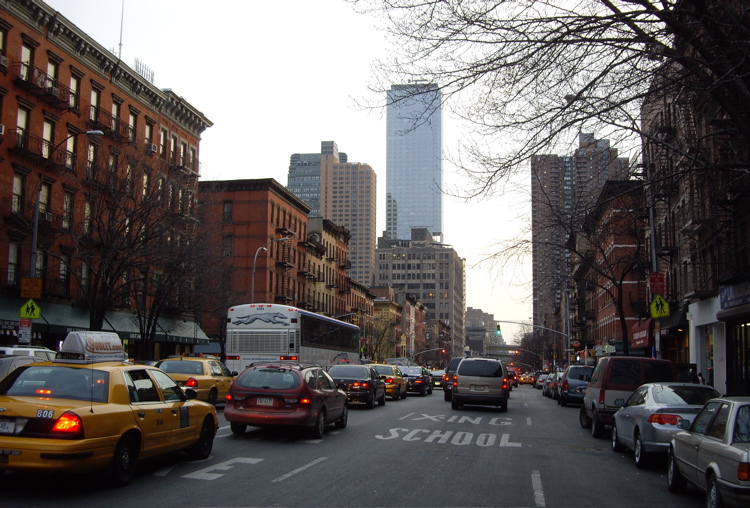


Geography and character
Physically compact, Hell's Kitchen mixes older low-rise tenements and walk-up buildings with later mid-rise and high-rise developments. The neighborhood contains a range of land uses: medical and service institutions, warehouses, theaters and a variety of retail and restaurant blocks. Its proximity to Midtown gives it important support infrastructure, including hospitals and light-industrial facilities that serve the broader business district. For context on local infrastructure and services, see the hospital and warehouse links: hospital, warehouse, and infrastructure.
History and development
Historically Hell's Kitchen was home to large numbers of working-class and immigrant families, notably an Irish-American community that shaped local culture and institutions; for background, consult the Irish community link: Irish Americans. For much of the 19th and 20th centuries the neighborhood had a reputation for rough streets and tough tenement life, which affected perceptions and property values (bad reputation, real estate prices). From the late 20th century onward, development pressure from nearby Midtown led to gradual demographic and physical change; planners noted displacement risks for people of modest means in earlier city plans (late 20th century changes).
Culture, residents and the arts
Closeness to Broadway and numerous rehearsal and training spaces has made Hell's Kitchen popular with performing artists. Many actors and theater professionals choose to live in the neighborhood because of its easy access to theaters and schools; relevant cultural links include actors, the Broadway district and the Actors Studio. Beyond the theater world, the area supports an active restaurant and nightlife scene, reflecting waves of newcomers who opened eateries and small businesses.
Transport, services and notable sites
Hell's Kitchen is well served by buses, subway lines that run along and across Midtown, and commuter rail connections nearby. Its role as part of Midtown's support network means that transportation arteries and service facilities are prominent. Key categories of local amenities include:
- Transportation: multiple subway lines and bus routes, convenient for Midtown employment centers.
- Healthcare and institutions: hospitals and clinics serving residents and the business district (hospital).
- Entertainment: off-Broadway and Broadway-adjacent theaters and rehearsal spaces.
- Commercial corridors: restaurants, specialty shops and small manufacturing or warehouse uses (warehouse).
Distinctive facts and present-day dynamics
Today Hell's Kitchen is a neighborhood of contrasts: longstanding community institutions sit beside new developments aimed at Midtown workers. The area's transformation reflects broader urban trends—gentrification pressures, entertainment-industry clustering, and infrastructure adaptation—while local civic groups and planning efforts continue to debate housing affordability and neighborhood character. For introductions and further reading about the neighborhood and its context within the city, see general references: Manhattan, New York City, U.S., and the geographic reference to the Hudson River. Additional topical links: infrastructure, bad reputation, real estate prices, Irish Americans, late 20th century changes, actors, Broadway, Actors Studio.
Questions and answers
Q: What is Hell's Kitchen?
A: Hell's Kitchen is a neighborhood in Manhattan, New York City, located on the West Side between 34th Street and 59th Street, from 8th Avenue to the Hudson River.
Q: What infrastructure does Hell's Kitchen have?
A: Hell's Kitchen has transportation, hospital, and warehouse infrastructure for the Midtown Manhattan business district.
Q: What was Hell's Kitchen's reputation in the past?
A: Hell's Kitchen had a bad reputation in the past, which resulted in real estate prices in the area being lower than much of the rest of Manhattan until the early 1990s.
Q: Who lived in Hell's Kitchen in the past?
A: Hell's Kitchen was once a center of poor and working-class Irish Americans.
Q: Why has Hell's Kitchen undergone change in the last few decades?
A: Hell's Kitchen has undergone change in the last few decades as a result of its location at Midtown.
Q: Who lives in Hell's Kitchen today?
A: Today, many actors live in Hell's Kitchen due to its closeness to the Broadway theaters and Actors Studio training school.
Q: What did the Plan for New York City book state about Hell's Kitchen in 1969?
A: The 1969 edition of the Plan for New York City book, authored by the City Planning Commission, stated that people of modest means were being driven from the area by development pressures due to the Midtown location.
Author
AlegsaOnline.com Hell's Kitchen (Clinton): Manhattan neighborhood overview Leandro Alegsa
URL: https://en.alegsaonline.com/art/139599