
Brenno — river of the Blenio Valley, Ticino, Switzerland
The Brenno is a 36 km river in Ticino, Switzerland, flowing south through the Blenio Valley from alpine sources and the Lago di Luzzone reservoir to join the Ticino at Biasca.
Overview
The Brenno is a mountain river about 36 kilometres long that drains the Blenio Valley (Valle di Blenio) in the canton of Ticino, southern Switzerland. It runs predominantly southward through a narrow alpine corridor before turning into a more open valley floor and finally joining the Ticino River at Biasca. The river links high alpine terrain, a storage reservoir, small valley communities and the lower Ticino plain.
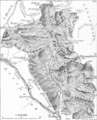
Image gallery
1 Image
Sources, course and tributaries
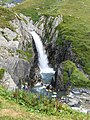
The principal source of the Brenno rises in the high pastures beneath Piz Gaglianera in the Cogn dei Lavazz area; in its upper reaches it behaves as a steep, fast-moving mountain stream. A major inflow comes from the Lago di Luzzone reservoir, which discharges into the Brenno near the village of Campo. Lower down the valley the Brenno receives the Brenno di Santa Maria, a tributary that descends from the Lukmanier Pass via the Olivone basin. Other smaller left-bank streams, notably the Orino and the Lesgiüna, contribute gravel and seasonal flows to the river.
Physical characteristics
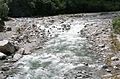
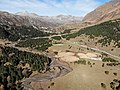
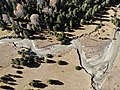
Along its course the Brenno shows a contrast between confined mountain channels and a broad, often braided lower reach. In the section between Malvaglia and the Buzza di Biasca landslide cone the river is particularly dynamic: repeated sediment deposition has created extensive gravel bars that occupy much of the valley floor. This pattern is typical of streams carrying large sediment loads from steep catchments and episodic high flows.
History, human use and infrastructure
The Blenio Valley has been inhabited for centuries, and the Brenno has long been important for local agriculture, pasture management and village life. In the 20th century the construction of the Lago di Luzzone dam created a regulated reservoir used for hydropower generation and seasonal water management. Communities along the Brenno have also invested in flood control works, embankments and channel adjustments to protect settlements and arable land from high spring and summer discharges.
Ecology and landscape value
The river corridor supports riparian vegetation and alpine-to-subalpine habitats in its upper reaches, while the gravel bars and dynamic channels of the lower Brenno provide distinctive ecological niches for pioneer plants and invertebrates. The whole valley is valued for hiking, mountain grazing (alpages) and scenic landscapes that combine rocky headwaters, the reservoir basin and pastoral lower slopes.
Notable facts and distinctions
- The Brenno drains the Blenio Valley and is a tributary of the Ticino River, which flows onward into Italy and eventually into the Po basin.
- Its mix of steep alpine reaches and a braided lower course makes it an example of an alpine river that transitions from confined torrent to sediment-rich valley stream.
- Human interventions such as the Luzzone reservoir have altered flow regimes, while flood protection works address the river's naturally active behaviour.
Today the Brenno remains a living part of Ticino's mountain landscape, combining natural dynamics with centuries of local use and modern water management.
Related articles
Author
AlegsaOnline.com Brenno — river of the Blenio Valley, Ticino, Switzerland Leandro Alegsa
URL: https://en.alegsaonline.com/art/13934