
George F. Smoot — cosmologist and Nobel Prize laureate
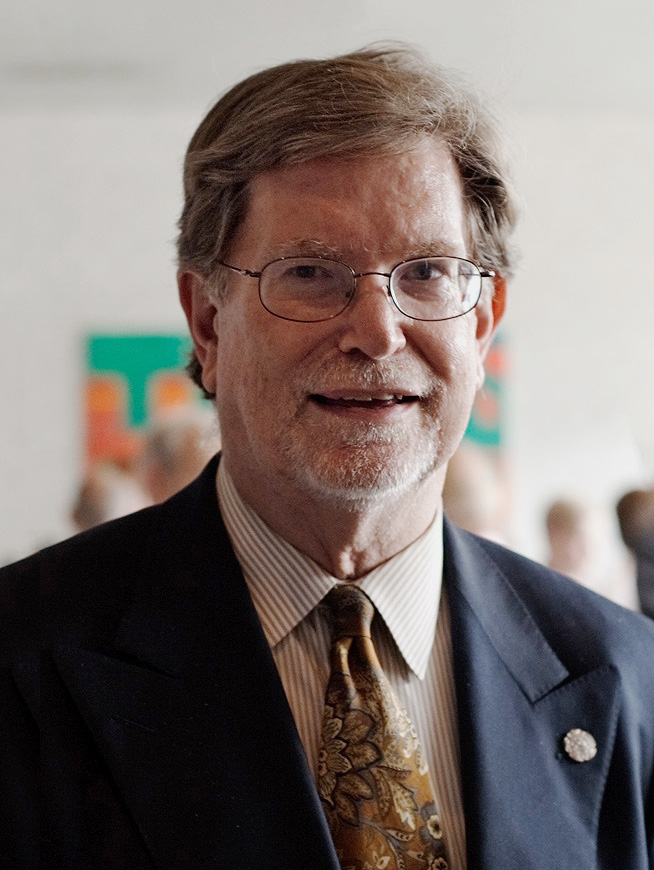
American physicist George F. Smoot (born 1945) received the 2006 Nobel Prize for measurements of the cosmic microwave background with the COBE satellite, advancing precision cosmology and our view of structure formation.
George Fitzgerald Smoot III (born February 20, 1945) is an American physicist and professor known for pioneering measurements in observational cosmology. He is best known for his role in experiments that mapped the cosmic microwave background (CMB) and for sharing the 2006 Nobel Prize in Physics with John C. Mather. Smoot has been affiliated with the University of California, Berkeley physics department and has maintained public and academic profiles describing his research and teaching (faculty page, profile).
Image gallery
7 Images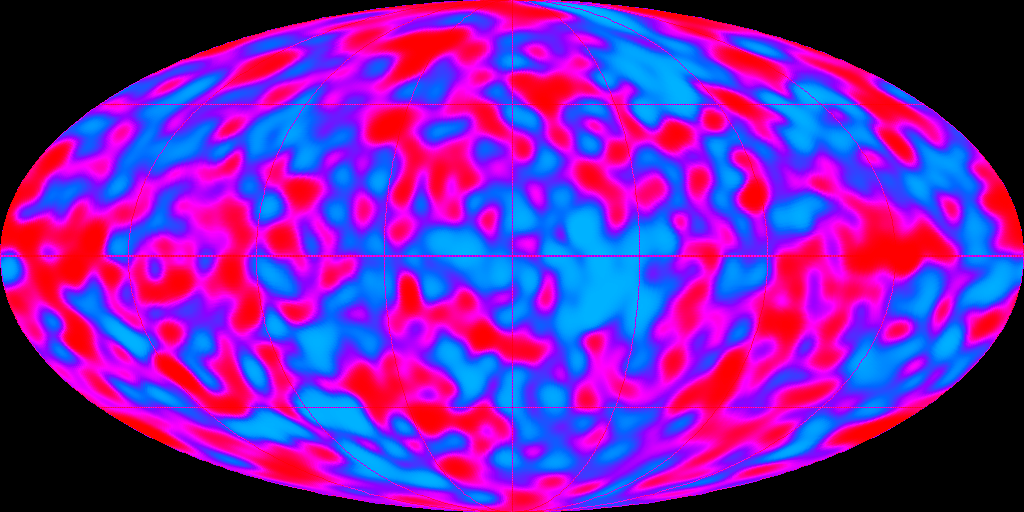




COBE and the detection of CMB anisotropy
Smoot was a principal investigator on the Cosmic Background Explorer (COBE), a satellite mission whose instruments measured both the spectrum and spatial variations of the relic radiation from the early universe. COBE carried several instruments, including a differential microwave radiometer and other detectors that together showed the CMB has an almost perfect blackbody spectrum while also exhibiting tiny temperature differences across the sky. The detection of these anisotropies — temperature fluctuations about one part in 100,000 — provided the first clear observational evidence of the seeds that later grew into galaxies and clusters under gravity. These results strengthened the case for the Big Bang framework and helped turn cosmology into a precision science.
Research approach and impact
Smoot's work emphasizes experimental instrumentation, meticulous calibration, and statistical analysis of faint signals. The success of COBE depended on careful control of systematic errors and collaboration between engineers and theorists to interpret sky maps. The COBE measurements constrained models of the early universe and supported ideas about cosmic inflation and the growth of structure. Subsequent missions and experiments built on COBE's legacy by mapping the CMB with finer angular resolution and sensitivity, enabling precise estimates of cosmological parameters and further development of observational cosmology and theoretical models.
Career, honors and public engagement
In addition to the Nobel Prize, Smoot has received other honors for his scientific contributions, including the Einstein Medal. He has continued to participate in instrument design, high-altitude and space-based observational programs, and public outreach to explain how measurements of the microwave sky inform our picture of cosmic history. His professional work is described in technical publications and accessible summaries that discuss both the scientific findings and the practical challenges of observing faint cosmological signals (astrophysics resources and project summaries).
Legacy and significance
Smoot's contributions are widely regarded as pivotal in shifting cosmology from qualitative models to a data-driven, quantitative discipline. The COBE results — confirmation of the CMB's near-perfect blackbody form and the detection of anisotropies — remain foundational observations. They provided empirical input for models of the early universe, constrained scenarios for the generation of primordial fluctuations, and set the stage for follow-up satellite missions and ground-based surveys that refined our estimates of the universe's age, composition and geometry.
Summary facts
- Field: observational experimental cosmology and astrophysics.
- Key instrument: the COBE satellite, whose measurements of the cosmic microwave background established important empirical benchmarks.
- Major award: 2006 Nobel Prize in Physics (shared with John C. Mather); other honors include the Einstein Medal.
- Affiliation and resources: academic and outreach material available via institutional pages (University profile, faculty page, personal profile).
George F. Smoot's work illustrates how precise instrumentation, careful analysis and interdisciplinary collaboration can convert theoretical ideas about the early universe into reproducible measurements, thereby shaping the modern understanding of cosmic origins and structure formation.
Questions and answers
Q: Who is George Fitzgerald Smoot III?
A: George Fitzgerald Smoot III is an American professor of astrophysics and cosmology.
Q: What did George Smoot win the Nobel Prize in Physics for?
A: George Smoot won the Nobel Prize in Physics in 2006 for his work on cosmic microwave background radiation and COBE with John C. Mather.
Q: What did George Smoot's work on cosmic microwave background radiation and COBE make possible?
A: George Smoot's work on cosmic microwave background radiation and COBE made it possible to measure black holes and cosmic radiation much more exactly than was possible before.
Q: What new evidence did George Smoot's work give to the big-bang idea?
A: George Smoot's work gave new evidence for the big-bang idea that the universe was once a big explosion.
Q: What satellite did George Smoot use to conduct his work?
A: George Smoot used the Cosmic Background Explorer Satellite (COBE) to conduct his work.
Q: What did the Nobel Prize committee say about George Smoot's work on COBE?
A: The Nobel Prize committee said that "the COBE-project can also be regarded as the starting point for cosmology as a precision science."
Q: What other award has Professor Smoot won?
A: In 2003, Professor Smoot was awarded the Einstein Medal.
Author
AlegsaOnline.com George F. Smoot — cosmologist and Nobel Prize laureate Leandro Alegsa
URL: https://en.alegsaonline.com/art/138818