
W. Ford Doolittle — evolutionary and molecular biologist
Biography and overview of W. Ford Doolittle, his research on cyanobacteria, endosymbiosis, horizontal gene transfer, critiques of the Gaia hypothesis and the universal Tree of Life, and his legacy.
Overview
W. Ford Doolittle (born February 21, 1941, in Urbana, Illinois) is a Canadian-based evolutionary and molecular biologist, Professor Emeritus at Dalhousie University. His work spans microbial systematics, molecular evolution and the origins of cellular complexity. Doolittle has been recognized by election to the National Academy of Sciences and as a Fellow of the Royal Society of Canada.
Image gallery
1 Image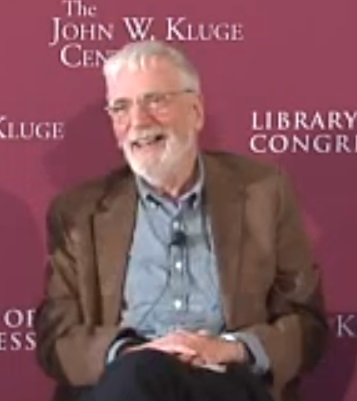
Research and scientific contributions
Doolittle's early laboratory and field studies focused on cyanobacteria, a group of photosynthetic prokaryotes important for understanding the origin of plastids. Building on comparative biochemistry and molecular phylogenetics, he produced influential evidence that chloroplasts (plastids) originated from a cyanobacterial endosymbiont. This supported and refined the endosymbiotic theory for the origin of certain organelles in eukaryotic cells.
Another major theme in his work is the role of horizontal gene transfer (HGT) in microbial evolution. Doolittle argued that gene flow between lineages, not only vertical descent, has strongly shaped prokaryotic genomes. His analyses helped popularize the idea that microbial evolution is network-like in many respects, complicating simple tree-based models.
Views on evolution, the Tree of Life and Gaia
Doolittle has been a prominent critic of an all-encompassing, strictly bifurcating Tree of Life. He proposed that, particularly for bacteria and archaea, evolutionary history is better represented as a web or network because of frequent genetic exchange. At the same time, he has made clear that his critiques are scientific and not aligned with intelligent design or non-scientific alternatives. In 1981 he published a widely cited critique of the Gaia hypothesis, stimulating debate about scientific and rhetorical aspects of that idea.
Historical context and influence
Doolittle's contributions arrived during a period of rapid growth in molecular methods and comparative genomics. As DNA sequencing and phylogenetic methods matured, his perspectives encouraged researchers to re-evaluate assumptions about lineage purity and the universality of tree-like descent. His work influenced microbial systematics, evolutionary theory, and discussions about how to represent evolutionary relationships in the genomic era.
Notable themes and legacy
- Support for the endosymbiotic origin of plastids and insights into early eukaryotic evolution.
- Emphasis on horizontal gene transfer as a major evolutionary force in prokaryotes.
- Arguments that challenge simplistic representations of a single rooted Tree of Life.
- A readiness to engage in public scientific debate, exemplified by his critique of the Gaia hypothesis.
Further reading and context
Readers seeking primary literature and broader discussion can consult reviews and commentaries that place Doolittle's arguments within ongoing debates about microbial evolution, the origins of cellular organelles, and methods for reconstructing evolutionary history. His career illustrates how molecular data reshaped core concepts in evolutionary biology and systematics; for introductions to related topics see materials on evolution and modern phylogenomics.
For institutional and biographical details visit pages associated with Dalhousie University and honors listings such as the National Academy of Sciences. Additional background on cyanobacteria, endosymbiosis and HGT can be found through specialist reviews and textbooks in microbiology and evolutionary biology.
Questions and answers
Q: Where was W. Ford Doolittle born?
A: W. Ford Doolittle was born in Urbana, Illinois on February 21, 1941.
Q: What is W. Ford Doolittle's profession?
A: W. Ford Doolittle is an evolutionary and molecular biologist and Professor Emeritus at Dalhousie University in Halifax, Nova Scotia.
Q: What awards has W. Ford Doolittle received?
A: W. Ford Doolittle is a member of the US National Academy of Sciences and a Fellow of the Royal Society of Canada, among other awards he has received for his work in biology.
Q: What research did W. Ford Doolittle conduct?
A: W. Ford Doolittle studied cyanobacteria and found evidence for the endosymbiont origins of chloroplasts as well as having a theory for the initial evolution of eukaryotes and showing why horizontal gene transfer is important to prokaryotic evolution.
Q: What article by W.Ford Doolittle gained notice in 1981?
A: In 1981, an article by WFordDoole entitled "Is Nature Really Motherly?" published in The CoEvolution Quarterly gained notice and was often cited by J E Lovelock's critics as it was a criticism of Lovelock's formulation of the Gaia Theory .
Q: DoesWFordDoole believe that an all-encompassing Tree Of Life is correct?
A: No,WFordDoole does not believe that an all-encompassing Tree Of Life is correct but he does not support intelligent design either as he believes that evolution could have happened without a single common ancestor or tree of life on Earth
Author
AlegsaOnline.com W. Ford Doolittle — evolutionary and molecular biologist Leandro Alegsa
URL: https://en.alegsaonline.com/art/138451