
F. W. de Klerk
South African statesman who served as state president (1989–1994), shared the 1993 Nobel Peace Prize with Nelson Mandela for actions that led to the end of apartheid, and later served in the Government of National Unity.
Overview
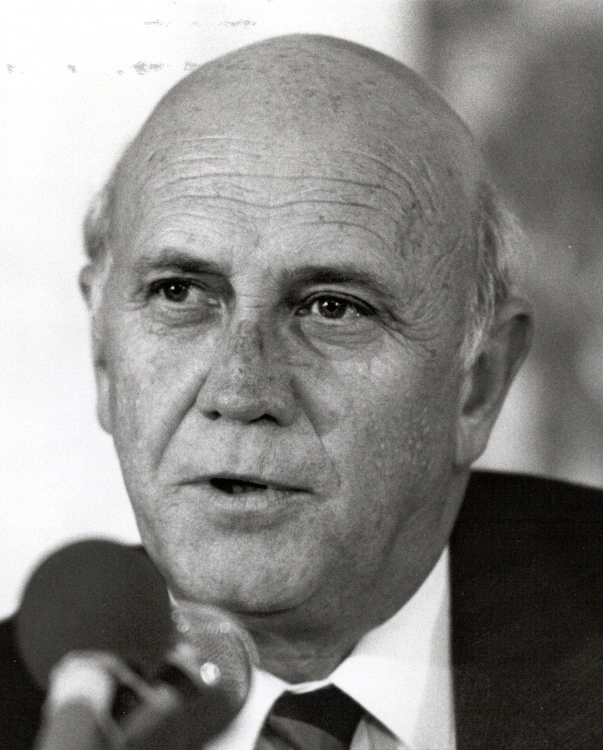
Frederik Willem de Klerk (18 March 1936 – 11 November 2021) was a South African politician best known for presiding over the transition away from apartheid. He served as State President from 1989 until the first fully representative elections in 1994, after which he became a deputy in the Government of National Unity. His role in dismantling institutional racial segregation and negotiating a new political order earned him international recognition as well as domestic controversy.
Image gallery
9 Images



Early life and legal career
De Klerk trained as a lawyer and qualified as an attorney in 1958. As a student and young professional he joined the National Party and worked as its legal adviser for several years before entering high-level politics. His legal background informed his early career and provided the technical knowledge that later helped in drafting transitional legislation and negotiating changes to the constitution and security laws.
Presidency and reform initiatives
After becoming president in 1989, de Klerk initiated a series of measures that altered the political landscape. He lifted bans on opposition groups and released political prisoners, the most famous being Nelson Mandela. He also began the repeal of many apartheid-era laws and opened formal talks with previously outlawed political organizations. These actions were framed by de Klerk as a controlled and negotiated process to avoid wider violence and chaos.
Negotiations, Nobel Prize, and outcomes
De Klerk shared the 1993 Nobel Prize for Peace with Nelson Mandela in recognition of their joint leadership in negotiating the end of apartheid. The prize acknowledged the process that led to the 1994 elections and a new constitution. Supporters praised the peaceful transfer of power and the legal dismantling of apartheid, while critics argued about the pace of change and the extent of concessions made to preserve existing economic structures.
Later political life and legacy
Following the 1994 election, de Klerk served as one of the deputy presidents in the Government of National Unity until 1996 and formally retired from frontline politics in 1997. He remained active in public commentary and in his party, which later rebranded as the New National Party; he left that party in 2004 when it sought alignment with the African National Congress. Historians and commentators continue to debate his motives and legacy—whether he was a pragmatic reformer who averted civil war or a representative of an entrenched order who acted primarily to safeguard certain interests.
Key actions and personal life
- Initiated repeal of apartheid legislation and unbanned political movements.
- Ordered the release of long-imprisoned political leaders and began multi-party talks.
- Shared the Nobel Peace Prize for facilitating a negotiated transition.
On the personal side, de Klerk was married twice. His first marriage to Marike produced three children; he married Elita Georgiades in 1998. His life and career remain central to understanding South Africa’s late-20th-century transformation and the complex process of reconciling justice, stability, and change.
For further reading about his political career and the transition period, see resources on his presidency, the legal reforms he oversaw, and analyses of the negotiations that ended formal racial segregation in South Africa. Additional contextual material can be found through biographical and historical summaries of this era that cover both achievements and criticisms of the transition.
Legal career details | Presidential records | History of apartheid | Political biography
Questions and answers
Q: Who was Frederik Willem de Klerk?
A: Frederik Willem de Klerk was a South African politician who served as the president of South Africa from 1989 to 1994 and later, as the vice president of South Africa from 1994 to 1996.
Q: What is the significance of Frederik Willem de Klerk in South African history?
A: Frederik Willem de Klerk is known for his role in ending apartheid and setting up a new government in South Africa. He was awarded the Nobel Prize for Peace in 1993, along with Nelson Mandela, for bringing peace and democracy to South Africa.
Q: When was Frederik Willem de Klerk born, and when did he pass away?
A: Frederik Willem de Klerk was born on March 18, 1936, and he passed away on November 11, 2021.
Q: What was Frederik Willem de Klerk's profession before he entered politics?
A: Before he entered politics, Frederik Willem de Klerk studied law and became an attorney. He worked as legal counsel for the National Party until 1972.
Q: How many times was Frederik Willem de Klerk married, and how many children did he have?
A: Frederik Willem de Klerk was married twice. He had three children from his first marriage with Marike Willemse and no children from his second marriage to Elita Georgiades.
Q: When did Frederik Willem de Klerk retire from politics, and from which party did he leave in 2004?
A: Frederik Willem de Klerk retired from politics in 1997. In 2004, he left the New National Party when it became known that the party wanted to unite with the African National Congress to form a single party.
Q: What was Frederik Willem de Klerk awarded the Nobel Prize for Peace for, and who did he share the prize with?
A: Frederik Willem de Klerk was awarded the Nobel Prize for Peace in 1993 for peacefully ending apartheid and setting up a new government in South Africa. He shared the prize with Nelson Mandela.
Author
AlegsaOnline.com F. W. de Klerk Leandro Alegsa
URL: https://en.alegsaonline.com/art/138241