
E. T. A. Hoffmann: German Romantic writer, composer and critic
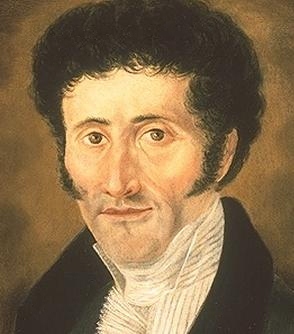
E. T. A. Hoffmann (1776–1822) was a German Romantic author, composer, critic and jurist whose fantastic tales blended the uncanny with everyday life and inspired major musical and stage works.
Overview
Ernst Theodor Amadeus Hoffmann (commonly cited as E. T. A. Hoffmann) was born in Königsberg on 24 January 1776 and died in Berlin on 25 June 1822. A trained jurist and a multi‑talented artist, he combined legal work with careers as a writer, composer, music critic, painter and caricaturist. He adopted the middle name "Amadeus" out of admiration for Mozart and remains best known for his imaginative tales that helped define aspects of German Romanticism.
Image gallery
9 Images



Early life and training
Hoffmann received a conventional education for a bourgeois youth of his era and trained in the law; he held posts in various administrative offices. Alongside official duties he pursued music and the visual arts, cultivated a lively circle of friends, and developed the tastes that would inform his criticism and fiction. His combined interests in music, theatre and the law gave his writings a distinctive professional and cultural depth.
Literary work and themes
Hoffmann is widely regarded as a master of the fantastic and the uncanny. His short stories and novellas often blend realistic detail with supernatural intrusions, psychological ambiguity and satirical observation. Recurring motifs include automata and dolls, doubles and doppelgängers, obsessive artists, unstable perception and the uneasy boundary between imagination and social reality. Several of his best‑known tales are celebrated examples of these themes: "The Sandman" ("Der Sandmann"), "The Golden Pot" ("Der goldne Topf"), "The Nutcracker and the Mouse King" ("Nussknacker und Mausekönig") and the novel fragment The Life and Opinions of the Tomcat Murr ("Lebensansichten des Katers Murr"). His prose ranges from dark psychological horror to luminous fairy tale and satire, often within the same work.
Music, criticism and artistic pursuits
Hoffmann wrote concert and opera criticism and contributed important early commentary on musical aesthetics from a Romantic point of view. He championed expressive, imaginative music and wrote essays and reviews that helped shape contemporary debates. Hoffmann also composed short piano pieces and songs and knew the theatrical stage from inside; his familiarity with performance and musical form informs many of his fictional scenes. In addition he produced drawings, watercolours and satirical caricatures, demonstrating an engaged visual sensibility.
Characters, alter egos and influence
Several fictional characters and alter egos in Hoffmann’s writings became influential in later culture. The moody music director Johannes Kreisler, a recurring figure in his tales, inspired later musical works — notably Robert Schumann’s piano composition "Kreisleriana" — and helped establish the Romantic stereotype of the eccentric artist. Hoffmann’s mixture of humour and terror shaped later authors: Edgar Allan Poe admired his imaginative daring, and Sigmund Freud later discussed Hoffmann’s "The Sandman" in his essay on the uncanny. His narrative strategies and themes anticipated developments in Gothic, symbolist and modern fantastic literature.
Stage and musical adaptations
Hoffmann’s plots and characters proved fertile for adaptation. The most famous stage transformation is Jacques Offenbach’s opera The Tales of Hoffmann, which makes Hoffmann himself a protagonist. Other composers and choreographers drew on his stories: Delibes’s ballet Coppélia and the various adaptations that led to the ballet tradition around The Nutcracker trace creative debts to Hoffmannian tales. Throughout the 19th and 20th centuries his work continued to inspire operas, ballets and incidental music as well as film and theatre adaptations.
Legacy and further study
Hoffmann’s importance lies both in the originality of his fiction and in the cross‑disciplinary nature of his career: he wrote as a jurist who observed society, as a critic who understood music from the inside, and as an imaginative artist whose fantasies interrogated reality. His initials E.T.A. are commonly used to identify him, and his name remains closely associated with the Romantic fascination for the uncanny and the artist’s inner life. Readers approaching Hoffmann today will find works that are at once witty, eerie and formally inventive.
Further reading and links
- Birth and early life
- Places associated with his death
- Biographical overview
- Overview of his role in German literature
- Selections of his major stories
- Musical compositions and sketches
- Examples of his music criticism
- Visual art and caricatures
- Notes on his legal and administrative career
- Influences on his musical tastes
- Connection with Mozart and the name "Amadeus"
- Context within Romanticism
- Fantasy and horror elements in his fiction
- Literary influence and reception history
- 19th‑century reception and criticism
- Offenbach's opera and theatrical adaptations
- Ballets and dance adaptations inspired by Hoffmann
- 20th‑century musical settings and legacy
Questions and answers
Q: Who was Ernst Theodor Amadeus Hoffmann?
A: Ernst Theodor Amadeus Hoffmann was a German writer, composer, music critic, painter, caricaturist, and lawyer born in Königsberg on January 24, 1776.
Q: Why did Ernst theodor Amadeus Hoffmann change his third name to Amadeus?
A: Ernst Theodor Amadeus Hoffmann changed his third name from Wilhelm to Amadeus because he admired the music of Wolfgang Amadeus Mozart so much.
Q: What is the significance of E. T. A. Hoffmann in literature?
A: E. T. A. Hoffmann is known as one of the most important Romantic writers who wrote horror and fantasy stories. His works had a significant influence on German literature in the 19th century.
Q: How did E. T. A. Hoffmann's stories influence music?
A: E. T. A. Hoffmann's stories had a significant influence on music and inspired works such as Delibes's Coppélia ballet and operas by Busoni and Hindemith.
Q: What is the name of the famous opera that features E. T. A. Hoffmann as the hero?
A: The famous opera that features E. T. A. Hoffmann as the hero is called The Tales of Hoffmann, composed by Jacques Offenbach.
Q: What are some of the talents of E. T. A. Hoffmann?
A: E. T. A. Hoffmann was a man of many talents, including being a writer, composer, music critic, painter, and caricaturist, as well as a lawyer.
Q: When did E. T. A. Hoffmann die, and where?
A: E. T. A. Hoffmann died on June 25, 1822, in Berlin.
Author
AlegsaOnline.com E. T. A. Hoffmann: German Romantic writer, composer and critic Leandro Alegsa
URL: https://en.alegsaonline.com/art/138112