
E. O. Wilson
E. O. Wilson (1929–2021), American biologist and author, pioneering entomologist and conservationist known for sociobiology, biodiversity research, the Half‑Earth proposal and influential popular science writing.
Overview
Edward Osborne Wilson (June 10, 1929 – December 26, 2021) was an American biologist, naturalist and author whose work bridged laboratory research, field natural history and public advocacy. Trained as an entomologist, he became best known for his studies of social insects—particularly ants—and for developing and popularizing broad synthetic ideas about the biological basis of social behavior, biodiversity and conservation policy. His books and essays reached audiences beyond academia and helped shape modern debates about the value of nature.
Image gallery
7 Images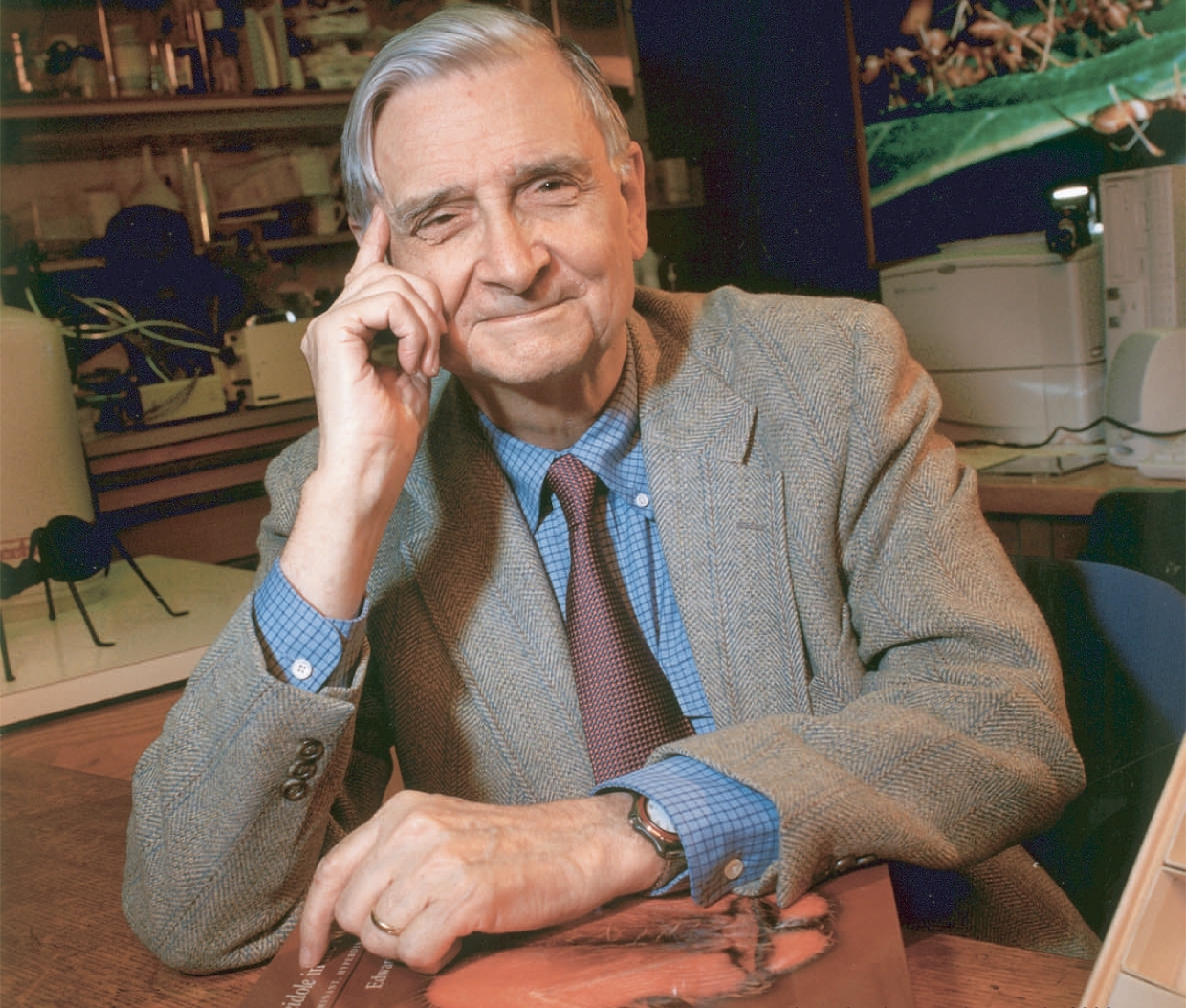


Major ideas and contributions
Wilson is often associated with the founding of sociobiology, an approach that seeks evolutionary explanations for social behavior across animals, including humans. He advanced the view that genes, ecological context and natural selection influence social organization while cautioning against simplistic genetic determinism. Wilson also played a prominent role in drawing attention to biodiversity loss and the need for active conservation. He coined or popularized concepts that encouraged interdisciplinary thinking about how species, ecosystems and human societies interact.
Career and honors
Wilson spent much of his professional life at Harvard University, where he served as a researcher, professor and museum curator in entomology. He combined meticulous fieldwork on ant natural history with theoretical writing that aimed at general principles. A two-time winner of the Pulitzer Prize in general non-fiction, Wilson received numerous major awards over his career. He was recognized for both scientific achievement and public outreach, and he held positions and fellowships in philosophical and skeptical organizations.
Influence, public ideas and debate
Beyond technical contributions, Wilson became a public intellectual: he argued for stronger protection of natural areas, proposed ambitious conservation targets, and wrote about the ethical implications of human relationships with other species. His environmentalism and reflections on human nature intersected with discussions of environmentalism, religion and worldview. He described his own perspectives on religion and ethics in broadly humanist terms and supported science-based approaches to public policy. Some of his ideas, particularly those in sociobiology, provoked vigorous debate over interpretation and social implications; proponents praised their explanatory power while critics warned of misuse or oversimplification.
Awards and recognition
- Two Pulitzer Prizes for general non-fiction, reflecting influence on both science and the public.
- Recipient of the National Medal of Science for contributions to biology.
- Winner of the Crafoord Prize, an award that honors disciplines not covered by the Nobel Prize.
- Fellowships and honors from scientific and humanist organizations, and curatorial positions that supported long-term research programs.
Selected works and legacy
Wilson combined technical monographs with widely read books aimed at general readers. His collaborative natural history studies and synthetic essays influenced fields from behavioral ecology to conservation biology. Key themes in his writing include the evolutionary roots of behavior, the moral and practical importance of preserving biodiversity, and calls for pragmatic strategies to steward the Earth’s life-support systems. His advocacy helped popularize ideas such as large-scale protected areas and inspired generations of biologists and conservationists.
Further reading
- Major monographs and popular books that summarize his scientific discoveries and public proposals.
- Collections of essays and interviews that document his evolving views on science, religion and policy.
- Critical commentaries that place his contributions in historical and disciplinary context.
For more details on aspects of Wilson’s career and thought, consult specialized biographies and the scientific literature; his long publication record and the debate it generated continue to be a central part of modern discussions about nature, society and the role of science in public life. Fellow status with learned societies and international recognition reflect both his scholarly impact and his public reach.
Questions and answers
Q: Who was Edward Osborne Wilson?
A: Edward Osborne Wilson was an American biologist, naturalist and author. He was an entomologist who studied ants, but to the public he is known for sociobiology, biodiversity and conservation.
Q: What awards did Edward Osborne Wilson win?
A: Edward Osborne Wilson won two Pulitzer Prizes for general non-fiction and the National Medal of Science (1977), as well as the Crafoord Prize (1990).
Q: What is his most famous work?
A: His most famous work is his role as "the father of sociobiology".
Q: Where did he work?
A: He worked at Harvard University.
Q: What other organizations was he a part of?
A: He was a Fellow of the Committee for Skeptical Inquiry and a Humanist Laureate of the International Academy of Humanism.
Q: What were his views on religion and ethics? A: He held secular humanist and deist ideas on religion and ethics.
Q: How did he influence society? A: His writing has been very influential in society.
Author
AlegsaOnline.com E. O. Wilson Leandro Alegsa
URL: https://en.alegsaonline.com/art/137783