
Crosby, Stills, Nash & Young
Crosby, Stills, Nash & Young (CSN/CSNY) are an influential folk-rock supergroup noted for close vocal harmonies, politically charged songs, and intermittent collaborations since the late 1960s.
Overview
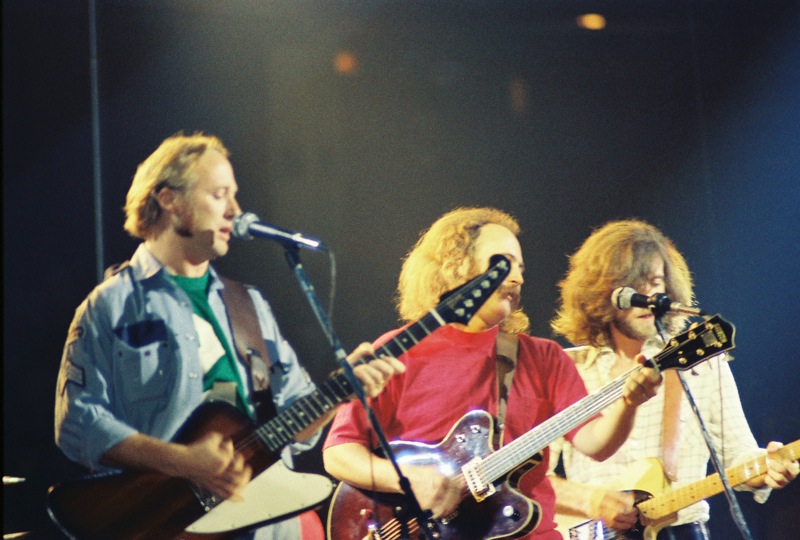
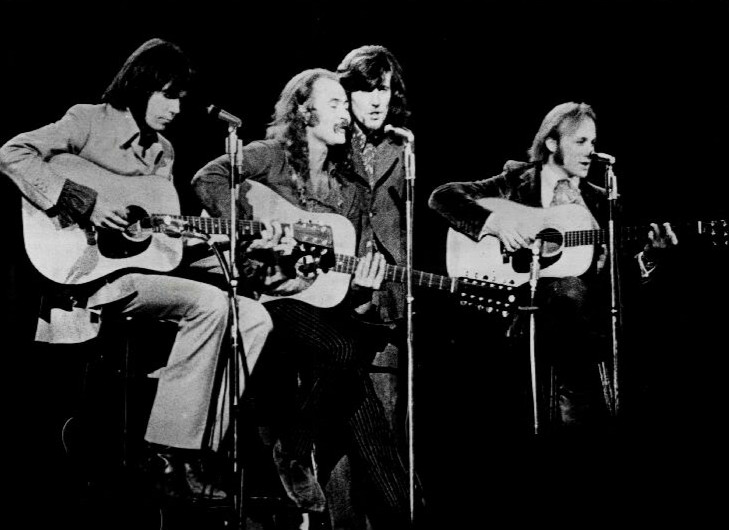
Crosby, Stills & Nash began as a trio in the late 1960s and became widely known as Crosby, Stills, Nash & Young when joined by a fourth, occasional member. The core lineup—David Crosby, Stephen Stills and Graham Nash—combined close three‑part harmonies with acoustic and electric arrangements rooted in folk rock. The addition of Neil Young, who hails from Canada, broadened the group's sound and repertoire, and the quartet is commonly referred to by the initials CSNY.
Image gallery
7 Images


Musical characteristics
The group's music emphasizes layered vocal harmony, intricate songwriting and a blend of acoustic folk, country touches and rock instrumentation. Their arrangements often feature interlocking guitar parts, melodic counterpoint and vocal blending that became a signature. Songwriting responsibilities were shared among members, producing a mix of intimate personal songs and broader topical pieces.
Origins and development
Members of Crosby, Stills & Nash came from prominent 1960s bands: Crosby from the Byrds, Stills and Young from Buffalo Springfield, and Nash from the Hollies. After forming as a trio, they released a self-titled debut that drew attention for its harmonies and songwriting. Neil Young joined at times to record and perform with the group, and the shifting lineups, personal rivalries and solo ambitions shaped a pattern of intense collaborations followed by long gaps.
Key recordings and songs
The group produced several songs and albums that became staples of late‑1960s and early‑1970s popular music. Representative tracks and records include:
- Albums: the debut studio album and the quartet's landmark release Déjà Vu.
- Well-known songs: "Marrakesh Express", "Suite: Judy Blue Eyes", "Teach Your Children", "Just A Song Before I Go".
- Protest material: the quartet recorded the urgent single "Ohio", a response to the Kent State shootings and an example of a politically engaged protest song.
Significance and influence
Crosby, Stills, Nash & Young influenced generations of singer‑songwriters and vocal groups with their harmonic approach and blending of personal and political themes. Their work helped define an era in which folk sensibilities met rock's larger stage, and members enjoyed parallel solo careers and side projects that further shaped popular music in the 1970s and beyond.
Notable facts and legacy
Known as a classic example of a musical "supergroup", CSN and CSNY are remembered as much for their distinctive sound as for the tensions that produced eras of brilliance and long hiatuses. Their songs continue to be performed and covered, and the ensemble's role in combining harmony‑centered songwriting with topical subject matter remains a touchstone in rock history.
For further reading on individual members and particular recordings, see pages about David Crosby, Stephen Stills, Graham Nash and Neil Young.
Questions and answers
Q: Who is in the supergroup Crosby, Stills, Nash & Young?
A: The supergroup is made up of David Crosby, Stephen Stills, Graham Nash, and occasionally Neil Young.
Q: What genre of music does Crosby, Stills, Nash & Young play?
A: They play American folk rock.
Q: What are some of Crosby, Stills, Nash & Young's popular songs?
A: Some of their popular songs include "Marrakesh Express", "Suite: Judy Blue Eyes", "Teach Your Children", "Ohio", and "Just A Song Before I Go".
Q: Who is the occasional fourth member of Crosby, Stills, Nash & Young?
A: Neil Young is the occasional fourth member, and he is from Canada.
Q: What was the subject of their protest song, "Ohio"?
A: "Ohio" was a protest song against the Kent State shootings in early 1970.
Q: What is the name of their song about a train ride?
A: "Marrakesh Express" is their song about a train ride.
Q: Who are the individuals that comprise Crosby, Stills & Nash?
A: Crosby, Stills & Nash is made up of David Crosby, Stephen Stills, and Graham Nash.
Author
AlegsaOnline.com Crosby, Stills, Nash & Young Leandro Alegsa
URL: https://en.alegsaonline.com/art/137082