
Christopher C. Kraft Jr.
American aerospace engineer and manager who created NASA's Mission Control structure and served as a leading flight operations executive during Mercury, Gemini and Apollo.
Christopher Columbus "Chris" Kraft Jr. (February 28, 1924 – July 22, 2019) was an American aerospace engineer and manager best known for shaping the systems and practices of modern mission control. During the earliest US human spaceflight programs he developed the organizational structure, procedures and real‑time operations techniques that allowed ground teams to supervise complex crewed missions safely.
Image gallery
10 Images


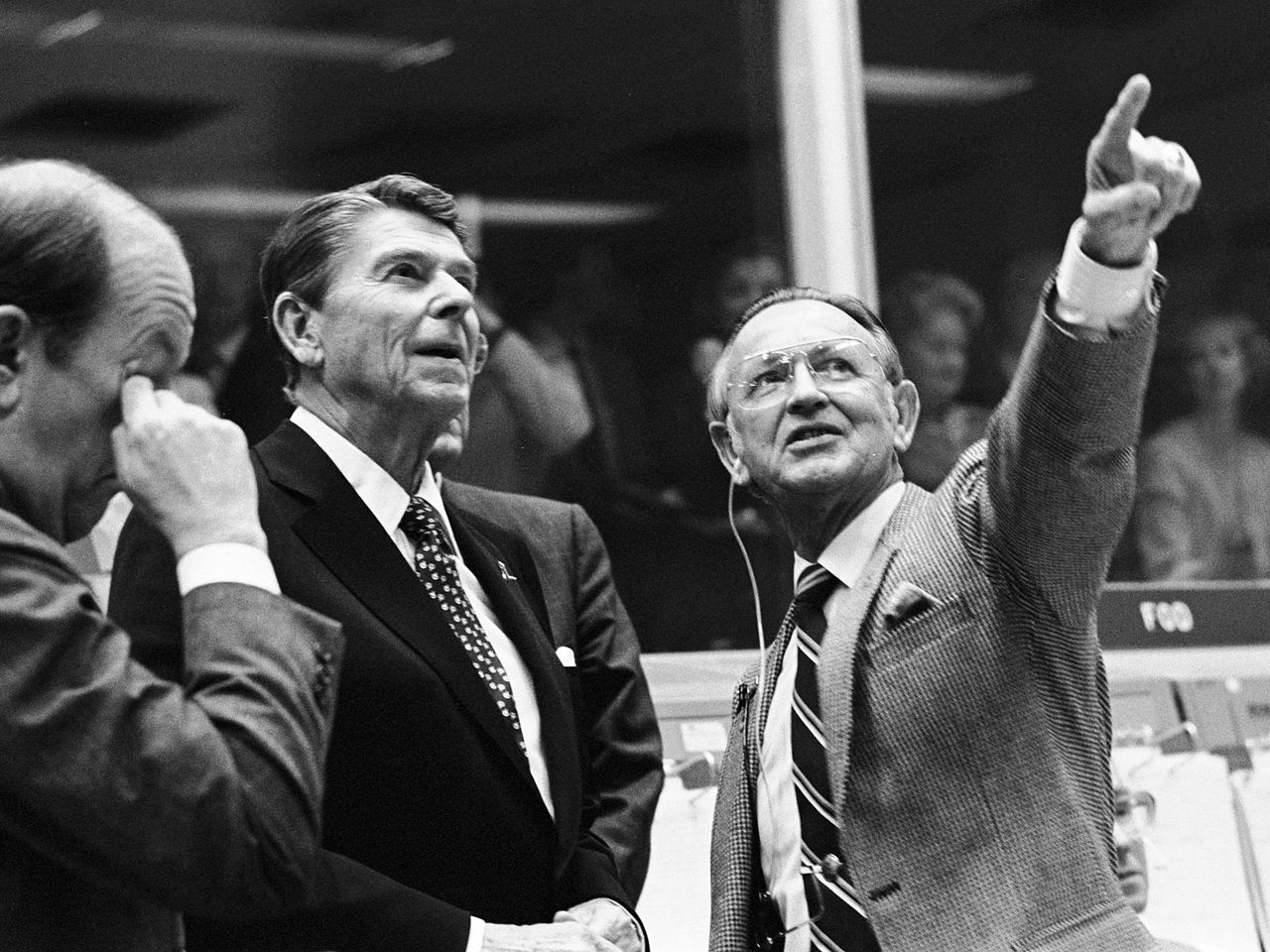


Overview and role
Kraft joined the group that became NASA's flight operations organization at the start of the space age and became the agency's first flight director. He established the concept of a dedicated control center with specialist flight controllers, standard consoles, disciplined communications and rehearsed checklists to support launch, orbit and reentry. Those innovations became the backbone of Mission Control and influenced operations for decades.
Contributions and methods
- Designed the flight control team model with named functional controllers and a flight director responsible for final decisions.
- Introduced rigorous procedures, contingency planning and simulation training to prepare teams for in‑flight anomalies.
- Led the evolution of consoles, displays and communications that turned telemetry into actionable decisions.
These practical systems emphasized clear lines of authority, disciplined radio protocols and pre‑defined procedures so crews and controllers could react quickly to changing conditions. Kraft's approach prioritized reliability, redundancy and rehearsed responses rather than improvisation.
Career arc and legacy
Throughout the Mercury, Gemini and Apollo programs he served as a senior operations manager and later assumed leadership roles at the Johnson Space Center. He helped transition NASA's operational practices from experimental test flights to routine procedures for increasingly complex missions. His influence endures in contemporary control centers and in the education of mission operations personnel.
Later in life he recounted his experiences in a memoir and remained a recognized figure in the history of human spaceflight. NASA has commemorated his contributions by associating his name with the agency's mission control facilities. For a concise biographical summary and official materials see further information.
Christopher C. Kraft Jr. died in 2019 at the age of 95, leaving a legacy as a pioneer of flight operations whose systems continue to support human missions beyond Earth orbit.
Author
AlegsaOnline.com Christopher C. Kraft Jr. Leandro Alegsa
URL: https://en.alegsaonline.com/art/136543