
Braidwood, New South Wales — historic Southern Tablelands town
Braidwood is a small historic town in the Southern Tablelands of New South Wales, Australia, known for its preserved 19th‑century buildings, nearby goldfields and use as a film location.
Overview
Braidwood is a rural town on the Southern Tablelands of New South Wales, Australia. It sits among rolling hills and river valleys and has long served as a service centre for surrounding farming districts. At the 2006 census the town and immediate area recorded about 1,108 residents; it continues to attract visitors for its historic streetscape and quiet country atmosphere.
Image gallery
2 Images
History and development
European settlement of the Braidwood district dates to the early 19th century. The town grew during the mid‑1800s as roads, pastoral activity and nearby alluvial goldfields brought new people and commerce. Many buildings erected during that period survive, giving the town a strong 19th‑century character. Local government arrangements have changed over time; Braidwood was within Palerang Shire and later became part of broader regional councils as administrative structures evolved.
Characteristics and notable sites
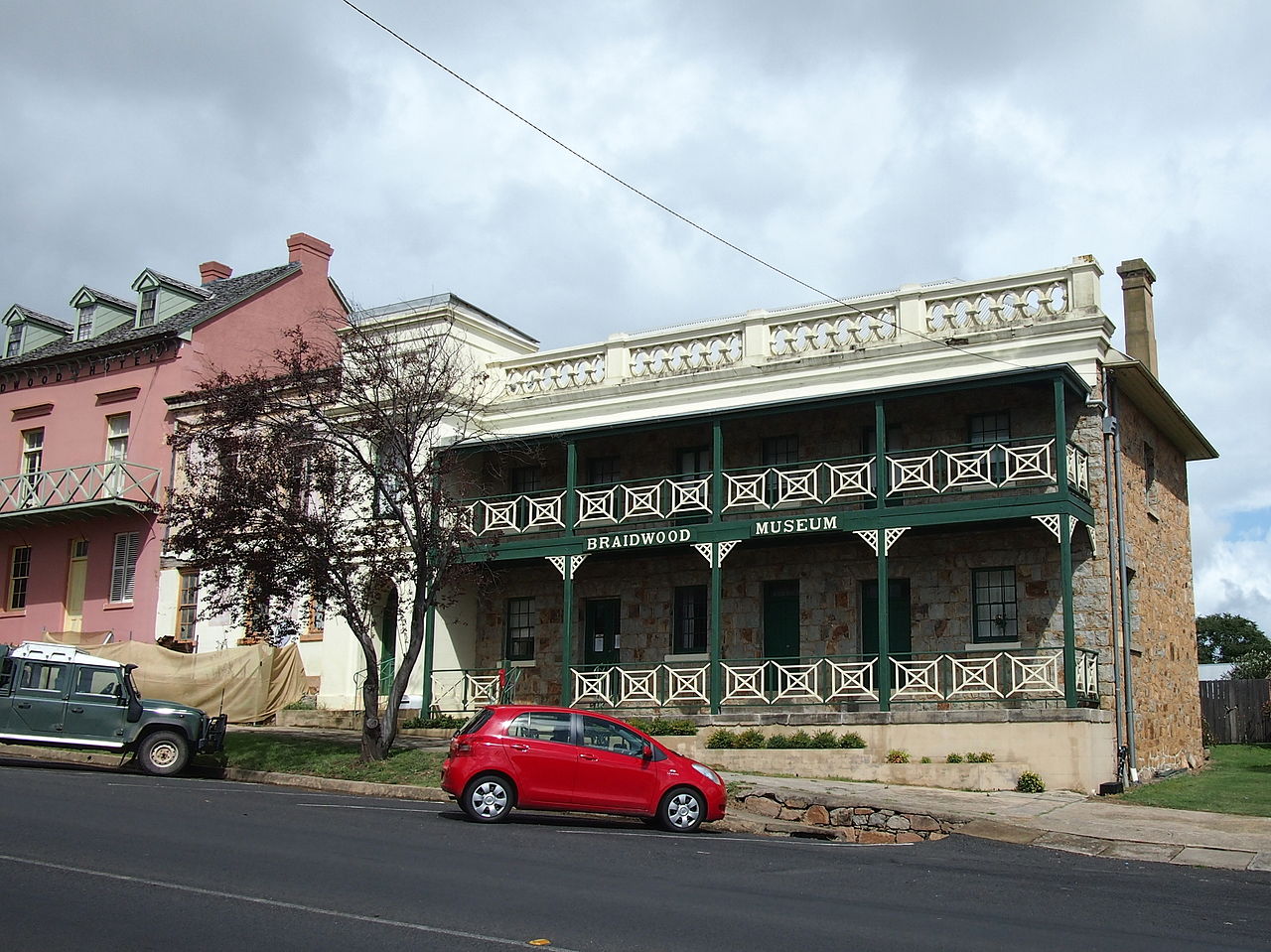
Braidwood is notable for a concentration of colonial and Victorian buildings, a compact main street, and several small churches, hotels and shops that reflect its nineteenth‑century origins. The surrounding countryside includes grazing land, small farms and historic mining scars from nearby gold workings. Points of interest for visitors commonly include heritage walks, antique and craft shops, and museum displays that interpret local history.
Culture, tourism and uses
Tourism, heritage conservation and local agriculture are important to Braidwood's economy. The town is popular with day‑trippers and weekend visitors from nearby regional centres, including travellers interested in historic towns and rural arts communities. Braidwood's streets and buildings have also been used as film and television locations; for example, scenes for the 1969 film Ned Kelly, starring Mick Jagger, were shot in the area (Mick Jagger is among the notable names linked to that production).
Distinctions and conservation
Because of its well‑preserved historic core, Braidwood is often cited in discussions about heritage conservation in regional Australia. Local and state authorities have sought to balance preservation of the town's character with contemporary needs such as tourism infrastructure, services for residents and management of the surrounding agricultural landscape.
Visiting and further information
- Best access is by road; the town is within driving distance of larger regional centres and the national capital.
- Visitors typically explore the main street, local galleries, antique shops and nearby historic sites.
- For official and practical details about the locality and services, consult regional council or state heritage resources via the appropriate online pages.
Questions and answers
Q: Where is Braidwood located?
A: Braidwood is located in the Southern Tablelands of New South Wales, Australia.
Q: What is the population of Braidwood in 2006?
A: The population of Braidwood in 2006 was 1,108 people.
Q: What is the name of the shire where Braidwood is located?
A: Braidwood is located in the Palerang Shire.
Q: Was Braidwood used as a filming location for a movie?
A: Yes, Braidwood was used as a filming location for the 1969 movie Ned Kelly, which starred Mick Jagger.
Q: Who starred in the movie Ned Kelly filmed in Braidwood?
A: Mick Jagger starred in the movie Ned Kelly, which was filmed in Braidwood.
Q: What type of area is Braidwood located in?
A: Braidwood is located in the Southern Tablelands, which is an area in the southern part of New South Wales, Australia.
Q: In what state is Braidwood located?
A: Braidwood is located in the state of New South Wales, Australia.
Related articles
Author
AlegsaOnline.com Braidwood, New South Wales — historic Southern Tablelands town Leandro Alegsa
URL: https://en.alegsaonline.com/art/13650
Sources
- censusdata.abs.gov.au : "Braidwood (Urban Centre/Locality)"
- gnb.nsw.gov.au : "Braidwood"